Arthritis in horses: causes, symptoms, and effective treatment options
Learn which measures, such as anti-inflammatory therapies, gentle exercise, and special feed supplements, can improve your horse’s quality of life. Learn when veterinary treatment is important and how alternative methods such as acupuncture and leech therapy can help. Help your horse live an active and pain-free life.
Table of Contents
What is arthritis?
🎥 Video tip: Understanding and recognizing arthritis in horses – This video clearly explains how arthritis develops in horses, which symptoms indicate the condition, and how joint fluid and cartilage breakdown affect mobility. A must-watch for horse owners to recognize warning signs early and ensure their horse’s well-being!
%2520(1)%2520(19).jpeg)
Arthritis in horses is a chronic joint disease in which the cartilage between the joints gradually breaks down. The joint cartilage forms a thin, elastic layer between the ends of the bones and acts as a natural shock absorber during movement. The smooth function of the joints is supported by joint fluid—also known as synovial fluid. This fluid lubricates the joint and supplies the cartilage with essential nutrients such as hyaluronic acid.
With healthy movement, the synovial fluid is distributed throughout the joint, lubricating the cartilage and supplying it with nutrients. In the case of arthritis, however, this process no longer functions smoothly. If the horse moves too little or the warm-up phase is too short, the cartilage does not receive enough synovial fluid. As a result, it loses elasticity and becomes more susceptible to damage.
Due to the lack of joint fluid, the cartilage suffers from a deficiency of nutrients, causing the cartilage layer to gradually wear down. The consequences are severe: the joint can become inflamed, leading to acute arthritis. As cartilage degradation progresses, the bones may eventually rub directly against each other, which is extremely painful for the horse and causes lameness. These recurring inflammations ultimately lead to chronic joint inflammation—true arthritis. Additionally, bone growths (osteophytes) may develop, making the joint stiffer as the joint space narrows.
Types of arthritis
The different types of arthritis can affect various joints and, depending on their location, cause specific symptoms and limitations. The following overview presents the most common forms of arthritis in horses and their characteristic features.
Causes of Arthritis
Arthritis is often seen as a sign of aging, since older horses are frequently affected due to years of stress on their joints. However, arthritis can also occur in young horses and is often caused by a combination of overuse, injuries, and lack of movement.
Age-related wear and tear
As horses get older, their joints become worn down through years of strain, which accelerates cartilage breakdown. This mainly affects older horses.
Injuries and overuse
- Acute arthritis: Acute joint inflammation often precedes chronic arthritis. It can be caused by injuries, tendon damage, or bone fractures that lead to incorrect weight distribution.
- Protective postures: Pain in one leg, for example due to an injury, often causes the horse to overload the other leg, which can damage the joints.
Conformation faults and hoof problems
Incorrect hoof trimming or congenital hoof misalignment can lead to uneven loading and may promote arthritis over time.
Overweight and feeding
Excess weight greatly increases the strain on the joints. Almost half of all leisure horses are considered overweight, which raises the risk of arthritis and also promotes metabolic diseases such as laminitis.
Early strain in young horses
Horses are not fully grown until around six years of age. Young horses that are trained too intensively too early—such as through lunging on a tight circle, jumping, or dressage—risk damaging their still immature joints.
Lack of movement
In contrast to overuse, too little movement also causes problems: without regular exercise, the joint fluid is not distributed sufficiently, the cartilage remains undernourished and dries out more quickly, making the joint stiffer and more vulnerable.
Symptoms of Arthritis in Horses
There are several symptoms that may indicate arthritis in horses. These signs commonly occur:
- “Warming out of it”: If the horse shows stiffness or even lameness at the beginning of a riding session that improves after a short time, this is a typical sign of arthritis.
- Lameness: Recurring or persistent lameness, especially after exercise.
- Swollen joints: Swelling in the affected joints is a common symptom.
- Difficulty lying down and getting up: Horses with arthritis often have trouble lying down or rising.
- Frequent stumbling: Stumbling occurs more often, especially on trails or at faster gaits.
- Filled joints: These fluid accumulations around the joints indicate inflammation.
- Reluctance to move: Affected horses often show little motivation to move and appear generally stiffer.
- Weather-related symptoms: In cold, damp weather, pain and lameness may increase. Cold slows the metabolism and makes the synovia (joint fluid) more viscous.
Diagnosis of Arthritis
🎥 Video tip: Diagnosing arthritis in horses. This video shows step by step how arthritis in horses can be identified. It explains typical examination methods such as lameness analysis, imaging techniques (X-ray, ultrasound, MRI), and the importance of joint fluid analysis.
%2520(1)%2520(20).jpeg)
If arthritis is suspected, a veterinarian should be consulted immediately. The veterinarian will first examine the horse at the walk and trot on different surfaces and assess the mobility of the joints. A systematic anesthesia (nerve block) is often also performed, in which specific sections of the horse’s leg are numbed one after another. After each block, a lameness analysis is carried out to precisely locate the source of pain.
Various imaging techniques are available for a detailed diagnosis. X-ray, ultrasound, computed tomography (CT), and MRI each offer different advantages depending on the case. In some cases, diagnostic arthroscopy may also be useful. For this procedure, the horse is placed under general anesthesia, and the affected joint is filled with saline solution to create enough space for a precise examination. An arthroscope with a camera allows the surgeon to look directly into the joint and analyze cartilage damage in detail. After the examination, the fluid is removed again.
Scintigraphy can also be helpful in detecting very early changes in bone metabolism. In this procedure, a small amount of radioactive substance is injected, which accumulates in the bones and concentrates more strongly in damaged areas. This makes it possible to identify problem areas before they become visible on X-rays.
🎥 Video tip: How does scintigraphy work in horses? – This video shows how scintigraphy is performed, when it is useful, and how it helps detect arthritis and other bone problems at an early stage. A helpful insight for horse owners who want to learn more about this procedure and its benefits.
%2520(1)%2520(22).webp)
Costs and Procedure of Scintigraphy
Scintigraphy is a helpful but costly procedure. According to the current fee schedule for veterinarians (GOT), scintigraphy alone costs at least 460 euros. Additional costs for the clinic stay, sedation, and any follow-up treatment are not included.
The procedure is also time-consuming: the injected substance requires around two hours to be processed by the body before the actual examination—which itself takes another hour or longer—can be carried out. Because the horse must stand completely still during the imaging, sedation is required, and shoes on the front feet must be removed. A scintigraphy examination should therefore be carefully considered.
Which diagnostic method is necessary overall depends on the severity, location, and visibility of the arthritis.
Treatment Options for Arthritis
Since arthritis in horses cannot be cured, treatment aims to keep the horse pain-free for as long as possible and improve its quality of life. The earlier the condition is detected, the better the chances of successful treatment. During acute phases, anti-inflammatory and pain-relieving medications help ease the symptoms.
Hyaluronic Acid Injections
A commonly used method is the injection of hyaluronic acid, either directly into the joint or intravenously. Hyaluronic acid is a natural component of joint fluid (synovia) that lubricates the joint and neutralizes inflammatory mediators. In severe cases, cortisone may also be administered to reduce inflammation. In cases of more advanced damage, high-molecular-weight hyaluronic acid or a combination of high- and low-molecular-weight hyaluronic acid is often used to create a long-lasting protective film around the joint. Hyaluronic acid can also be given through feed to increase hyaluronic acid levels in the blood and improve joint support.
Autologous Blood Therapy (IRAP/ACS)
Treatment with autologous blood is a modern and expensive approach originally developed in human medicine. In this procedure, blood is taken from the horse and processed using special techniques to concentrate it. The substances in the prepared serum can reduce cartilage breakdown and promote regeneration. In particular, so-called IRAP (Interleukin Receptor Antagonist Protein) or ACS (autologous conditioned serum) is effective in cases of arthritis because it blocks the cytokines that drive cartilage degradation. This treatment is usually repeated two to five times and can cost up to 1,000 euros.
Therapeutic Arthroscopy
Arthroscopy is used in arthritis both diagnostically and therapeutically. During this procedure, the cartilage surface is smoothed and loose fragments are removed. Arthroscopy is often used in cases of joint chips. However, its benefit in arthritis is controversial, as a study from human medicine showed no significant improvement compared with no treatment.
Corrective Shoeing
A specially designed shoeing method can help relieve stress on the joints. If the horse is to go barefoot, regular and professional hoof trimming is necessary to prevent misalignment and protect the joints.
Alternative Methods
In addition to conventional therapies, many horse owners rely on alternative methods:
- Leech therapy: Leeches are applied to suck blood. This is intended to have an anti-inflammatory effect.
- Acupuncture: Long, thin needles are inserted into the affected areas to release blockages in the flow of energy.
- Therapy boots with ceramic fibers: These boots may have a supportive effect and improve well-being.
Alternative methods should always be understood as supportive measures and do not replace veterinary treatment.
Riding with Arthritis
🎥 Video tip: Active seniors – What does the old horse need? – In this video, you will learn how older horses can stay healthy and active even in old age. It shows the best care and exercise strategies for senior horses, explains the importance of an adapted diet, and gives tips on how to specifically relieve arthritis and other age-related complaints. A valuable guide for anyone who wants to give their horse a long and fulfilling life in old age.
%2520(1)%2520(23).jpeg)
A diagnosis of arthritis does not necessarily mean that a horse can no longer be ridden—quite the opposite. Regular, gentle exercise helps slow the progression of the disease, as it supports joint function and builds muscles that relieve strain on the joints. A well-developed muscular system protects the joints and helps prevent excess weight, which can worsen arthritis.
However, since a horse with arthritis is more sensitive, adjustments in training are important. An extended warm-up phase of at least 20 minutes is essential so that the joint fluid is properly distributed and the joints remain supple. Tight turns should be avoided, as they put strain on the joints. Instead, straight lines on soft ground—ideally out in the field—are recommended. It is important to pay attention to the footing, as it affects the level of strain.
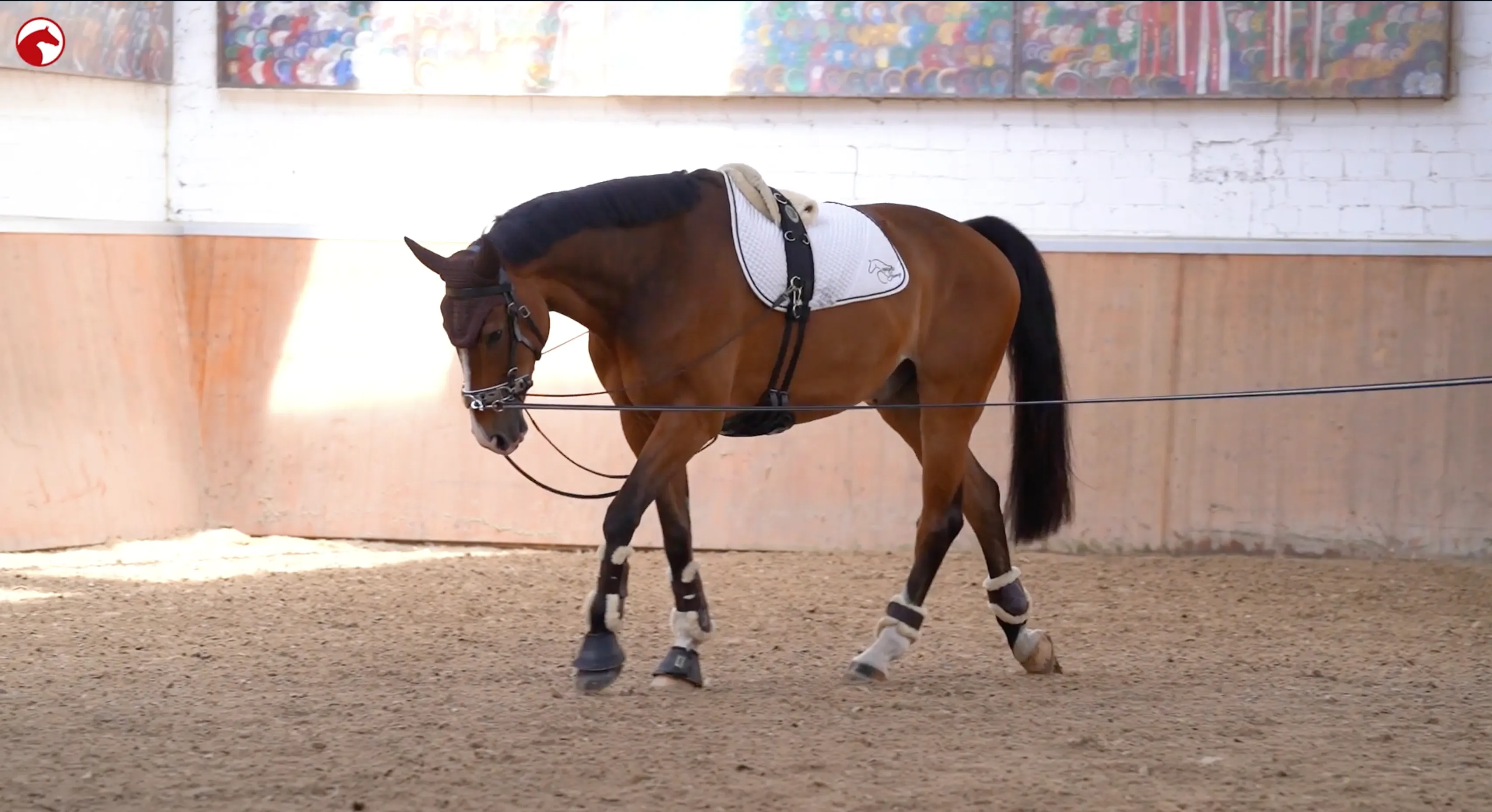
Walking over small obstacles such as logs or poles promotes joint mobility and strengthens the muscles. In cases of mild arthritis, pole work in all gaits can help maintain mobility. Jumping, however, should be avoided, as shock absorption in the affected joints is reduced. Traditional lunging on a tight circle is also not advisable, as it places uneven strain on the joints. Instead, groundwork, long-reining, or double-lunge work are better options—exercises performed on larger circles without the weight of a rider.
It is important that the horse is only ridden or exercised when it is free from lameness. Limping or irregular movement is a sign of pain and should always be taken seriously. Since arthritis symptoms can worsen depending on the weather, the rider should also consider the horse’s condition on any given day.
For all horses—especially those with arthritis—free movement is essential to stimulate joint fluid circulation. A paddock paradise or open stable with a calm herd and opportunities for movement is ideal. The exact level of workload suitable for a horse with arthritis should always be discussed with the treating veterinarian.
Which feeds can help with arthritis?
Feed supplements cannot replace the treatment of arthritis, but certain natural remedies can have a supportive effect due to their anti-inflammatory and pain-relieving properties. Proven supplements include:
- Green-lipped mussel powder
- MSM (methylsulfonylmethane)
- Devil’s claw
- Ginger
- Nettle
- Hyaluronic acid
These supplements should be fed in cycles, as long-term use may strain the horse’s stomach. Each horse reacts differently, so it is advisable to try different supplements to find out what works best.
When should a horse be euthanized due to arthritis?
Even though arthritis is now manageable, it remains incurable. If the disease and the associated pain become so severe that the horse can no longer have a quality life, it is the owner’s responsibility to make the final decision and relieve the animal from its suffering.
Arthritis in horses: Summary
Arthritis in horses is a progressive, incurable joint disease that can be well managed with the right measures and appropriate care. Early diagnosis and individualized treatment—including anti-inflammatory therapies, controlled exercise, and specific feed supplements—can significantly improve the horse’s quality of life. It is important to adapt training carefully, avoid overloading, and take the horse’s daily condition into account.
Alternative therapies such as leech therapy, acupuncture, or specialized shoeing can further support veterinary treatment.
For horse owners, it is essential to recognize symptoms early and work closely with a veterinarian. This way, a horse with arthritis can still live an active and fulfilling life. However, if the point is reached where quality of life can no longer be ensured, a responsible decision in the best interest of the horse is required.
Arthritis in Horses: Key Questions and Answers
What makes arthritis worse in horses?
Lack of exercise, excess weight, improper hoof care, early and intensive strain, and uneven ground can worsen the symptoms of arthritis.
What helps best with arthritis in horses?
Gentle exercise, an adapted diet, and anti-inflammatory supplements such as green-lipped mussel powder and devil’s claw can relieve symptoms. Veterinary treatments such as hyaluronic acid injections and autologous blood therapy can also be beneficial.
Can a horse with arthritis still be ridden?
Yes, exercise is important, but the intensity should be adjusted. Gentle training, straight lines, and a thorough warm-up phase of at least 20 minutes help keep the joints mobile.
What can I give a horse with arthritis for pain relief?
Veterinary-prescribed anti-inflammatory medications and supplements such as MSM (methylsulfonylmethane) and devil’s claw can help relieve pain. However, they should always be given in consultation with a veterinarian.
What really helps with arthritis in horses?
Regular, controlled exercise, a balanced diet, and targeted supplements such as hyaluronic acid and MSM can improve quality of life. Veterinary guidance is essential for choosing the right treatment.
Can you still ride a horse with arthritis?
Yes, but training should be adapted to the horse’s needs. Groundwork, long-reining, and avoiding tight turns help reduce strain on the joints and maintain mobility.
When should a horse with arthritis be euthanized?
If the pain can no longer be controlled despite treatment and the horse no longer has a good quality of life, euthanasia may be a responsible decision. This should always be discussed with a veterinarian.
Which supplements help with arthritis in horses?
Supplements such as green-lipped mussel powder, MSM, devil’s claw, ginger, and hyaluronic acid can have anti-inflammatory and pain-relieving effects. It is useful to try different supplements to find what works best.
What can be done for arthritis in horses?
Regular, gentle exercise, appropriate feeding, and targeted veterinary treatment help relieve symptoms and maintain the horse’s quality of life.
How does arthritis show in horses?
Typical signs include stiffness, lameness, difficulty getting up, swollen joints, frequent stumbling, and reluctance to move—especially in cold weather.
Which exercises are suitable for a horse with arthritis?
Gentle groundwork, long-reining, straight-line movement on soft ground, and light pole work at the walk help keep the joints mobile and build muscle.
How should a horse with arthritis be exercised?
The horse should be exercised regularly and carefully, ideally with a long warm-up phase. Straight-line movement on soft ground or in open terrain, while avoiding tight turns, helps relieve strain on the joints.
You might also like