Trakehner: From cavalry horse to versatile sport horse
The Trakehner is one of the oldest and noblest German riding horse breeds. Originally from East Prussia, the breed was founded in 1732 by King Frederick William I of Prussia at the Trakehnen State Stud. Since 2022, Trakehner breeding has been recognized as UNESCO Intangible Cultural Heritage.
Table of Contents
Character and Temperament
Trakehners are distinguished by their friendly and sensitive nature. They are willing to perform, intelligent, and highly responsive to their rider’s mood. This sensitivity makes them ideal partners for experienced riders, but it also places certain demands on handling, which means they are not unreservedly suitable for beginners.
Their courage and resilience predestine them for a wide range of uses, especially in dressage, show jumping, and eventing. Despite their demanding nature, Trakehners reward their riders with a deep, trusting partnership and exceptional performance.
Conformation
Trakehners are known for their elegant and harmonious build. With a height of 160 to 170 cm, they have an expressive head with large, intelligent eyes, a long, arched neck, a sloping shoulder, and a well-muscled croup. The most common coat colors are bay, black, and gray.
Suitability and Areas of Use
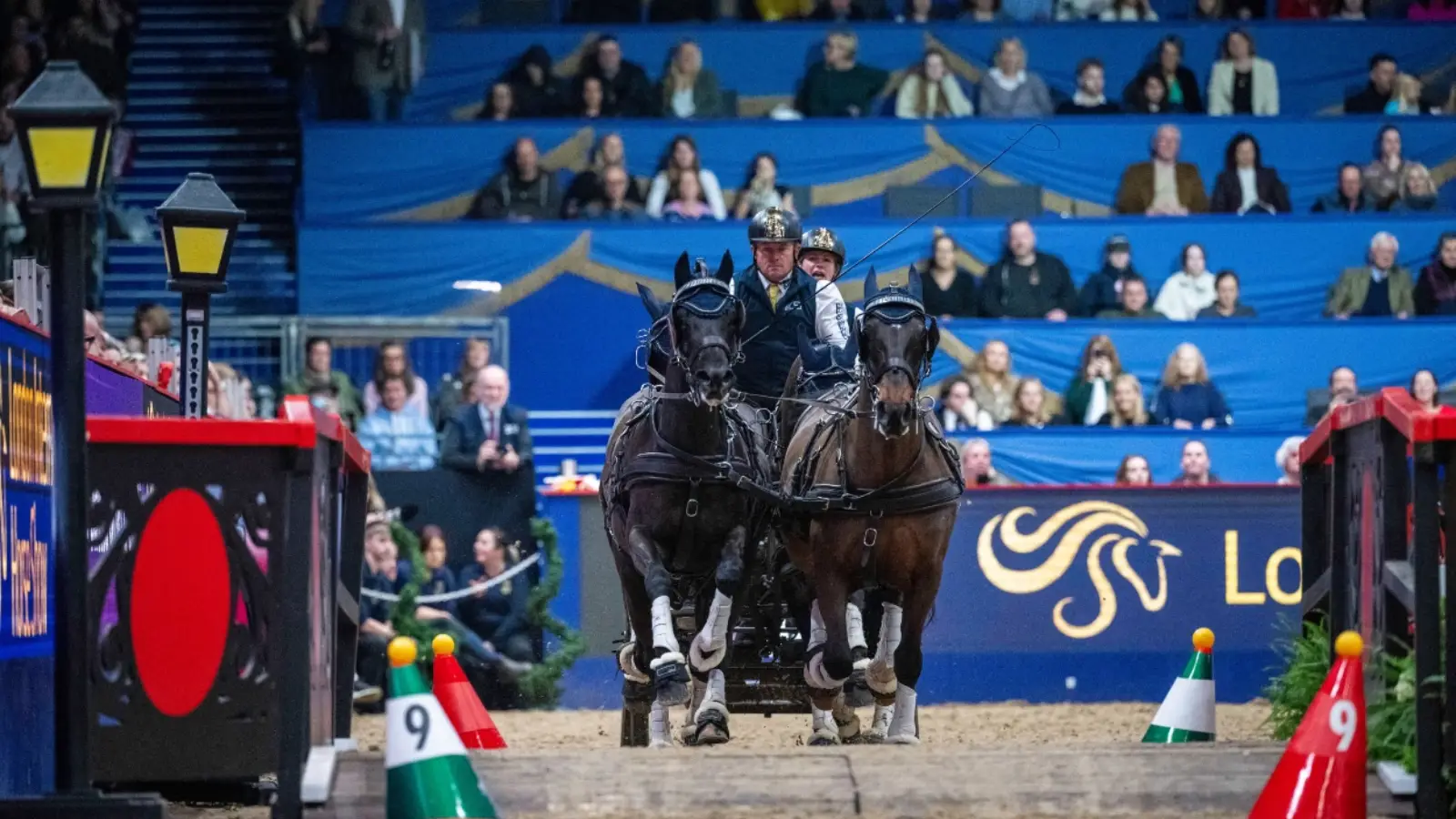
The Trakehner horse is known for its versatility and is considered one of Germany’s outstanding riding horse breeds. Trakehners are successful in various equestrian disciplines. They are particularly impressive in eventing and dressage, where they achieve outstanding results. Trakehners are also valued in driving sport and as leisure horses.
Their sensitivity and noble appearance make them unique among horse breeds. With a height of 160 to 170 cm, they meet the ideal requirements for performance-oriented riders. The characteristic Trakehner brand, the moose antler, has been used for centuries to identify this special breed.
Whether you are looking for a Trakehner for sport, as a leisure companion, or as a special horse, this noble breed meets the highest standards and remains a symbol of quality and tradition.
Movement
A Trakehner’s conformation forms the basis for the desired movement, which is defined in the breeding program of the Trakehner Verband as follows:
- Ground-covering gaits
- Energetic, regular basic gaits
- Elastic, expressive, and light-footed movement
- Trot with a long suspension phase
- Canter with powerful hindquarters stepping well underneath
- A loose, swinging back
- Freedom through the shoulder with the forehand swinging straight forward
- Knee action is desirable
Thanks to their movement, Trakehners cut a fine figure both in the dressage arena and in the jumping course and across country. Especially in jumping, the ideal horse is one that approaches the fence thoughtfully while showing elegance and intelligence. The overall sequence of a jump should be characterized by flow and rhythm.
Breeding and Distribution
🎥 Video tip: Learn more about Trakehner breeding. In the video, you will discover more about the six most significant studs in Trakehner breeding.

Trakehners are bred under strict purebreeding rules, with only Trakehners, Thoroughbreds, Shagya Arabians, and Anglo-Arabians permitted for crossbreeding. This controlled process ensures the preservation of the unique characteristics of the Trakehner horse breed.
Worldwide, there are around 280 breeding stallions and 4,500 broodmares securing the population of this noble German riding horse breed. The Trakehner breeding community is internationally connected and promotes the exchange of knowledge and experience in order to maintain the high standards of the Trakehner breed.
The characteristic Trakehner brand, the moose antler, symbolizes the long tradition and special status of this horse breed. With a height of 160 to 170 cm and their exceptional sensitivity, Trakehners are valued worldwide—both in equestrian sport and in breeding.
The Long Breeding History of the Trakehner
Trakehner breeding dates back to the 13th century, to the time of the Teutonic Order. The foundation for systematic breeding was finally laid in the 18th century in East Prussia, in the town of Trakehnen, from which the breed takes its name. In 1732, King Frederick William of Prussia purchased the main stud and initially began breeding hardy carriage horses.
The breeding goal changed when cavalry horses were needed for the military. As a result, Arabians and English Thoroughbreds were introduced to add more speed and elegance. With the first performance tests and careful pedigree documentation, breeders pursued even more precise selection of breeding horses.
As early as 1787, the brand still known today was introduced to mark affiliation: a moose antler, since the heraldic animal of East Prussia had been a moose. At that time, a distinction was made between two types of horses: those born at the Trakehnen main stud and those born elsewhere. Foals bred directly in Trakehnen received a single antler brand and were allowed to be called Trakehners. All other horses not born in Trakehnen but descended from Trakehners received a double moose antler. This likely explains why today we know only Trakehner horses with the double moose antler, since none of these horses were born directly in Trakehnen. Horses with the double brand are, strictly speaking, not allowed to be called Trakehners, but are properly referred to as East Prussian Warmbloods of Trakehner origin, or simply East Prussians.
However, with the end of the Second World War in 1944, many people—including the horses—were forced to flee East Prussia. This sealed the fate of the Trakehnen main stud. The few remaining horses were evacuated to what later became the occupation zones and to the state studs of Neustadt/Dosse and Graditz.
With the end of the Trakehnen main stud, all horses bred afterward were, strictly speaking, East Prussian Warmbloods. However, the name Trakehner became so firmly established that today only the double moose antler brand serves as a reminder that these horses were not bred in Trakehnen itself.
It took a long time for Trakehner breeding to recover after the expulsion from East Prussia and to return to the quality level it had before the war. There was simply not enough stock available to make a sufficient number of breeding matches. Over time, however, more and more purebred Arabians, Shagya Arabians, Anglo-Arabians, and English Thoroughbreds were introduced to refine the Trakehner, until the Thoroughbred influence eventually accounted for around half of the bloodlines.
Today, Trakehners are themselves often used to refine formerly heavier warmblood breeds, which is why they are important ancestors of the modern German riding horse.
The Trakehner Breeding Program
Trakehner breeders pay close attention to maintaining the greatest possible purity of the breed, meaning that only a very limited number of other breeds may be used for refinement. Apart from Arabians and Thoroughbreds, other horse breeds are excluded. To preserve the purity of the Trakehner, breeding is governed by a strict breeding program consisting of three components: the GP Program, the Elite Program, and Linear Description.
In the GP Program (breeding progress through targeted mating), the focus is on the mares. The goal is to achieve greater quality from a smaller population of selected broodmares—namely foals that are genetically superior to others. This is intended to have a positive effect on both breeding and sport. The broodmares are selected according to three criteria: their own performance, the performance of their offspring, and the performance of their ancestors and relatives.
Since 1995, the Elite Program has awarded elite titles. These serve as a mark of quality and are recorded as a title in the horse’s passport. The aim of the elite title is to highlight Trakehner sires that stand out through both their own performance and the performance of their offspring.
Linear Description is not a tool for ranking or placing horses. It comes from practical breeding work and is intended to help breeders choose and match their breeding animals more effectively. Judges take notes during performance tests, foal inspections, licensing inspections, free-jumping competitions, and mare registrations. This allows breeders to better understand the scores awarded. The evaluation process therefore becomes more transparent. The judges’ notes are compiled into a data set and then analyzed. The results are made available to the breeder so they can be taken into account when planning matings.
This system is already used by other breeding associations and in other countries. The Trakehner Verband bases its approach on the evaluation forms and software of the Oldenburg system.
Famous Trakehners
An outstanding example of the quality of Trakehner breeding is the stallion Kenneth, born in 2019. With a height of 172 cm, he impresses with his brilliant type and exceptional quality of movement. His sire, the Trakehner stallion of the century Millennium, is considered one of the most successful sires and has already produced more than 75 licensed sons.
This exceptional Trakehner stallion embodies the elegance and athletic ability that are characteristic of the Trakehner horse breed. Through his successes in equestrian sport and his importance for breeding, Kenneth is a symbol of the high quality of the German riding horse breed Trakehner.
Other famous Trakehners:
- Charly Chaplin (1970–2000): Licensed in 1987, named an elite stallion in 2004. Successful up to Grand Prix level, with numerous successful daughters and sons, including Polarzauber.
- Polarzauber (1996–2012): Licensed in 2002. Successfully competed up to advanced-level dressage under Dorothee Schneider. Despite numerous successes (61 wins), he received little acceptance in breeding, producing only seven sport offspring.
- Caprimond (1985–2014): Licensed in 1987. Entered Trakehner history as the youngest stallion to be named an elite stallion in 1995 and Trakehner Stallion of the Year in 1998. An influential foundation sire with many successful dressage offspring (for example Hohenstein), and still successful in Grand Prix at the age of 19.
- Hohenstein (1991–2013): Premium stallion, licensed in 1993, named Stallion of the Year in 2002. Successful up to advanced-level dressage. Passed on his outstanding rideability to his successful offspring (30 licensed stallions and more than 100 state premium mares).
- E.H. Sixtus (1989–2022): Licensed in 1991 as reserve champion, Stallion of the Year in 2001, and a successful show jumper up to advanced level. He had a major influence on Trakehner breeding, with more than 300 registered offspring successful up to advanced level in dressage, show jumping, eventing, and driving.
- Kostolany (1984–2013): Licensed in 1987 as champion stallion, Stallion of the Year in 2009. He passed on his versatility to his offspring, who can be found in eventing, dressage, and show jumping.
Breed-Typical Health Issues
As a result of long-term breeding, certain health problems have become more common in Trakehners due to an increased predisposition. These include mud fever, colic, laminitis, and ear infections. These conditions can have various causes, but an imbalance in feeding, exercise, and hygiene plays a decisive role. Excess weight, a diet too high in starch and sugar, insufficient exercise, and stress can all contribute to colic, laminitis, and mud fever. With species-appropriate horse management and needs-based feeding, these illnesses can largely be prevented.
In recent years, many Trakehner breeders have also focused increasingly on the hereditary metabolic disorder MIM (formerly PSSM2). Muscle Integrity Myopathy is a genetic mutation in which the muscles, including their function, are damaged. Because MIM is embedded in genetics and therefore inheritable, several horse breeding associations—including the Trakehner, Hanoverian, and Oldenburg associations—have joined forces to monitor the development and health of horses even more closely with the help of state-of-the-art laboratory analysis.
The Trakehner: In Summary
The Trakehner is more than just a horse breed—it embodies elegance, athleticism, and tradition. With its friendly yet demanding nature, it is the ideal partner for experienced riders seeking a deep connection with their horse. Its versatility makes it a star in dressage, show jumping, eventing, and even therapeutic riding.
Thanks to a strictly regulated breeding program focused on purity and quality, Trakehners have preserved their reputation as one of the noblest German riding horse breeds. Recognition as Intangible Cultural Heritage by the German Commission for UNESCO underlines the cultural and historical significance of this breed.
Whether as a sport horse, a leisure companion, or for refining other warmblood breeds, the Trakehner remains a symbol of quality, grace, and unbroken tradition. For riders and breeders who value class and character, it remains a first choice.
Trakehner: The most important questions and answers
Are Trakehners suitable for beginners?
Trakehners are known for their spirited and strong-willed nature. Their fire makes them less suitable for beginners. Although Trakehners are very open and people-oriented horses, their pronounced willingness to perform and rideability make them better partners for more experienced riders. Trakehners want and need to be challenged and encouraged; otherwise, their friendly nature can turn into stubbornness and overexcitement.
Nevertheless, every horse must be considered individually. There are certainly Trakehners that are very well suited as horses for children and young riders.
Is a Trakehner a Thoroughbred?
Despite their high proportion of Thoroughbred blood, Trakehners are classified as warmbloods. At the same time, in many respects—especially in terms of temperament and willingness to perform—they resemble Thoroughbreds.
How much does a Trakehner cost?
There is no fixed general price for a Trakehner, as with this versatile breed the cost depends on aptitude, pedigree, and previous achievements. Looking at the horse market, Trakehner foals can start at around €10,000. For riding horses with initial competition results, the price range can be between €20,000 and €40,000. And for that, you do not even need to go to an auction.
The most expensive Trakehner stallion of all time (Kap Verde by Helium) was sold at auction in 2023 for €350,000.
Are Trakehners part of the World Heritage?
In 2022, the Trakehner was named Intangible Cultural Heritage by the German Commission for UNESCO. This made it the first living cultural asset from the German horse sector to receive this recognition.
Special recognition was given to the Trakehner breeding community for its remarkable commitment, including its detailed documentation, which can be traced back to the beginnings of the breed nearly 290 years ago. Trakehner breeding is also distinguished by its cross-border exchange of knowledge and skills. In addition, the Trakehner Verband was praised for its openness in making educational and informational offerings accessible in order to engage the public in the breeding tradition.
You might also like