German Sport Horse – modern top class in sport horse breeding
The German Sport Horse is a modern, athletic warmblood that emerged from the collaboration of several German breeding associations. With its willingness to perform, rideability, and versatility, it impresses at international competitions as well as in the upper-level leisure riding sector. Learn everything here about breeding, characteristics, and the disciplines in which the DSP excels.
Table of Contents
What is a German Sport Horse?
The German Sport Horse (DSP) is a modern warmblood breeding line specifically bred to meet the high demands of competitive equestrian sport. It is not a closed breed in the traditional sense, but rather a performance-focused breeding cooperation of several southern and eastern German horse breeding associations. The DSP breeding program aims to develop a high-performing, rideable, correctly built, and versatile riding horse.
These horses are equally suitable for the disciplines of dressage, show jumping, eventing, and driving, and they enjoy a strong reputation both in elite sport and among ambitious leisure riders.
Origin & development: the story behind the DSP brand
Cooperation as a recipe for success
The origin of the German Sport Horse lies in the collaboration of several German breeding associations that wanted to pool their breeding-strategic resources and stallion lines in order to compete on equal footing with the strong competition from Hanover, Holstein, and Oldenburg.
In 2003, the breeding cooperation was officially launched under the umbrella brand “German Sport Horse.” Initially, it was a marketing initiative, but it soon became clear that the shared direction also enabled enormous progress in quality. Since 2014, DSP has been an officially registered breeding population under the EU Animal Breeding Regulation.
The participating breeding associations
The following associations form the foundation of DSP:
- Bavarian Breeding Association for Ponies and Special Breeds (e. V.)
- Baden-Württemberg Horse Breeding Association
- Brandenburg-Anhalt Breeding Association
- Saxony-Thuringia Horse Breeding Association
- (previously also Mecklenburg)
These associations remain independent, but operate under the shared breeding name “German Sport Horse” with unified stallion-book management, marketing, and breeding goals.
Breeding goal & genetics: the ideals of the German Sport Horse
Modern requirements in focus
The breeding goal of the German Sport Horse is clearly defined and follows the expectations of modern competition and leisure riders. DSP horses are intended to stand out through the following traits:
- willingness to perform and eagerness to work
- correct, athletic conformation
- first-class movement in all three basic gaits
- jumping scope and intelligence
- rideability, character, and composure
Genetic diversity as a strength
DSP breeding policy relies on an open studbook, allowing the use of top stallions from other warmblood populations. This makes it possible to introduce bloodlines from Holsteiners, Hanoverians, Oldenburgers, Trakehners, or Dutch KWPN lines in a targeted way. This increases:
- genetic variability
- athletic performance
- long-term sustainability of the population
Many DSP horses carry internationally sought-after bloodlines such as Contender, Don Schufro, Sandro Hit, Cornet Obolensky, Balou du Rouet, Quaterback, or For Pleasure.
Conformation: what a German Sport Horse looks like
The German Sport Horse is a large-framed yet elegant warmblood with a distinctly athletic type. Typical features include:
- height between 165 and 175 cm
- a long-lined, well-muscled body
- a dry, refined head with large eyes
- a well-set neck with clear throatlatch freedom
- a sloping shoulder for free movement
- a powerful, well-angulated hindquarter
- strong, correctly aligned limbs with clearly defined joints
All classic colors are permitted, with bays, blacks, and chestnuts predominating. Greys are also represented. Special colors or pinto patterns play only a minor role in DSP breeding.
Character & temperament
DSP horses are considered particularly willing to perform, eager to learn, and level-headed. They combine athletic toughness with a high degree of manageability, which also makes them attractive to ambitious amateurs. Their mental flexibility, paired with sensitivity and intelligence, makes them reliable partners both in sport and in everyday handling.
Breeding, rearing, and selection
From foal rearing to licensing
Even during rearing, great importance is placed on a natural, group-based development so that young horses are optimally prepared physically and socially. Many breeding farms have:
- spacious paddocks
- species-appropriate group stables
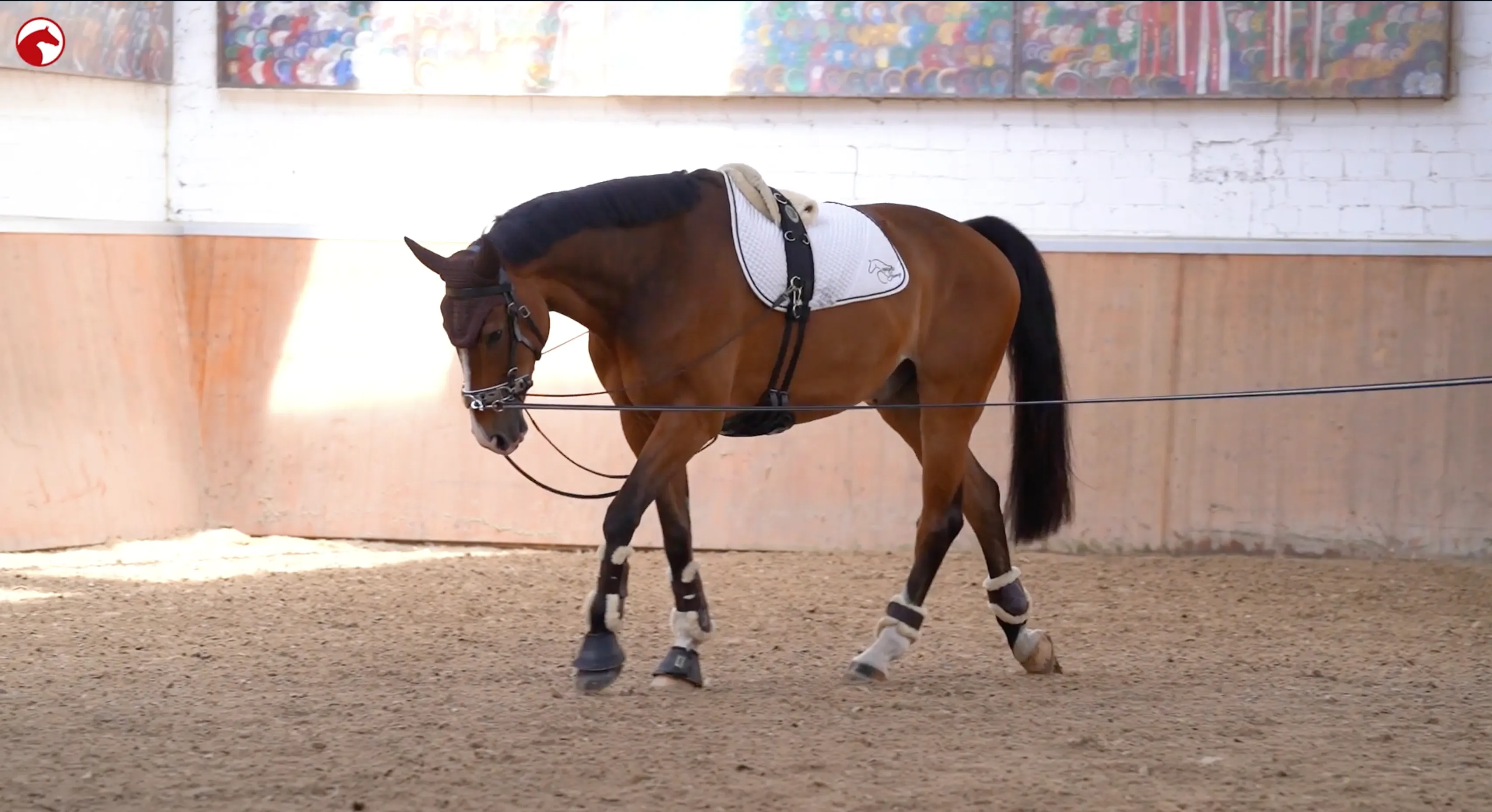
- early development via walkers, lunge rings, and first free-jumping exercises
At around 2.5 to 3 years of age, the first inspections and licensing events begin. Particularly talented young horses are licensed as part of the DSP Stallion Days. There, stallions are assessed not only for conformation and movement, but also for:
- health (e.g., X-rays)
- character
- willingness to perform
Performance tests
Licensed DSP stallions must complete a stallion performance test (HLP), either as a 14-day aptitude test or a 50-day test. The following criteria are evaluated:
- temperament
- rideability
- jumping ability
- basic gaits
DSP mares are also selected through performance tests (field tests or station tests) and mare-book inspections/registrations.
Sporting disciplines
Dressage
With bloodlines such as Quaterback, Don Diamond, or Belissimo M, the DSP stands for expressive movement, rhythm security, and ability to collect. In dressage, many DSP horses can be found up to Grand Prix level.
Show jumping
In the jumping arena, the DSP impresses with:
- quick reactions
- a powerful jumping technique
- a tactical canter
- top-level jumping aptitude
Names such as Chacco Blue, Landor S, or Lordanos shape the DSP scene here.
Eventing
In recent years, the DSP has increasingly proven itself “in the bush,” i.e., in eventing. The combination of courage, stamina, and intelligence, along with a natural canter, makes it a sought-after partner across country.
Driving & leisure riding
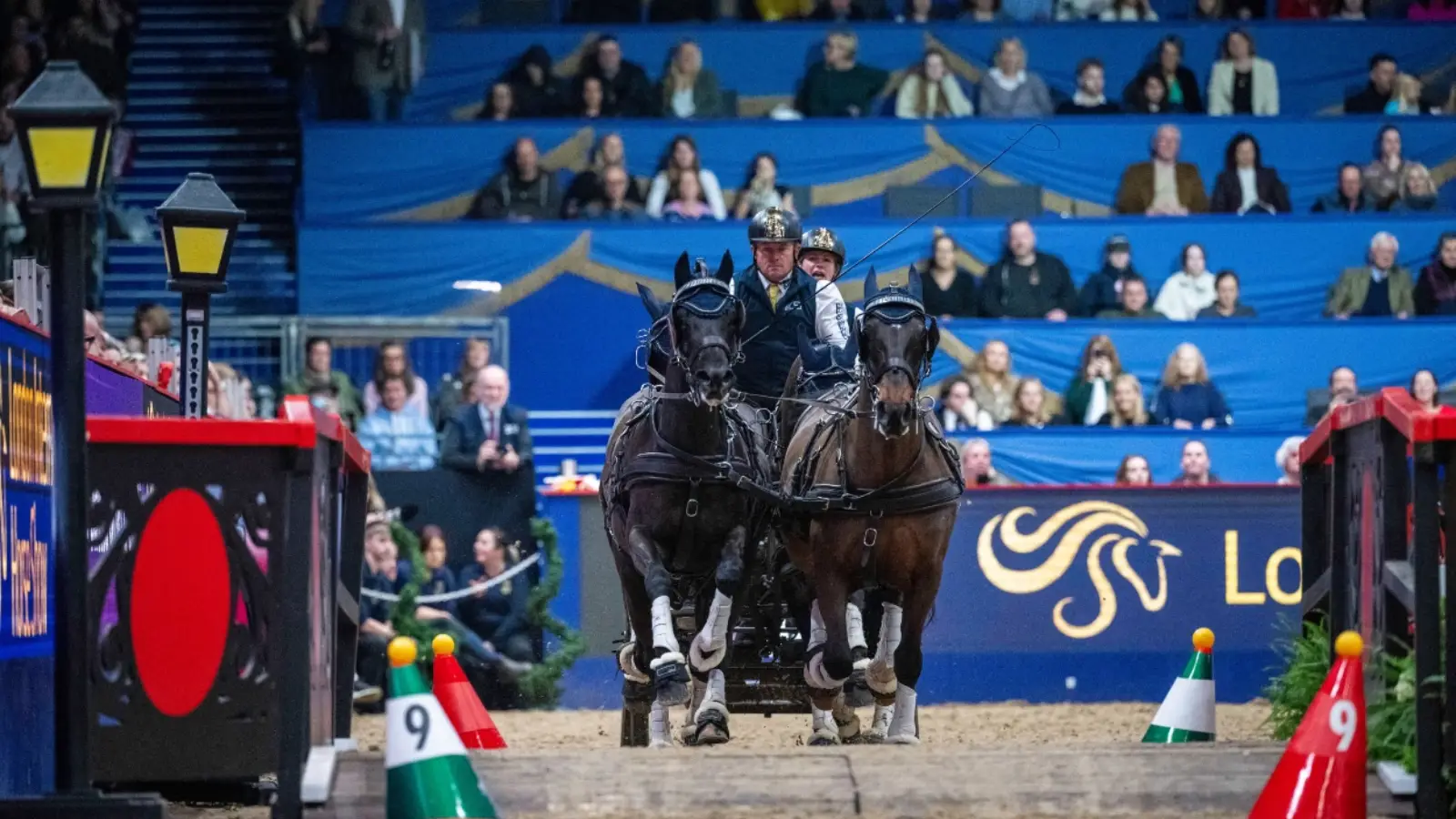
The DSP is also represented in driving. Drivers value balance, steadiness, and correctness of movement patterns. For ambitious leisure riders, the DSP can also be a loyal partner—provided it is chosen in a type-appropriate way.
Successful horses & international achievements
Sporting flagships
Some examples of successful DSP horses:
- DSP Alice (Simone Blum) – World Champion in show jumping 2018 in Tryon
- DSP Chakaria (André Thieme) – European Championship gold in show jumping 2021
- DSP Quantaz (Isabell Werth) – Grand Prix dressage
- DSP Dream Catcher – successes in international eventing competitions
Breeding championships & Bundeschampionat winners
Numerous DSP foals and young horses have attracted attention at the DSP championships, the Bundeschampionat, or in the Youngster Tour. This has shown that DSP progeny can keep pace with the best horses in Germany and Europe.
Marketing & events
DSP Stallion Days & elite auctions
Among the most important events are:
- DSP Stallion Days in Munich or Neustadt/Dosse
- elite foal auctions
- South German championships
These events not only provide insight into breeding quality, but are also an important marketplace for up-and-coming talent.
Online marketing & global presence
Through digital auction platforms, video presentations, and social media, DSP is now well positioned internationally. Purchases from the USA, Asia, or Scandinavia are not uncommon.
Suitability: Who is the German Sport Horse suitable for?
Future prospects & innovation
Research & performance data
The DSP breeding associations work closely with research institutions and performance centers such as the FN, the LFL Bavaria, or HfWU Nürtingen. The focus includes:
- recording sport performance data
- genomic selection
- health monitoring
Sustainability & species-appropriate horse keeping
Increasing emphasis is also placed on:
- sustainable breeding strategies
- horse-friendly management
- early development while preserving natural growth
Conclusion: high-performing, versatile, and future-proof
The German Sport Horse is a prime example of successful, modern horse breeding. The cooperation of regional breeding associations has created an international brand with a future. Whether dressage, show jumping, eventing, or driving—the DSP impresses with performance, intelligence, and character. It is the ideal partner for anyone looking for more than just a riding horse: a true sport talent with heart and presence.
FAQ – Frequently asked questions
How much does a good German Sport Horse cost?
Foals start at around €6,000–€8,000, young horses at approximately €15,000–€30,000. Well-trained sport horses can quickly cost €60,000–€150,000 or more.
Where can you buy DSP horses?
Through official auctions, breeding associations, stud farms, and also online via sales platforms and auctions.
Is the DSP suitable for beginners?
In principle, yes—but only if the horse has a calm character and good training. Not every DSP is automatically a beginner’s horse; advice from a trainer is recommended.
How long does a DSP live?
Like other warmbloods: 20 to 30 years, depending on management and health.
You might also like