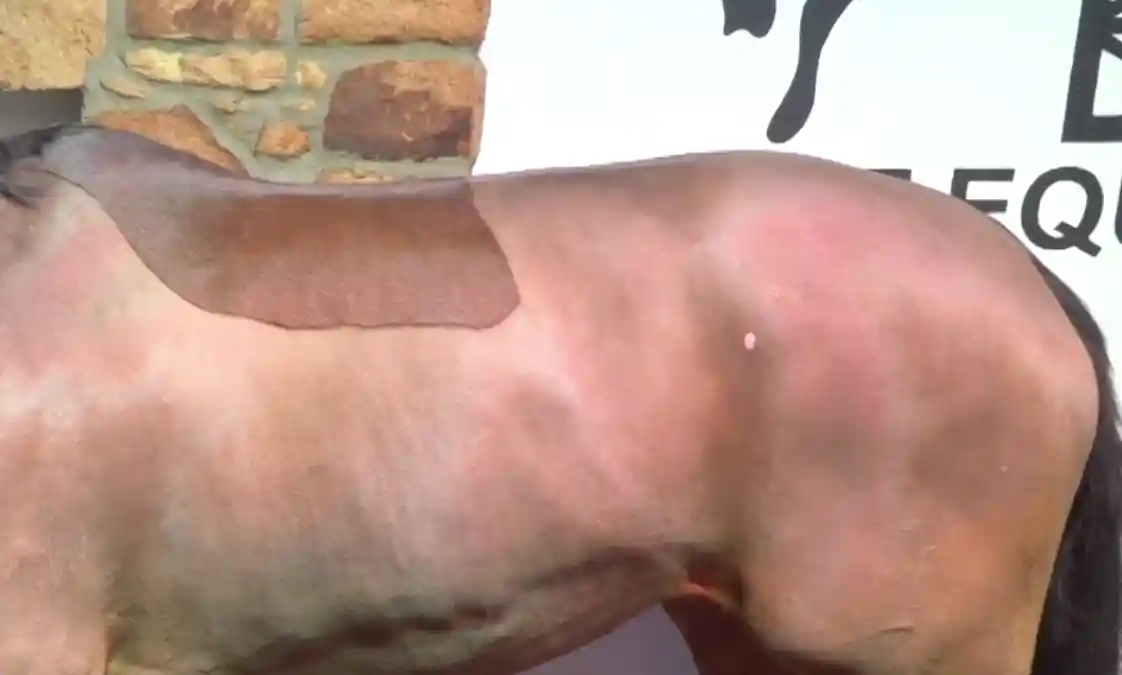
Side view of a horse's back.

Strengthen Your Horse’s Back: Exercises to Do at Home

The article shows you how you can specifically support and improve your horse’s back with simple exercises. You’ll get a step-by-step guide for at home

Table of Contents

🎥 Video tip: Relaxation for the horse’s back – these exercises can help!

In our ClipMyHorse.TV Academy, you’ll find an exclusive premium video on this topic that explains the routine in a comprehensive and expert way and offers valuable tips. The Academy gives you access to professionally produced, practical expertise—ideal for anyone looking to deepen their training knowledge in a targeted way.
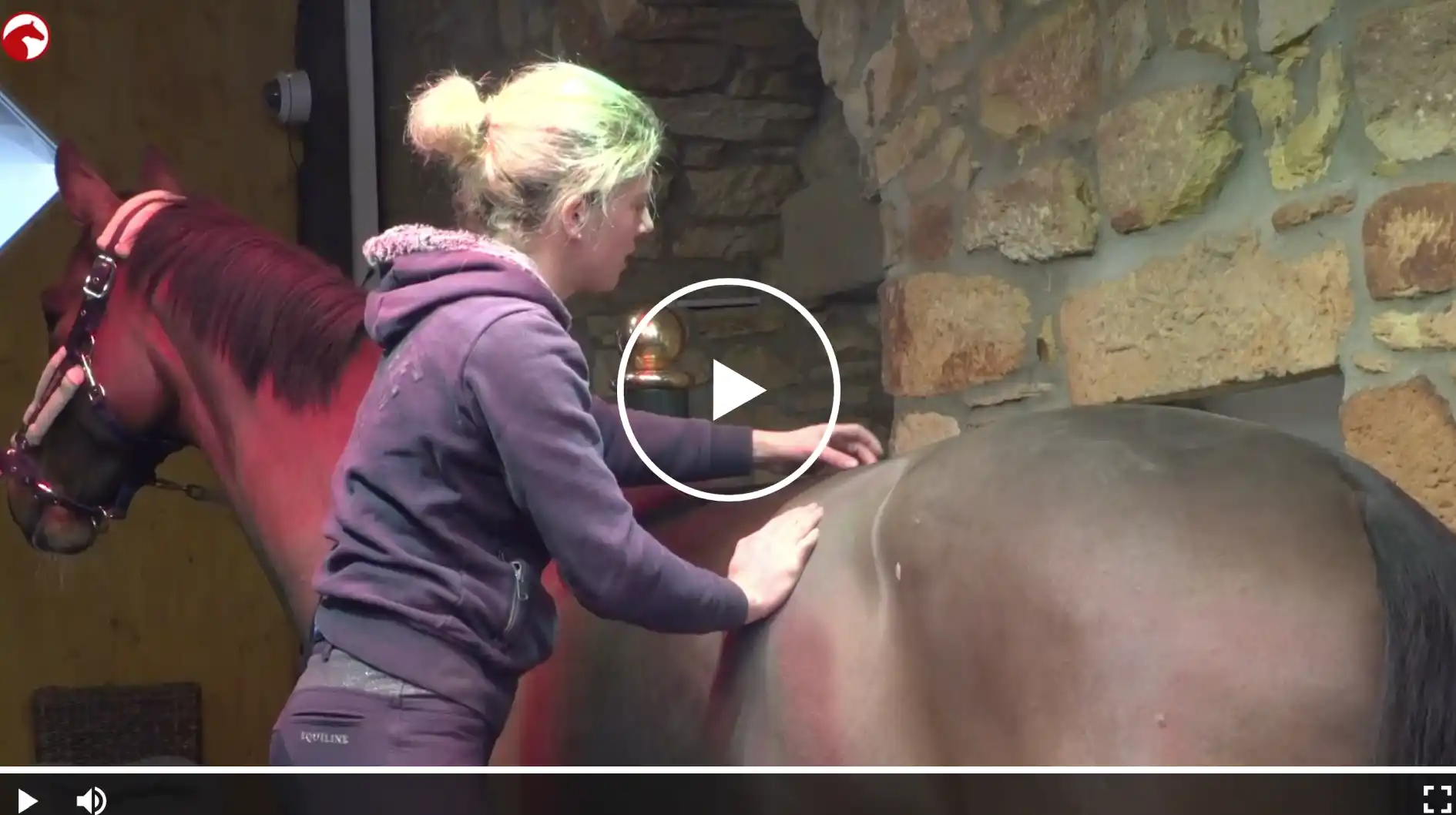
A horse physiotherapist palpates the back of a brown horse in a stable to assess its musculature and musculoskeletal system.

A healthy horse’s back isn’t just “loose”—it needs to be functionally capable of carrying weight. The goal is for the horse to support itself with its abdominal muscles, for the withers to lift noticeably, and for the movement to feel bigger, freer, and more even. The neck should reach into an elastic stretch from the withers, rather than the horse “running down into the ground.”

Problems are often caused by a tight back and tension in the long back muscle—and that’s exactly where the following at-home exercises come in.

Important note on performing the exercises:

Do all exercises slowly, carefully, and with feel. The aim is to relax the muscles. The exercises shown are not a substitute for professional physiotherapy treatment. If the horse becomes unwilling or appears sensitive or painful during the massage, a physiotherapist should be consulted.

❗ Please consult a veterinarian if the following signs occur:
Clear avoidance, inability to stand still, or defensive behaviour (ears pinned back, biting, kicking)
Strong reaction to very light pressure (e.g. “collapsing”, going “down on the knees”)
Suspected pain or if the situation escalates

The exercises are intended as gentle support and do not replace veterinary diagnosis or treatment if there are clear symptoms or significant issues.

Exercises: Step-by-step explained

Arching the back

Goal: Lift the back, relieve the long back muscle, support the thoracic spine.

How to do it:
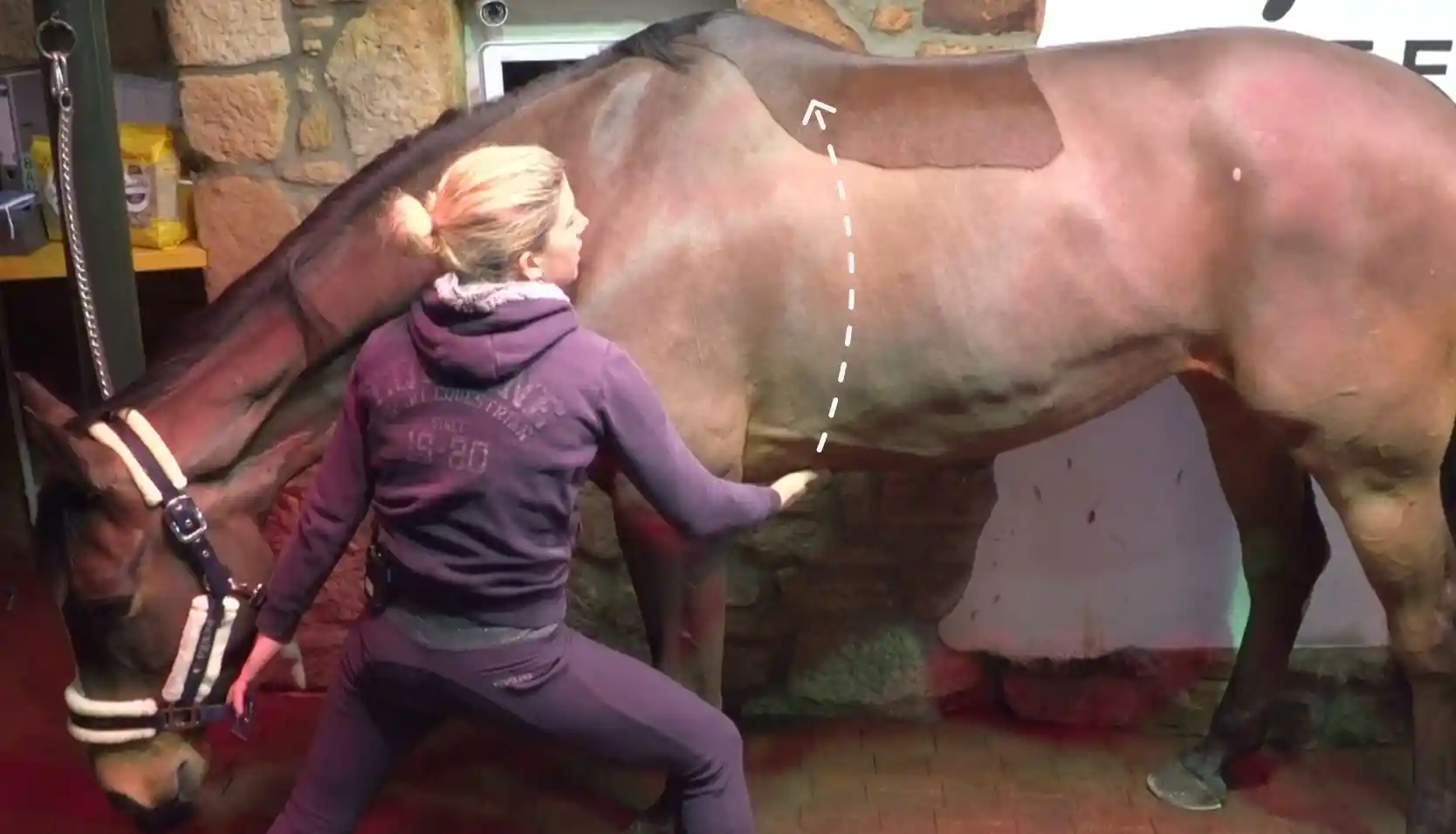
Step-by-step instructions:
1. Stand next to the horse.
2. Using your fingertips, gently move from back to front towards the head along the underline (belly/girth area).
3. The goal is for the back to visibly lift.
4. Pay attention: the head should lower rather than lift (without pulling).
Common mistakes: too much pressure, movements that are too rushed, holding the head up.
A therapist performs an exercise with the horse in the stable to support the back and abdominal muscles.

Skin folds in the girth area

Goal: Mobilize the tissue and loosen possible adhesions in the girth area.

How to do it:
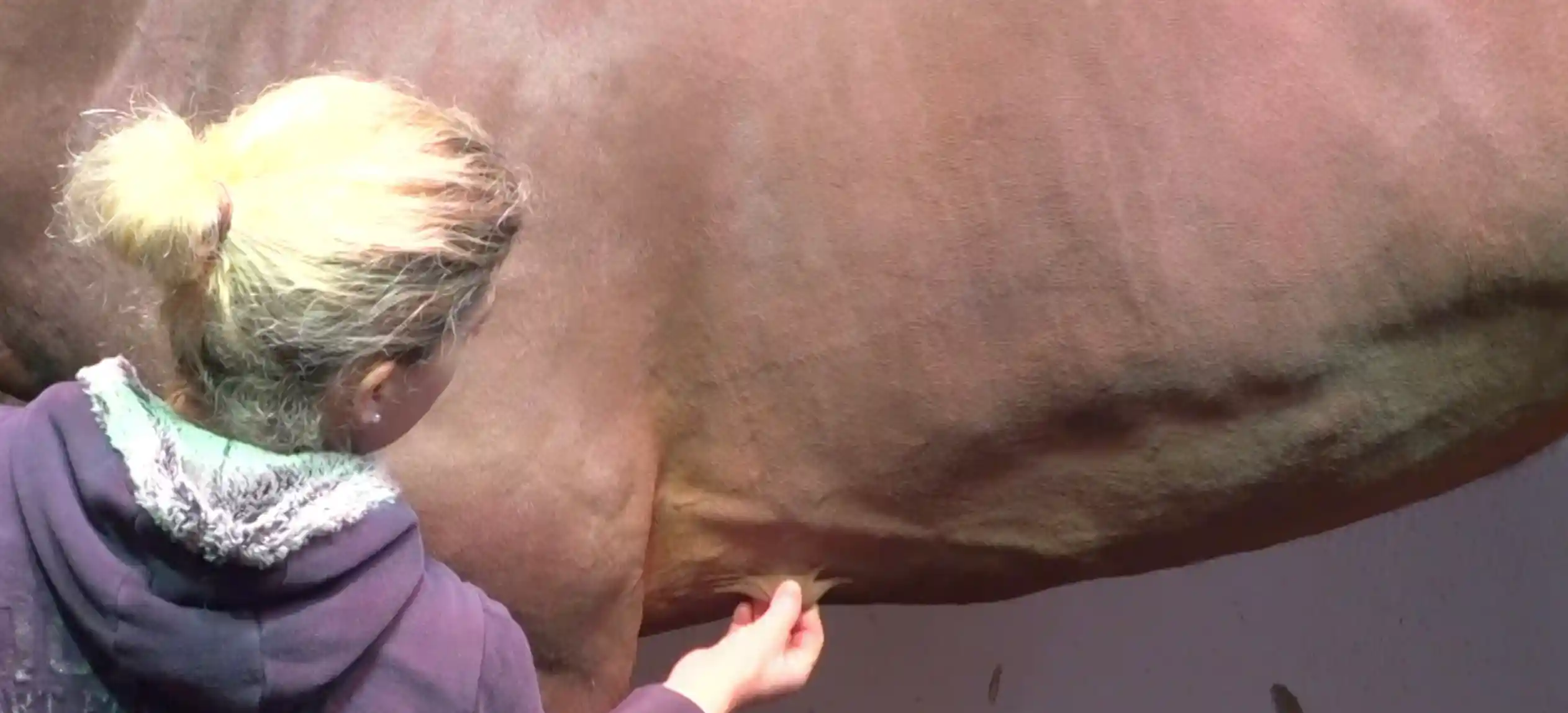
Helpful application:
1. Gently lift and move the skin in the girth area (no pinching, no jerking)
Close-up: A therapist gently lifts a skin fold in the girth area on a standing horse to keep the tissue mobile and release tension.

Gently rocking the withers

Goal: Loosen the shoulder and chest area, promote suppleness.

How to do it:
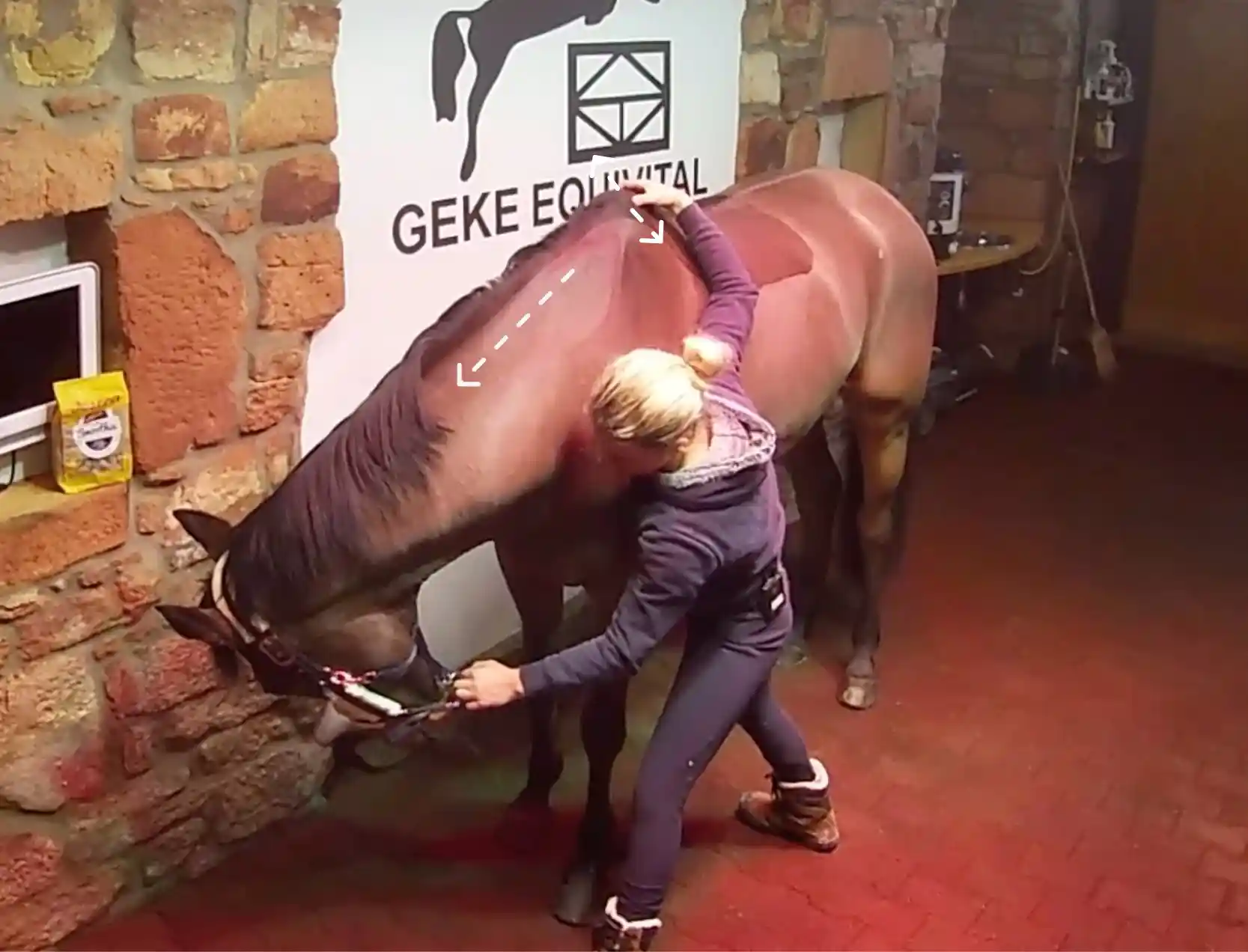
Step-by-step instructions:
1. Place one hand on top of the withers.
2. Use a very small movement to gently “rock” the horse slightly to the right and left.
3. Important: keep the back lifted, the head lower, and the horse relaxed.
Duration: 20–40 seconds, 1–2 rounds
A therapist supports the horse’s stretching posture in the stable by guiding the head and neck downward to relieve the topline and musculature.

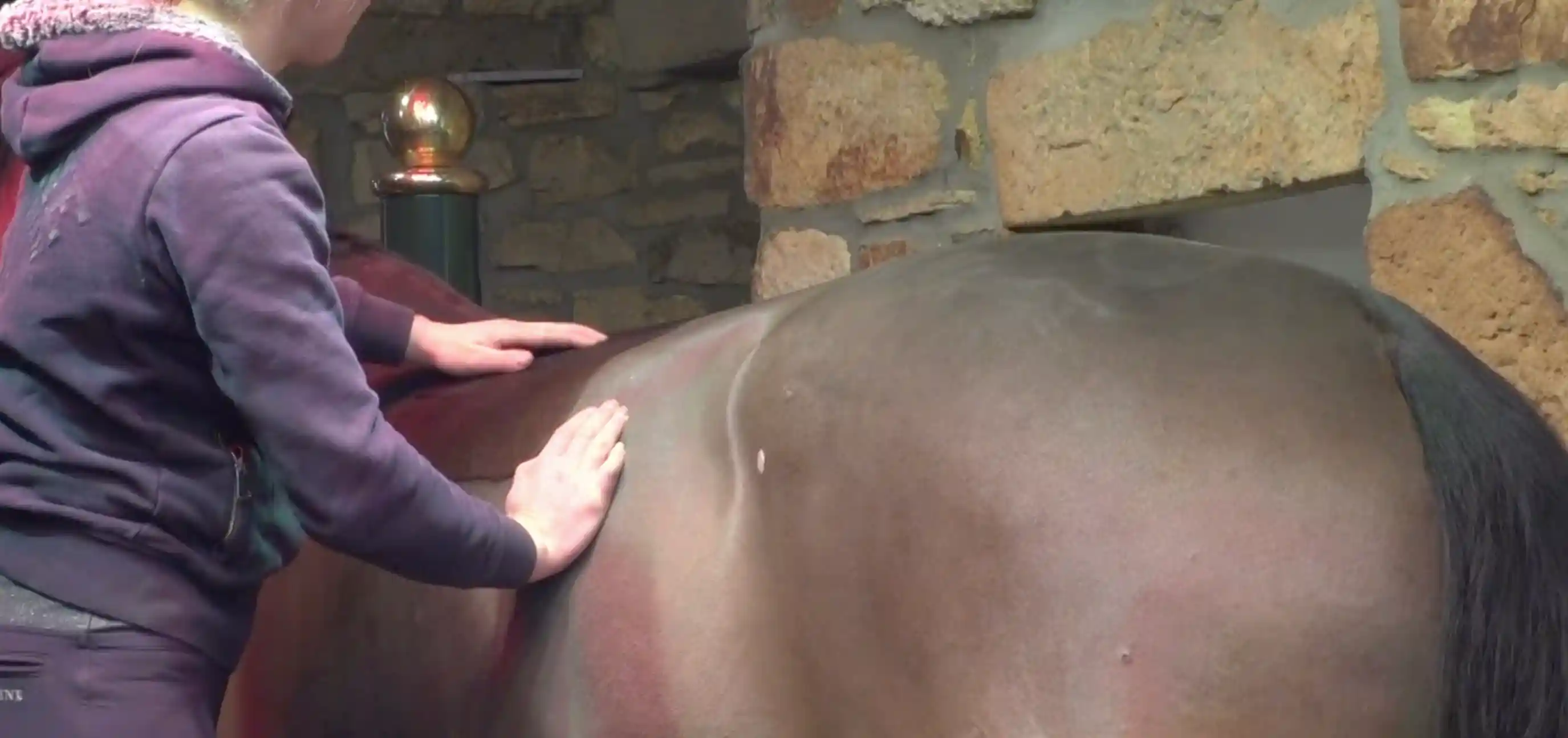
Massaging the back muscle

Goal: Reduce tension in the long back muscle and make the tissue more mobile.

How to do it:
Step-by-step instructions:
1. Work on both sides next to the spine — not on the spinous processes.
2. Apply light pressure “in and out,” moving slowly along the muscle fibres toward the back.
3. Optionally use the heel of your hand or both hands.
Remember: Too much pressure often makes the muscle harder rather than softer.
A therapist massages the horse’s back muscles alongside the spine to release tension and support mobility in the back.

Swinging the tail sideways

Goal: Gentle mobilization and promoting movement through the body.

How to do it:

Step-by-step instructions:
1. Stand slightly to the side behind the hindquarters (not directly behind the horse).
2. Hold the tail loosely and gently swing it to the right and left without pulling.
3. Optional: place your other hand on the back to feel the movement.
A therapist mobilizes the hindquarters of a standing horse by swinging the tail sideways to gently support movement of the spine.

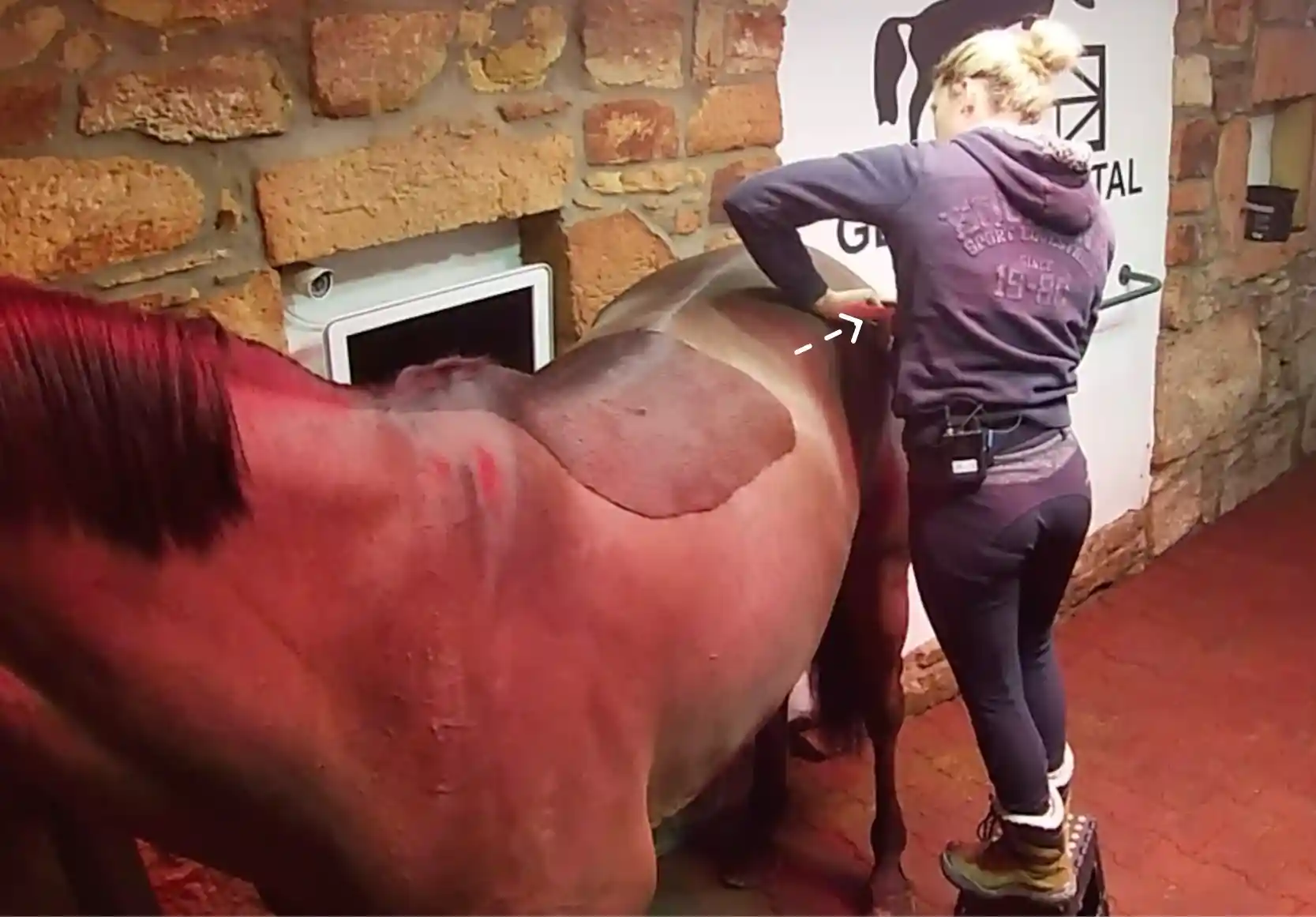
Loosening the gluteus and hip point

Goal: Relax the hindquarters muscles and bring gentle movement into the area.

How to do it:
Step-by-step instructions:
1. Massage the gluteal muscles calmly and over a broad area.
2. In between, add short, light swinging impulses using the tail.
3. Place your hand on the point of the hip and initiate a small movement with minimal pressure.
Stop signal: the horse collapses, hollows the back, or shows resistance → reduce pressure or stop.
A therapist massages the gluteal and croup muscles of a standing horse in the hindquarters area to release tension and promote mobility.
Close-up: A therapist massages the horse’s croup and gluteal muscles to release tension and support hindquarters mobility.

Massaging the hamstrings

Goal: Release tension and support suppleness in the hindquarters.

How to do it:

Step-by-step instructions:
• Massage broadly, slowly, and comfortably: the muscle should remain soft and able to move under your hand.
A therapist massages the hamstrings of a standing horse to loosen the hindquarters and support mobility.

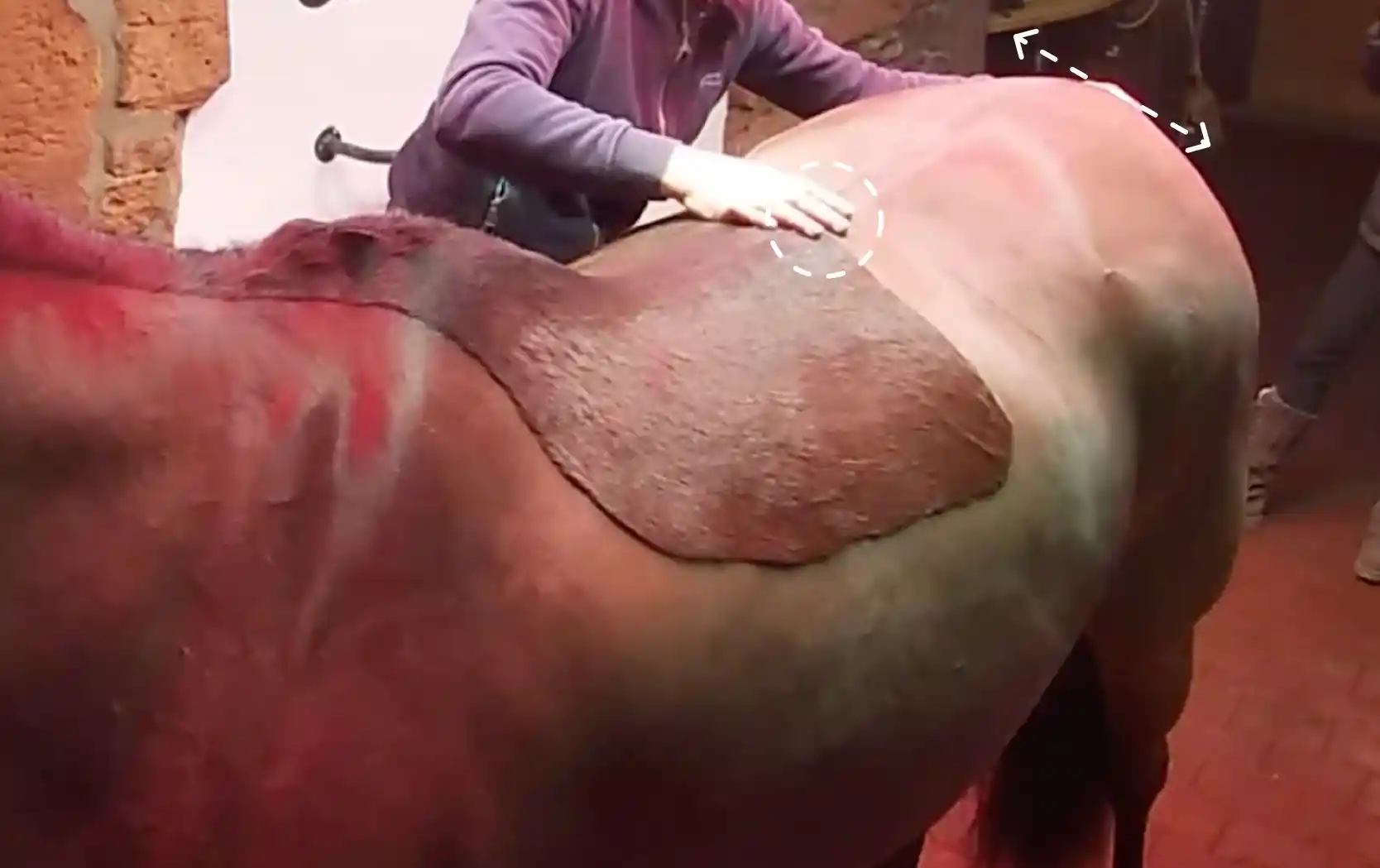
Loosening the lumbar area

Goal: Gently engage the fascia/tissue in the lumbar region.

How to do it:
Step-by-step instructions:
Goal: Gently address the fascia and tissue in the lumbar area.
1. Work next to the lumbar spine using a flat thumb (no fingernail!).
2. At the same time, very gently rock or apply small movement impulses using the tail.
A therapist loosens the lumbar and croup area of a standing horse with gentle pressure and shaking movements to make the back and hindquarters more mobile.

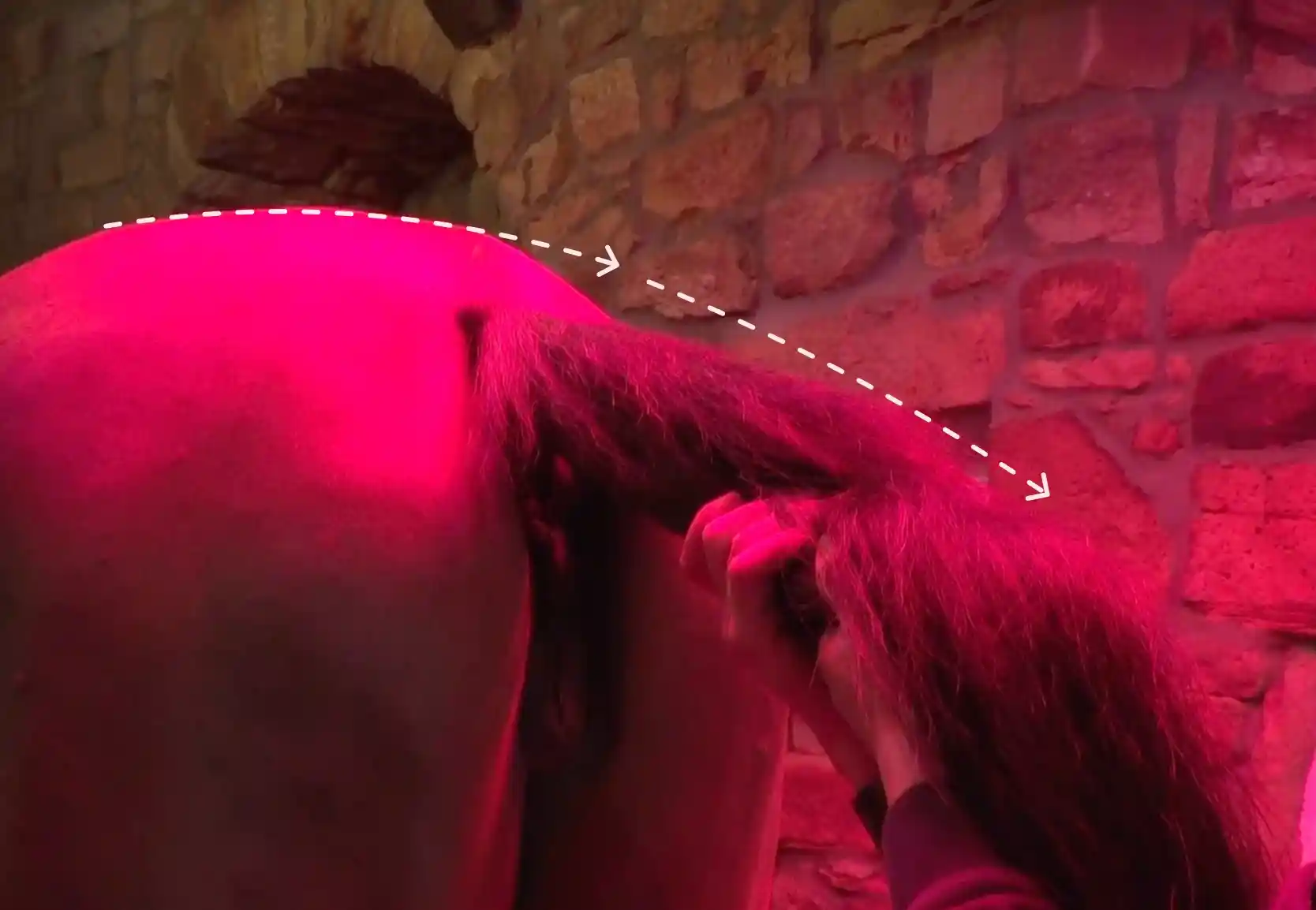
Tail base: gentle traction & tail circles

Goal: A relieving impulse in the lumbar area and mobility at the tail root.

How to do it:
Step-by-step instructions:
1. Position the horse squarely, standing slightly to the side (not directly behind the horse).
2. Hold the tail dock (do not pull on the tail).
3. Apply a light backward traction in line with the spine.
4. Optional: slowly circle the tail (both directions), if needed with minimal traction.
Good signs: the horse softens, chews, or leans very slightly forward.
Stop signal: tail clamping, strong resistance, kicking or biting → stop immediately.
A therapist applies gentle traction to the tail base of a standing horse to relieve the lumbar and sacral area and promote mobility.
A therapist mobilizes the tail root of a standing horse by gently circling the tail to loosen the lumbar and sacral area.

Conclusion

These exercises can help loosen the back, promote carrying capacity through the abdominal muscles, and detect tension early. The key is that your horse remains relaxed and that you work in a measured way. If there is pain or clear defensive reactions, the rule is: stop and have it assessed by a professional.

Author
Marie Kleiter DISCOVER CMH.TV

Tags