Exterior & Interior of the Horse: Assessing Conformation and Character
Correctly assessing a horse means more than just paying attention to beauty or temperament. Only the interaction between the exterior – that is, the physical conformation – and the interior – the horse’s character and behavior – shows whether a horse is physically and mentally suited for its intended use. In this article, you will learn what truly matters in a holistic horse assessment, which characteristics are relevant, and how to avoid common mistakes.
Table of Contents
What is Exterior – and what is Interior in horses?
When assessing a horse, you will quickly encounter two terms: exterior and interior. Both originate from French and roughly mean “outer appearance” and “inner nature.” In the context of horses, they describe two central aspects of evaluation—one you can see, the other you can feel.
The exterior includes all externally visible characteristics of the horse: from head to tail, from the neck set through the topline to the croup. Details such as leg conformation, the shape of the back, or the quality of the limbs are also part of it. The aim is to draw conclusions from the horse’s conformation about health, load-bearing capacity, rideability, and suitability for specific tasks.
The interior, on the other hand, refers to a horse’s behavior, psyche, and temperament. It concerns how a horse handles stimulating situations, whether it is willing to learn or rather stubborn, how quickly it becomes nervous, or whether it is easy to handle. These traits are not visible, but they become very apparent in daily work—and often determine whether a horse is a good match for humans.
Only the combination of exterior and interior provides a complete picture. A horse with good conformation but a difficult character can be just as problematic as one with a pleasant nature but clear exterior faults. Anyone who wants to assess horses should therefore keep both aspects in mind.
Why assessing exterior and interior is so important
Correctly evaluating horses is more than a snapshot—it is a combination of observation, experience, and knowledge. Assessing a horse’s exterior and interior helps you determine whether it is physically and mentally suited to your goals.
The exterior largely determines a horse’s physical resilience. A correct topline, a load-bearing wither, a well-muscled croup, and a clearly defined foundation allow for smooth movement and even weight distribution. The alignment of the cannon bone and hind legs also says a great deal about long-term soundness.
The interior, in turn, influences how well a horse copes with new situations, how it responds to training, and how reliable it is in everyday handling. A nervous or very temperamental horse requires a different approach than a calm type. This is especially important when you are looking for a leisure partner, a sport horse, or a reliable mount.
In short: anyone who wants to assess horses needs a holistic view. Only when exterior and interior complement each other does a coherent overall picture emerge—and a sustainable partnership between horse and rider.
Exterior in Horses: What Is Meant by Conformation
A horse’s conformation is more than just its outward appearance—it is the functional blueprint that determines how a horse moves, how much load it can carry, and which tasks it is suited for. Exterior assessment focuses on systematically identifying and evaluating this blueprint.
The most important characteristics at a glance
The exterior describes the horse’s external physical structure—its “conformation.” It is crucial for functionality, health, and suitability. The following features are key:
- Topline of the horse:It extends from the withers to the croup and influences carrying capacity as well as suppleness. A well-shaped, well-muscled topline is a prerequisite for healthy training loads.
- Midsection of the horse:As the central section, it connects the forehand and hindquarters. A harmonious body with sufficient rib spring allows for good breathing capacity and freedom of stride.
- Neck set of the horse:The transition from neck to body should be soft and low, enabling the horse to balance well and step into the contact.
- Withers of the horse:A clearly defined withers is important for saddle stability and shoulder freedom. It should be long and not too low.
- Croup of the horse:A slightly sloping, well-muscled croup supports impulsion from the hindquarters. Its shape directly affects the canter and the ability to collect.
What does the horse’s foundation indicate?
The foundation includes the limbs—fore and hind legs, including joints, tendons, and hooves. It shows how resilient the horse is and how correctly it stands. Deviations such as overly steep or overly soft pasterns, narrow or wide stance, or asymmetries indicate potential strain or soundness issues.
The role of the horse’s legs, cannon bone, and hind legs
The horse’s legs must be correctly aligned and clearly defined. The cannon bone, in particular, plays a key role in stability—it should be straight, strong, and free of bony changes. The hind legs provide insight into impulsion and weight-bearing capacity. Good angulation of the hock and correctly aligned hind legs are essential for healthy movement mechanics.
Recognizing Common Exterior Faults
Hardly any horse is anatomically perfect—minor deviations from the ideal are normal and often unproblematic. However, certain exterior faults occur more frequently and, depending on their severity, can negatively affect a horse’s long-term health, rideability, or suitability for use.
Stag neck in horses
A stag neck is characterized by an overly developed upper neck musculature combined with a weak underside. It often occurs together with a high head carriage and a stiff topline. Functionally, this leads to problems with stretching into the contact—the horse finds it difficult to reach to the bit, shows tension at the poll, and tends to evade or brace. Especially in dressage, this makes relaxation and steady contact more difficult.
Swan neck in horses
A swan neck may look elegant at first glance—the neck is strongly arched and the transition to the head is often fine. Functionally, however, this shape carries risks: the pronounced curve can restrict mobility at the poll, disrupt the connection to the topline, and lead to irregularities in rhythm. Horses with a swan neck more often show difficulties when backing up or in collected work, as the neck cannot be integrated well into overall balance.
Cow-hocked in horses
Cow-hocked horses show an X-shaped alignment of the hind legs: the hocks are set too close together, and the hooves point outward. This misalignment causes uneven loading of the hindquarters, which can lead over time to overuse injuries, tendon damage, or issues in the sacroiliac joint. Impulsion from the hindquarters is also reduced, which becomes particularly noticeable in the canter or when jumping.
Steep croup in horses
A strongly sloping or steep croup negatively affects the horse’s ability to push from behind and take weight. Horses with this type of croup tend to step under less effectively, often show a flat, weak canter, and struggle with collection. In trot work, they also often lack dynamics and swing.
Short back
A short back can seem positive at first—the horse appears compact and strong. But if the back line is too short, the necessary elasticity in movement is often missing. Horses with a short back have a more limited range of motion, tend to show stiff transitions, and can tighten up more quickly under taller/heavier riders or with sustained work.
Long back
An overly long back often leads to stability issues. These horses frequently struggle to carry the rider’s weight evenly and can look “loose” or unstable in their movement. The back and abdominal muscles must be trained intensively to counteract tension and a sagging topline. In collection, long-backed horses find it significantly harder to take weight behind.
Important for the assessment:
No single trait determines a horse’s value or usability. What matters is always the interaction of all factors—both physical and mental. A horse with a minor exterior fault but a stable interior, good rideability, and sensible training can, in practice, be reliable, motivated, and willing to perform.
That’s why exterior faults should never be assessed in isolation, but always in relation to the overall impression, the intended use, and the horse’s individual strengths.
Assessing the exterior—step by step
Systematically assessing a horse requires more than a quick glance. To form a clear picture of the horse’s conformation, you should proceed in a structured way. The following steps will help you capture and classify relevant features.
Interior in Horses: Understanding and Assessing Character
While the exterior is visible and measurable, the interior is revealed through behavior—often subtly, but just as decisively. It describes a horse’s inner disposition: its personality, temperament, and emotional stability. Anyone who wants to assess a horse should take these “soft factors” seriously, as they determine how well the cooperation between horse and human works.
What exactly does interior mean in horses?
The interior describes a horse’s inner qualities: its character, response patterns, temperament, and mental state. It is the counterpart to the exterior, which captures the physical conformation. While the exterior is measurable and visible, the interior becomes apparent through behavior and daily handling.
Key aspects of the interior include:
- Nervous strength and resilience
- Willingness to cooperate
- Learning behavior
- Social behavior toward humans and other horses
- Temperament
It is also important to note that the interior is not purely innate. Management, training, and experiences play a major role in shaping a horse’s behavior. Nevertheless, there are clear basic types—some horses are naturally sensitive, others naturally confident. Recognizing and correctly interpreting these differences is the key to a successful partnership.
Recognizing a Horse’s Character Traits
A horse’s nature does not reveal itself at first glance—it shows in small gestures, reactions, and the way it interacts with its environment. Anyone who wants to assess the interior correctly needs powers of observation, patience, and a good sense for nonverbal communication.
Typical character traits in horses can be grouped into several areas:
- Temperament: Is the horse rather lively, nervous, or calm?
- Nervous strength: How does it react to new stimuli or unfamiliar situations?
- Willingness to cooperate: Does it work with the human or resist?
- Learning behavior: How quickly does it understand new tasks—and how well does it retain them?
- Dominance behavior: Does it act confidently or submissively?
A temperamental horse often shows a lot of energy, quick reactions, and a high level of tension. This can be an advantage in sport, but it requires experience in handling. A horse with strong nerves, on the other hand, remains calm even in new environments and is reliable in hacking or competition settings.
Horses with a high willingness to cooperate are easy to handle, remain responsive, and show a readiness to work. Others appear more independent, prefer to follow their own ideas, or test boundaries—this is not necessarily negative, but it does require tact and sensitivity in training.
Assessing the interior also includes the question: how quickly does a horse recover after excitement? Does it calm down again after a spook, or does it remain nervous? This ability to self-regulate is an important indicator of inner stability.
The best information about a horse’s interior comes from everyday handling: during grooming, leading, tacking up, lunging, or riding. Pay attention to the horse’s gaze, body tension, and reactions to touch and voice. All of this gives you clues about how the horse thinks and feels—and whether it suits you.
Is there such a thing as a “good” or “bad” interior?
At first glance, the answer seems clear: a horse with a good interior is balanced, willing to learn, and mentally resilient—pleasant to handle, in other words. But it is not that simple. Whether an interior is perceived as “good” or “bad” depends largely on the intended use and on the expectations of the rider or handler.
A sensitive, temperamental horse can bring exactly the right energy for competitive sport—it reacts finely to aids and often shows a great deal of expression. For a beginner’s leisure horse, however, the same disposition would be less suitable: constant alertness and high reactivity make handling more demanding.
Conversely, a calm, phlegmatic type may seem pleasantly uncomplicated at first. Yet in daily work it can be difficult to motivate such a horse to active participation. Riders with ambitious sporting goals may therefore struggle with this type of interior.
What matters, then, is not whether a horse is “good” or “bad,” but whether its character suits the person and the task. The key question is: is the horse mentally capable of doing what is expected of it—and does it feel comfortable in that role?
A balanced interior is often the result of genetic predisposition, appropriate management, and fair training. Horses that trust their caregivers and feel secure show their true character clearly and honestly—and that is valuable in any context.
Is a horse’s interior also dependent on its breed?
The question of whether a horse’s interior is breed-dependent can be answered clearly with: partly, yes. Each horse breed has been selectively bred over generations for specific purposes—and not only conformation, but also character played a central role in this process.
Many warmblood breeds, such as the Hanoverian or Oldenburg, are considered willing to perform, resilient, and eager to learn—traits that are highly valued in dressage and show jumping. Draft horses, such as the Rhenish-German Coldblood type, were bred for calmness and pulling power: they are typically steady in character, strong-nerved, and unflappable. Thoroughbreds, by contrast, are known for their sensitivity, speed, and often pronounced temperament.
So-called hardy breeds such as Icelandic horses, Fjord horses, or Haflingers also show typical character traits. They are usually sure-footed, independent, and intelligent—qualities that make them ideal leisure horses, but that can also be demanding in everyday handling.
Despite these tendencies, the following always applies: within every breed there are individual differences. Not every Quarter Horse is laid-back, and not every Arabian is nervous. A horse’s interior is always shaped by management, training, and experience as well. Nevertheless, knowledge of breed-typical character traits helps to place expectations more realistically.
Especially with crossbreeds or horses of unclear ancestry, it makes sense not to rely on breed stereotypes, but to view each horse individually—and to get to know its interior through direct interaction.
How important is the interior?
The interior is often the underestimated part of horse assessment—yet in everyday life it matters more than even the most beautiful conformation. A good interior is the foundation for trust, cooperation, and long-term enjoyment when working with a horse. It influences how a horse learns, how it copes with stress, and how reliably it reacts in different situations.
A correctly built horse with refined exterior qualities is of little use if it is permanently spooky, aggressive, or unwilling. Conversely, a physically unremarkable horse with a balanced nature, willingness to work, and eagerness to learn can be a valuable partner—both in leisure riding and in sport.
The importance of the interior becomes especially clear in the long term:
- In everyday handling, it determines how safe interactions are.
- In training, how quickly progress is made.
- In sport, how consistently a horse performs—even under pressure.
- In management, how well it integrates into a herd or routine.
Especially for beginners, children, or older riders, the interior is often the decisive factor. A strong-nerved, people-oriented horse provides security, makes learning more enjoyable, and reduces the risk of misunderstandings.
Conclusion: Just as a building is unstable without a solid foundation, a riding partnership remains fragile without a stable interior. Anyone who wants long-term enjoyment and success with their horse should sharpen their focus on the inner qualities just as much as on the outer ones.
Learning to Assess Horses Correctly: Tips for Practice and Training
Observe, evaluate, take notes
A well-founded horse assessment does not start with numbers or technical terms, but with patient observation. Take your time to look at a horse calmly—both standing and in motion. Pay attention to its body language, facial expression, the carriage of head, neck, and tail, as well as muscle tension.
Observe the horse in different situations:
- when being led out of the stall
- during grooming and tacking up
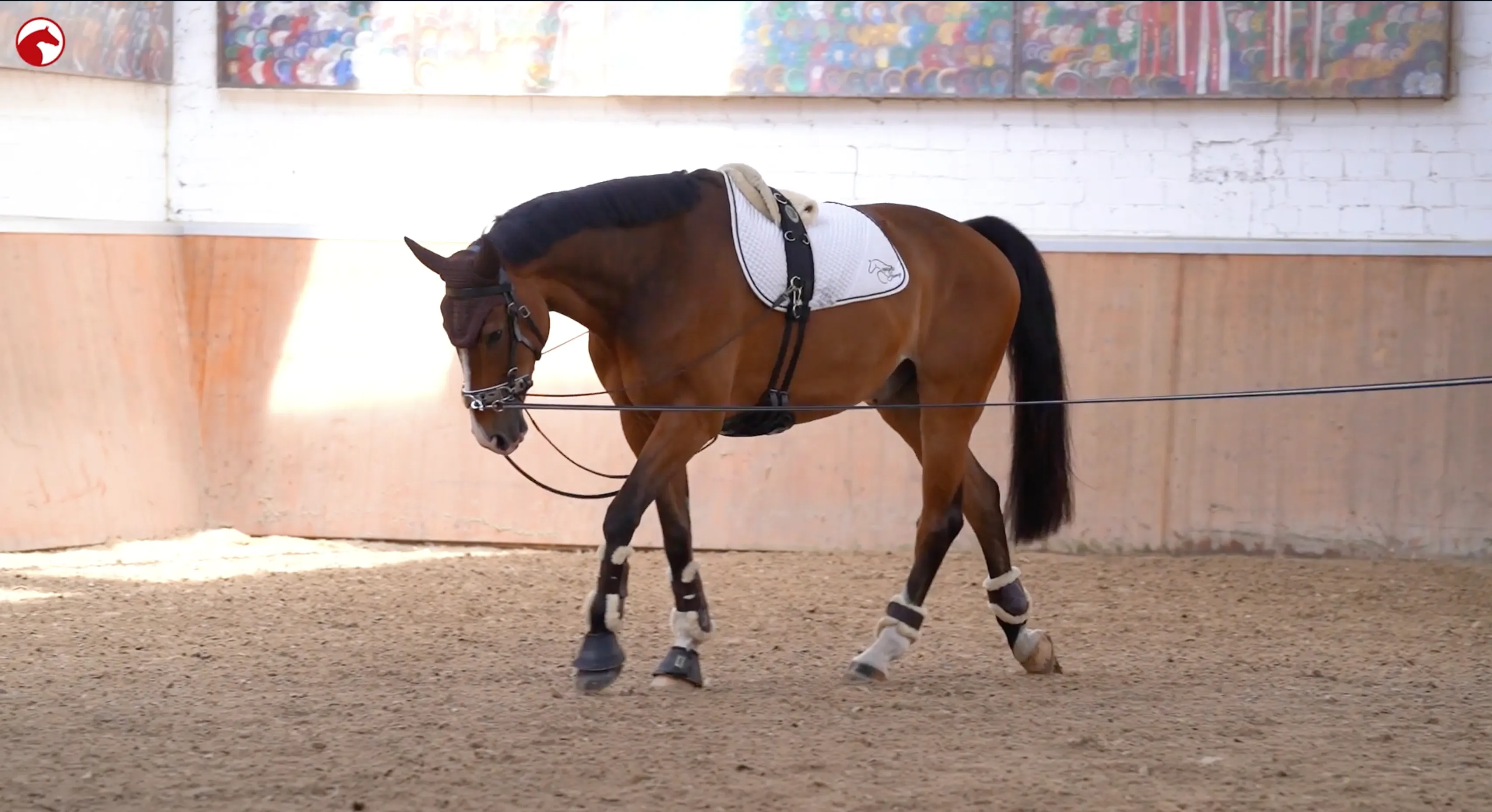
- when being lunged or moving freely
- in contact with other horses
- when handled by unfamiliar people or exposed to unknown stimuli
These everyday situations reveal a lot about the interior: is the horse curious or cautious? Does it react hectically or thoughtfully? How quickly does it settle again? Movement patterns also tell you something about the functionality of the exterior-for example, carrying capacity, balance, looseness, or possible limitations.
It is important not to keep observations only in your head. Record unusual findings as well as positive traits. Notes help you develop a more objective picture and avoid being misled by first impressions. Comparing several horses also becomes easier when you clearly document your impressions.
Tools: Assessment Sheets, Sketches, Photos
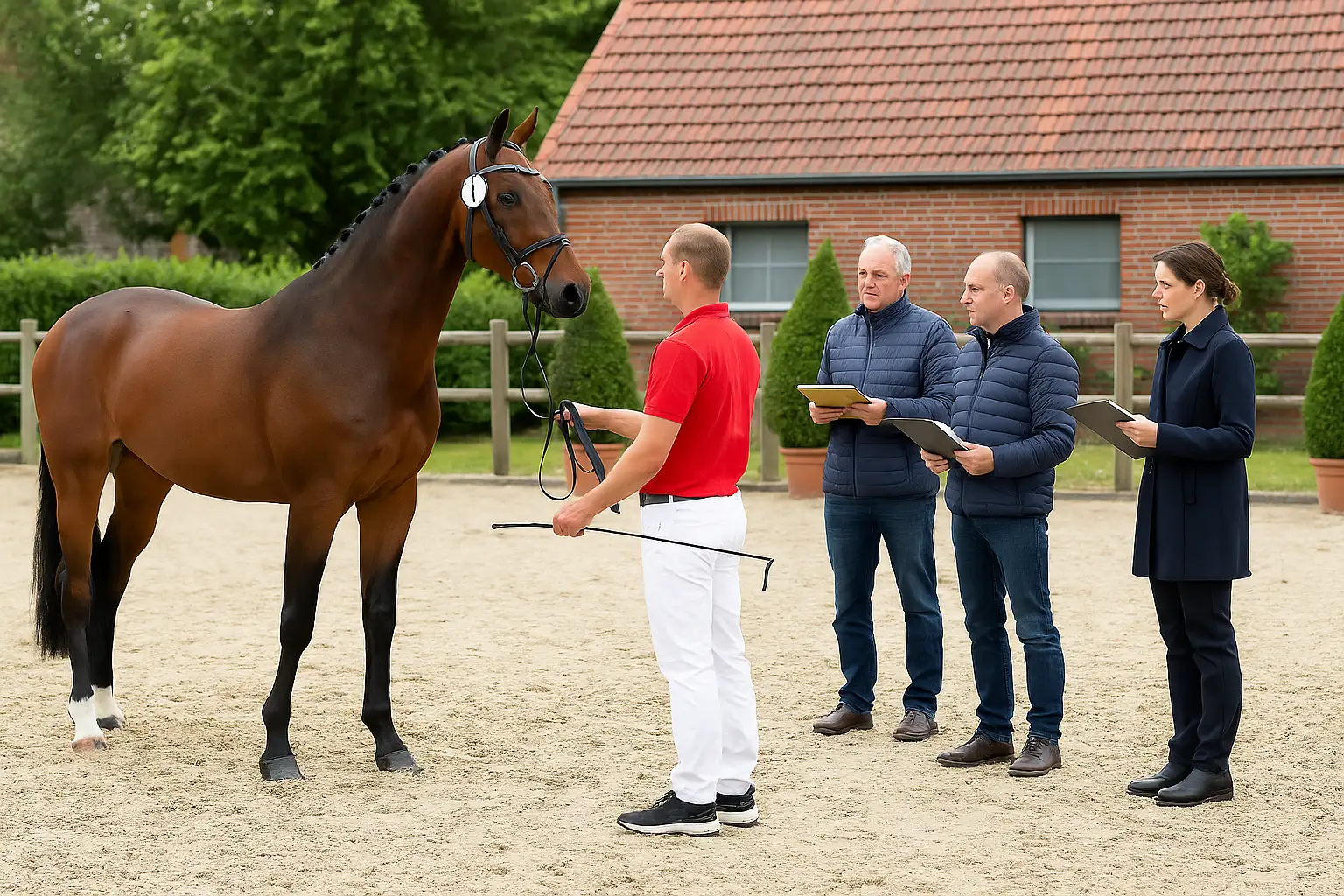
Professional assessments-such as those at breeding events or in training contexts—use structured templates. Assessment sheets divide the evaluation into individual areas: exterior, interior, movement, behavior, and special features. This creates comparability and helps ensure that no details are overlooked.
Personal sketches or diagrams are especially useful when you want to record anatomical proportions or limb alignment. Even simple line drawings help train your eye for detail.
Photos and videos are also valuable tools:
- side, front, and rear views in stand
- recordings at walk, trot, and canter
- short clips during handling or exposure to environmental stimuli
They allow you to review impressions later or obtain external assessments—for example from trainers, veterinarians, or experienced horse professionals.
Avoiding Mistakes: What Is Often Overlooked at First Impression
Many assessments fail because of personal bias—often unconsciously. A striking coat color, a “refined” head, or an impressive build can obscure functional weaknesses or character issues. Likewise, inconspicuous horses with an unremarkable exterior are often underestimated, even though in practice they may be reliable, willing to work, and mentally resilient.
A common mistake is observing a horse in only one situation—for example during a pre-purchase examination or a test ride. Yet many essential traits only become apparent in everyday life: how does the horse behave on the walker? How does it react to changes in daily routine? How quickly does it build trust?
Behavior in stressful or conflict situations is a particularly valuable indicator. Does the horse remain responsive? Does it become hectic, or does it withdraw? Such reactions cannot be trained—they reveal the true stability of the interior.
Therefore, the rule is: observe a horse over several days and in different contexts. Talk to previous caretakers, ask targeted questions, and listen to your gut feeling. Not everything is measurable—but much can be sensed if you look closely.
Conclusion: How to Achieve a Holistic Horse Assessment
Assessing a horse solely by its appearance or solely by its behavior falls short. An evaluation only becomes truly meaningful when exterior and interior are considered together. Conformation influences what a horse can physically achieve—character determines how it cooperates with humans.
A harmoniously built horse with a load-bearing back, a sound foundation, and balanced musculature offers ideal prerequisites for health and rideability. Yet without the appropriate inner qualities—namely mental resilience, willingness to learn, and readiness to cooperate—it will not become a reliable partner.
Conversely, a horse with minor exterior faults can function excellently in everyday life if it has a stable, people-oriented, and resilient interior. Experience shows that the “ideal” horse is not the perfect model, but the one that is physically and mentally suited to its specific task.
A well-founded assessment is always also a matter of responsibility.
Anyone who buys, trains, or places a horse should look beyond outward appearance and view the animal holistically. This means observing attentively, applying knowledge, reflecting on experience—and honestly evaluating whether horse and human are a good match.
In the end, it is not about ratings on paper, but about long-term partnership, well-being, and safety—for both sides.
Frequently Asked Questions About Assessing Exterior and Interior in Horses
What does “cow-hocked” mean in a horse?
A cow-hocked horse shows an X-shaped alignment of the hind legs: the hocks are close together while the hooves point outward. This misalignment leads to uneven loading and can cause long-term joint and tendon problems.
What is a stag neck – and why is it problematic?
A stag neck is a conformational deviation in which the upper neck muscles are strongly developed while the underline is weak. Horses with a stag neck often carry their head high and have difficulties with stretching and relaxation.
How can you identify a steep croup?
A steep croup is noticeable by its sharply sloping profile—the transition from the back to the tail appears abrupt and steep. Functionally, it restricts impulsion from the hindquarters and makes engagement and collected movements more difficult.
What is the opposite of a good interior?
A “poor” interior may show, for example, as nervousness, lack of willingness to cooperate, low motivation to learn, or dominant behavior. Context is always important—what is considered problematic in sport may be unproblematic in a leisure setting.
How can I assess a horse’s interior?
The interior is reflected in behavior—for example during grooming, leading, saddling, or in new situations. Pay attention to reactions, body language, self-regulation after stress, and how the horse handles unfamiliar stimuli. An honest assessment takes time and comparison.
Which is more important: exterior or interior?
Both are crucial—and should be considered together. Good exterior provides the physical basis for health and performance. Good interior ensures safety, cooperation, and willingness to learn. The combination is what counts.
Is there an ideal body type for every horse?
No, the ideal body type depends on the intended use. A show jumper requires different qualities than an Icelandic horse or a therapy horse. What matters is that the conformation is functional, harmonious, and suited to its purpose.
You might also like