Kissing spines in horses: shock diagnosis - And now?
Kissing spines is a common spinal condition in horses. Learn everything about the causes, symptoms, diagnostic options, and the most effective treatment approaches, including medication, physiotherapy, and targeted muscle building. You will also discover how to train your horse correctly and which preventive measures can help reduce the risk. Explore valuable expert tips now to support your horse’s long-term back health and overall well-being.
Table of Contents
Kissing Spines Syndrome: Definition
Kissing spines syndrome describes a painful equine spinal condition in which the dorsal spinous processes of the vertebrae come so close together that they touch or even overlap. This contact can lead to pain, inflammation, and restricted movement. Horses that are trained incorrectly or put under rider weight too early are particularly often affected. Kissing spines in horses can be diagnosed with X-rays and treated with a combination of medication, physiotherapy, and targeted muscle building.
➡️ Video Tip: What is kissing spines? Our video explains the symptoms, diagnosis, and treatment options for this equine back disorder, with visual explanations to help you better understand how the horse’s spine works.

Kissing Spines: Causes
There are numerous factors that can contribute to the development of kissing spines in horses. These may result from training mistakes as well as from anatomical predispositions. The most common causes include incorrect riding, insufficient topline and back muscle development, or a poorly fitting saddle. Genetic predisposition and orthopedic issues such as bone spavin can also play a role. In the following table, you will find a detailed overview of the most common causes:
Symptoms of Kissing Spines in Horses
The following table provides an overview of the most common symptoms that can occur in horses with kissing spines. The severity of the symptoms can vary greatly from horse to horse, depending on the individual horse’s pain sensitivity, the stage of the condition, and other factors such as training and tack fit.
The severity levels shown in the table are intended as a general guide. It is important to note that the severity of the symptoms does not always directly reflect the extent of the condition. For this reason, if kissing spines is suspected, it is essential to consult a veterinarian to obtain an accurate diagnosis and the most appropriate treatment plan for the horse.
Kissing Spines: Diagnosis
➡️ Video Tip: Diagnose kissing spines with X-rays. See how the radiographic process works and how veterinarians assess the position of the dorsal spinous processes in order to make an accurate diagnosis and create an appropriate treatment plan — a fascinating insight into equine veterinary medicine.

Clinical examination:
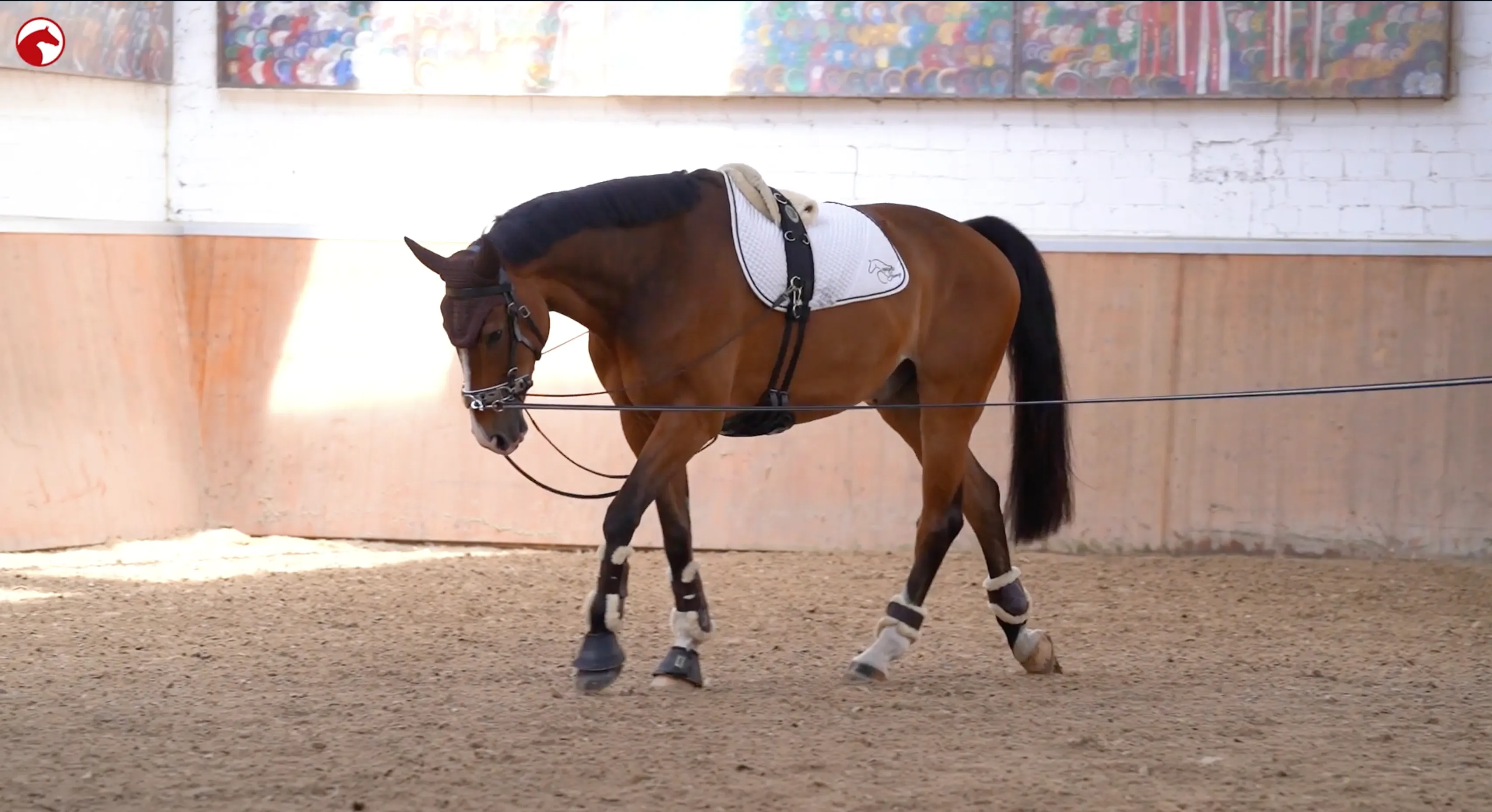
The veterinarian begins with a thorough physical examination. The horse is palpated to identify painful areas in the back and regions of muscle tension. When the horse is worked on the lunge, it often becomes clear that it has difficulty maintaining balance or bending correctly. A surcingle can also reveal problems, as horses with kissing spines often appear stiff or fail to move in a relaxed way. In addition, the horse is assessed under saddle to determine whether the lack of rideability is caused by pain or by training-related issues.
X-rays:
Radiographs are one of the key diagnostic tools for kissing spines in horses. The examination does not only assess the surface of the dorsal spinous processes, but also deeper parts of the spine such as the vertebral bodies and articular joints. This helps determine the full extent of the problem, since deeper structures are often involved as well and may not be visible at first glance.
After the clinical examination and the X-rays, there are further methods to assess the significance of kissing spines more precisely. One option is diagnostic anesthesia, in which the affected area is numbed to see whether the horse moves better afterwards.
Ultrasound can also be used to detect soft tissue changes, such as ligament injuries. Another diagnostic method is scintigraphy, which shows whether the painful areas are actively inflamed and whether deeper structures such as the facet joints may also be affected.
Treatment options for kissing spines
➡️ Video Tip: Pain-free despite kissing spines. Learn how anti-inflammatory medication and targeted injections can improve mobility and relieve pain — with a detailed look at the medical treatment of this equine back condition.

Medication for the Treatment of Kissing Spines
Medication plays a central role in the treatment of kissing spines in horses. In most cases, non-steroidal anti-inflammatory drugs (NSAIDs) are used to relieve pain and reduce inflammation. In addition, local injections of corticosteroids or other pain-relieving medications can be administered directly into the affected area of the spine. This targeted treatment often provides rapid relief and can improve the horse’s mobility and rideability. In some cases, however, drug treatment is only the first step and should be combined with further therapeutic approaches.
Physiotherapy and Osteopathy
Physiotherapy and osteopathy play a decisive role in the treatment of kissing spines. Through manual therapy, stretching exercises, and targeted movement work, restrictions can be released and the musculature strengthened. These treatment methods improve mobility and help reduce pressure on the spine. Acupuncture and chiropractic treatment can also be beneficial by relaxing the muscles and restoring the horse’s natural freedom of movement.
Muscle-Building Training
Once the horse’s pain has been relieved, targeted muscle-building training begins, which is essential for stabilizing the spine. Lunging, in-hand work, and lateral work promote the horse’s relaxation, suppleness, and the development of strong, healthy back muscles and abdominal muscles. These exercises help the horse lift its back correctly and reduce pressure on the dorsal spinous processes. Working in a long and low outline is especially important, because it encourages the horse to round its back and create more space between the vertebrae. Exercises such as walking uphill and downhill, pole work, and correct transitions also strengthen the abdominal muscles, which play an important supporting role for the horse’s back.
Saddle Fit and Tack Adjustment
A properly fitting saddle is essential to avoid pressure on the horse’s sensitive spine. Because the saddle area is often affected in horses with kissing spines, the saddle should be checked and adjusted regularly by a qualified expert. A poorly fitting saddle can place additional stress on the dorsal spinous processes and worsen the horse’s back pain. In some cases, saddle pressure analysis is also recommended to ensure that pressure is distributed as evenly as possible.
Surgical Treatment
If conservative treatment does not bring the desired results, surgery may be necessary. One commonly performed procedure for kissing spines in horses is the division of the interspinous ligament, which reduces pressure on the dorsal spinous processes. This can relieve pain and improve the horse’s mobility. The surgery is usually performed in a minimally invasive way to keep stress on the horse as low as possible. Surgical treatment is generally only considered when other forms of therapy are not sufficient and the horse’s condition clearly requires it.
How Can I Prevent Kissing Spines?
- Pay close attention to changes in your horse’s behavior and performance. Take early signs of back problems seriously, such as discomfort, reluctance to work, or resistance under saddle.
- Excess weight places additional strain on the back. A balanced diet and regular exercise to maintain a healthy body condition are important.
- Your horse needs enough recovery time to allow the muscles to regenerate. Plan rest days and breaks from intense work.
- Close communication with your veterinarian is essential in order to monitor your horse’s condition and adjust the treatment plan when necessary.
- A qualified equine physiotherapist can provide valuable support in treatment and rehabilitation.
- A well-fitted saddle is highly important to minimize pressure on the back.
- Develop a tailored training program that takes your horse’s individual needs into account.
Kissing Spines: Summary
Kissing spines is a common equine back disorder in which closely spaced dorsal spinous processes cause painful inflammation and restricted movement. Causes may include incorrect training, a poorly fitting saddle, or genetic predisposition. Diagnosis is usually made with X-rays, ultrasound, and a clinical examination. Treatment includes medication, physiotherapy, muscle-building work, and in severe cases surgery. Preventive measures such as targeted training, correctly fitted tack, and regular veterinary monitoring can help protect the horse’s long-term back health.
Kissing Spines: The Most Important Questions and Answers
How do you recognize kissing spines in horses?
Horses with kissing spines often show back pain, restricted movement, and a decline in performance. Typical symptoms include sensitivity when saddling and stiffness in movement. A diagnosis is made through X-rays or a clinical examination.
Can you ride a horse with kissing spines?
Yes, but only with the right treatment and an adapted training program. The horse should first build up muscle through groundwork and lunging before being ridden again. A well-fitting saddle and a suitable saddle pad are essential.
Can kissing spines be cured?
Kissing spines cannot usually be completely cured, but the symptoms can often be significantly improved through targeted treatment such as medication, physiotherapy, and muscle-building training.
Which saddle pad and saddle are suitable?
A correctly fitting saddle is crucial to avoid pressure points. A special saddle pad can help distribute pressure more evenly over the horse’s sensitive back.
Can a horse with kissing spines jump?
Jumping may be possible, but only if the horse is well trained and moving without pain. Veterinary advice and carefully adapted training are important.
How much is a horse with kissing spines worth?
Horses with kissing spines often have a lower market value because treatment and long-term management of the condition require additional care, time, and expense.
You might also like