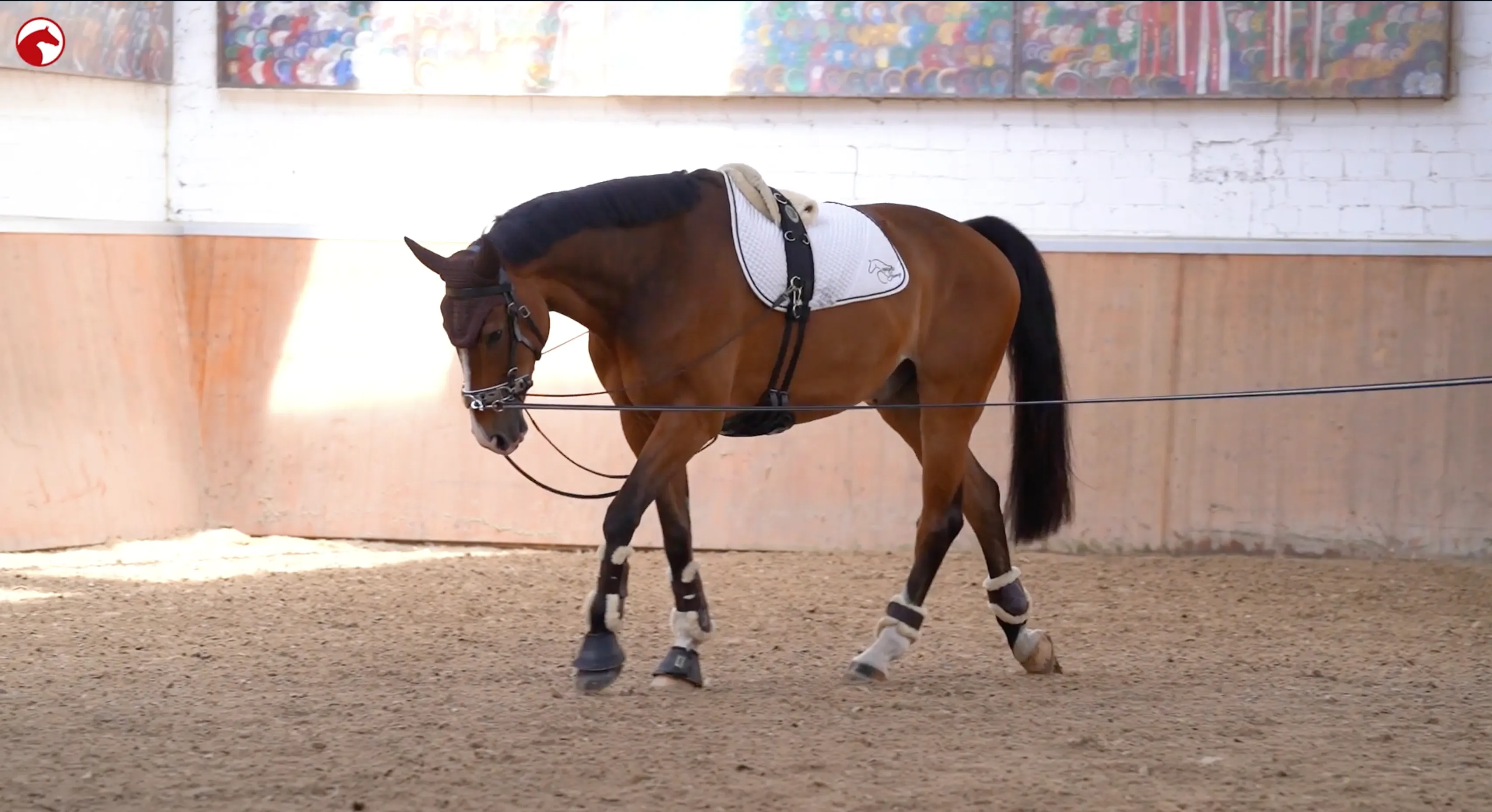
Levisto Alpha Z: Das Klonpferd von Levisto Z im Porträt
The Cloned Horse – Or When You See Horses Twice
Table of Contents
In autumn 2013, a special image appears on the cover of the Z-Magazine from Studfarm Zangersheide. In the background, a printed truck shows the internationally placed breeding stallion Levisto Z jumping over an obstacle. In front of this image, an almost identical scene unfolds: the then four-year-old stallion Levisto Alpha Z jumps over a blue-and-yellow obstacle of the stud.
The viewer of the cover is not experiencing a visual illusion, but is in fact seeing double — the image shows Levisto Z and his clone, Levisto Alpha Z.
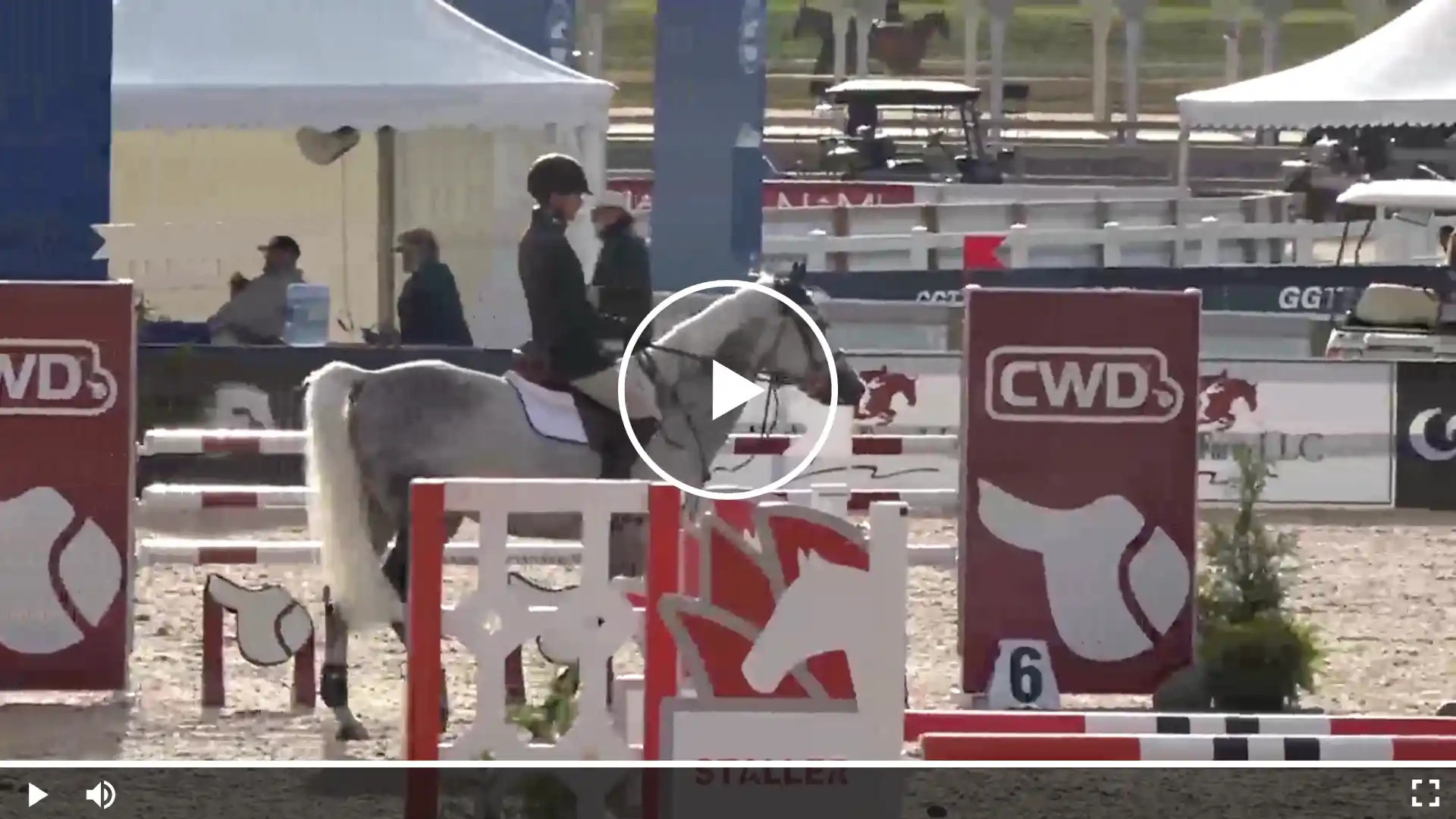
For many people, clones in equestrian sport are still an unfamiliar phenomenon. Yet cloned horses are now quite prominent in both sport and breeding.
One example is Levisto Alpha Z, born on March 19, 2009. As a clone of Levisto Z, the gray stallion also carries the pedigree Leandro x Carolus I. As the “Z” in the name indicates, both originate from the breeding program of Studfarm Zangersheide in Belgium; the breeder is Klaus-Peter Wiepert. Levisto Alpha Z is not the first cloned horse. As early as 2003, Prometea, a cloned Haflinger filly, was born in Italy. At Studfarm Zangersheide, Chellano Alpha Z became the first cloned horse in 2008.
The physical resemblance between Levisto Alpha Z and his genetic model is remarkable—even for a clone. At the time of his birth, sporting ambitions were still out of the question. However, in 2012 the International Equestrian Federation (FEI) permitted cloned horses to compete in sport. In September of the same year, Levisto Alpha Z was licensed, becoming the second licensed cloned stallion at Studfarm Zangersheide.
In 2013, Levisto Z retired from sport—but the career of Levisto Alpha Z was just beginning: he won the Belgian Championships for four-year-old horses. It was the first time a cloned horse had won a show jumping championship. The following year, in 2014, several offspring of Levisto Alpha Z were born. They were the first of many foals, as—like Levisto Z—his clone was also used for breeding. In the video, you can see him at the 2015 stallion presentation of Studfarm Zangersheide.
In general, cloned horses are more commonly found in breeding than in sport. The reason is that identical genetics do not automatically guarantee comparable success. Like any other young horse, a clone requires proper education and appropriate training. Since a clone is more expensive in breeding than a conventionally bred horse, this investment is often redirected, and the cloned horse is used directly for breeding in order to pass on its valuable genes. The cloning method also makes it possible to breed from the genes of successful geldings—by cloning them so that the clone can produce offspring.
Levisto Alpha Z resembles Levisto Z not only physically, but also in character. Judy Ann Melchior, who rode Levisto Z, also became acquainted with his four-year-old clone. She described riding the two horses as follows:
“If you blindfolded me over a jump, I wouldn’t know whether I was sitting on Levisto Z or Levisto Alpha Z. Just like the original, I recognize the same characteristics: well-behaved, never hectic or anxious, always maintaining overview. The traits are identical, regardless of age.”
From a scientific perspective, genes alone do not guarantee the development of a similar character. In the case of Levisto Alpha Z, however, this appears to have been exactly the case.
On December 10, 2021, Levisto Z passed away at the age of 24. His clone, Levisto Alpha Z, has lived in the USA since 2019. He has been presented at competitions under various riders and has competed in show jumping classes up to 1.40 m. If you would like to follow the careers of Levisto Alpha Z and his offspring, activate the “Follow Horse” function on ClipMyHorse.TV!
You might also like