.webp)
Relaxing your neck & jaw: Exercises to do at Home
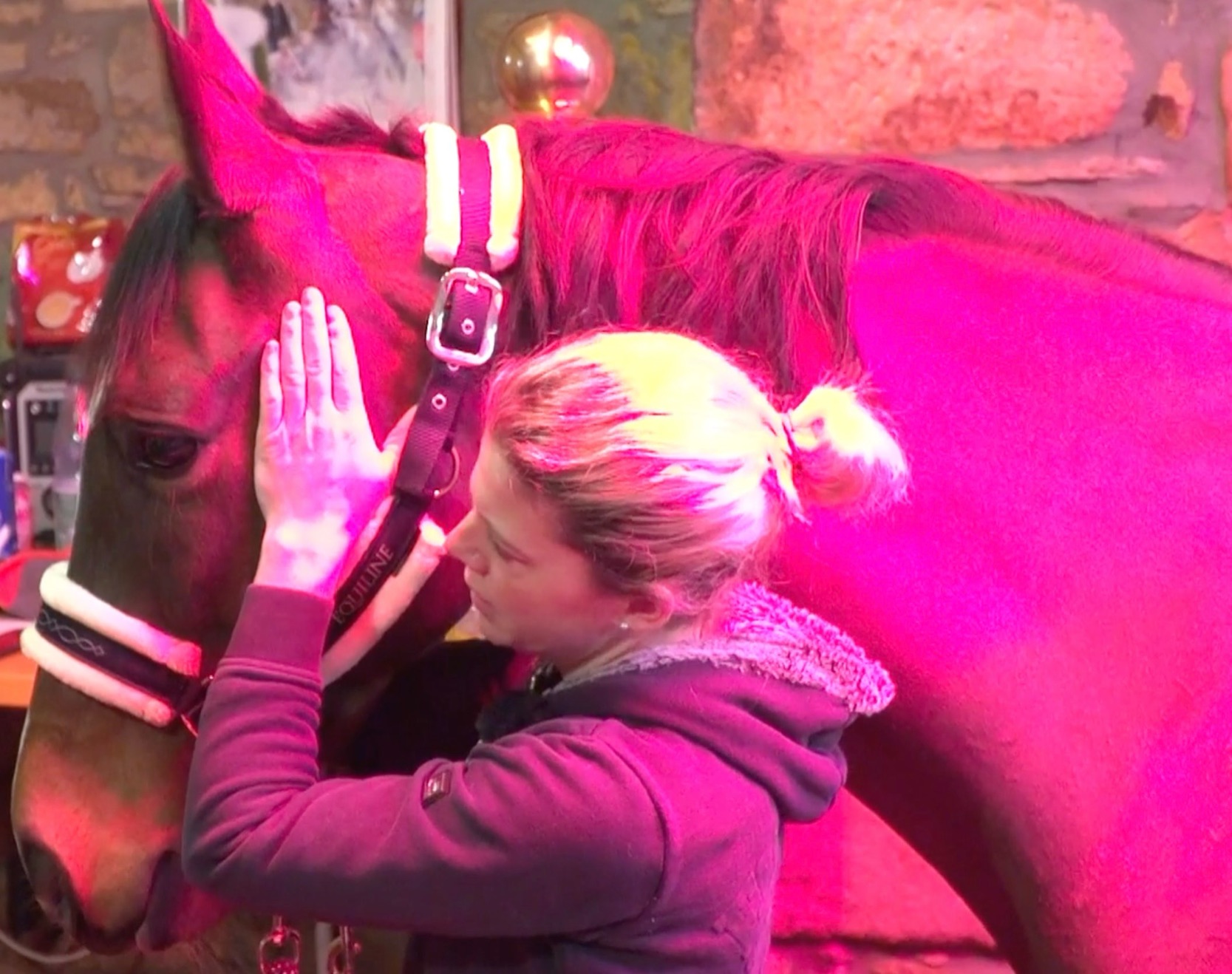
In this article, I show you a short, gentle at-home routine that you can use to specifically support your horse’s head and neck area. You’ll get step-by-step instructions and helpful tips on how to recognize true relaxation.
Table of Contents
🎥 Video tip: How to soften your horse’s poll and jaw
In our ClipMyHorse.TV Academy, you’ll find an exclusive premium video on this topic that explains the routine in a comprehensive and expert way and offers valuable tips. The Academy gives you access to professionally produced, practical expertise—ideal for anyone looking to deepen their training knowledge in a targeted way.
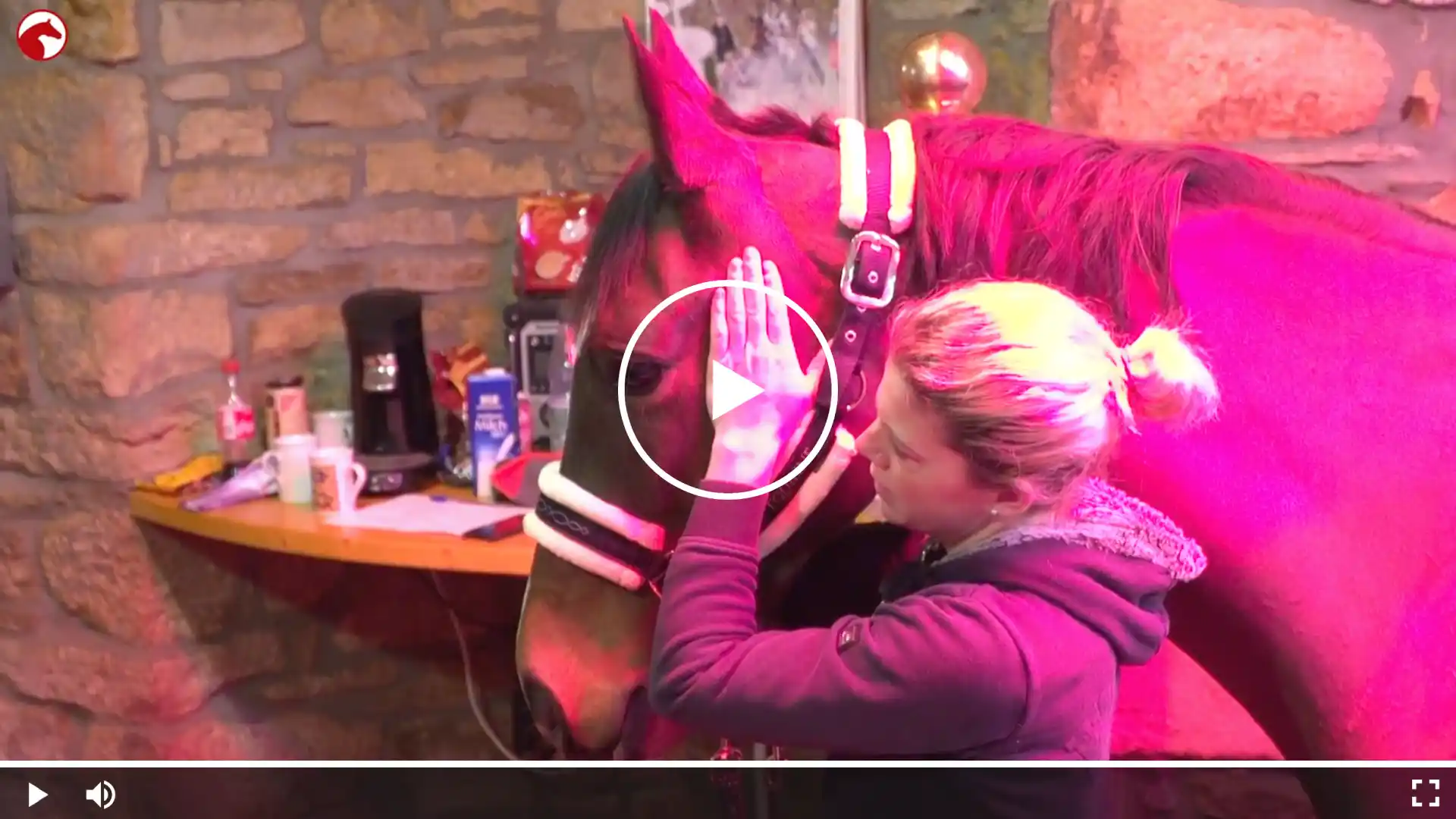
A loose poll and a relaxed jaw often have a direct effect on contact, bend, and the overall feel of movement. Especially after dental treatment, this area can be sensitive—but even with issues like headshaking or general tension in the head and neck area, calm, gentle support is worthwhile.
Important note on performing the exercises:
Do all exercises slowly, carefully, and with feel. The aim is to relax the muscles. The exercises shown are not a substitute for professional physiotherapy treatment. If the horse becomes unwilling or appears sensitive or painful during the massage, a physiotherapist should be consulted.
Exercises: Step-by-step explained
Relaxing the poll
Goal: Relieve the poll area, initiate letting go, and encourage relaxation/chewing.
How to do it:
.webp)
.webp)
Gently mobilizing the mane crest and nuchal ligament
Goal: Support relaxation along the upper neck line.
How to do it:
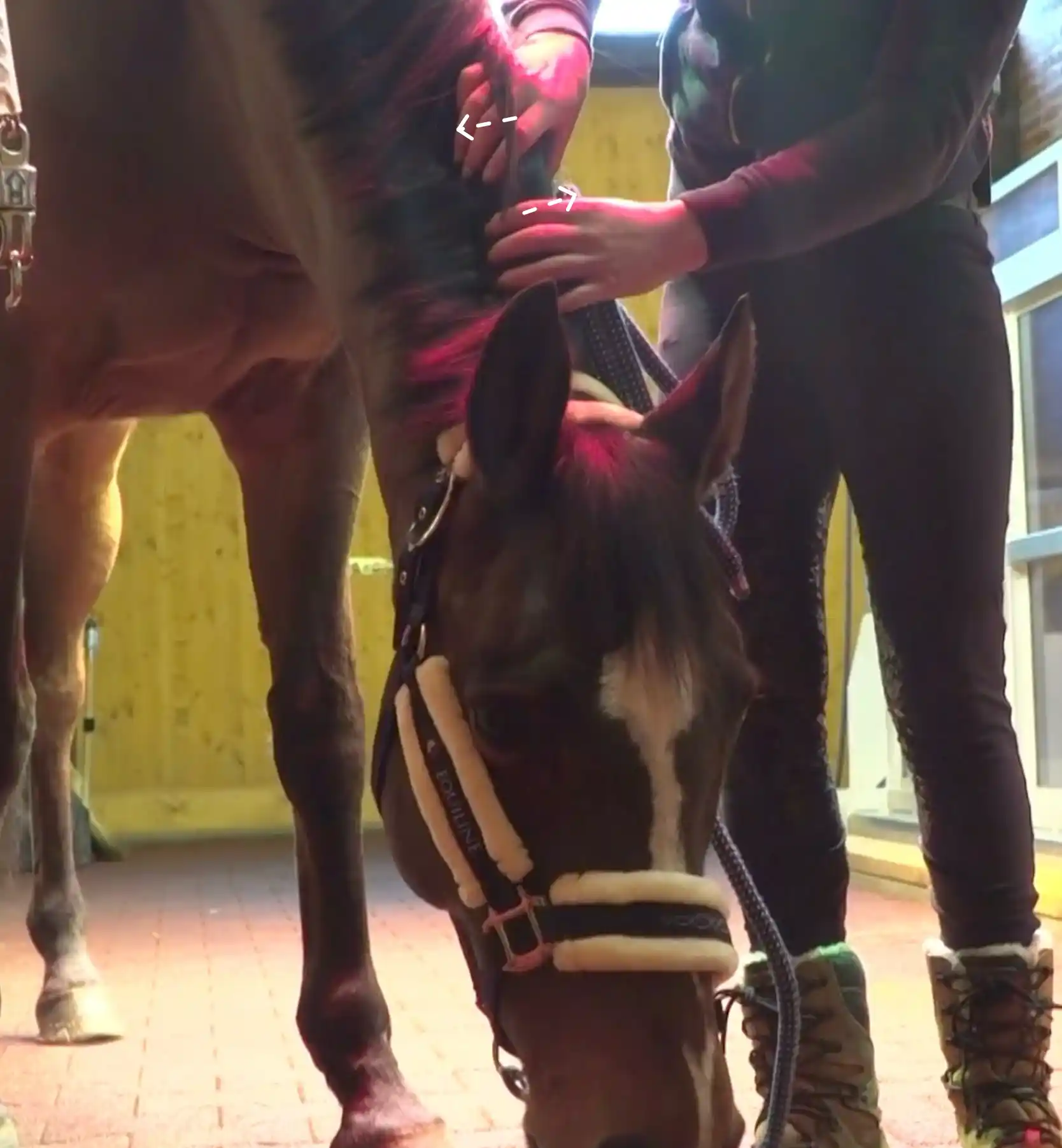
Stroking along the upper neck muscles
Goal: Release the muscles on the right/left and relieve the poll area.
How to do it:
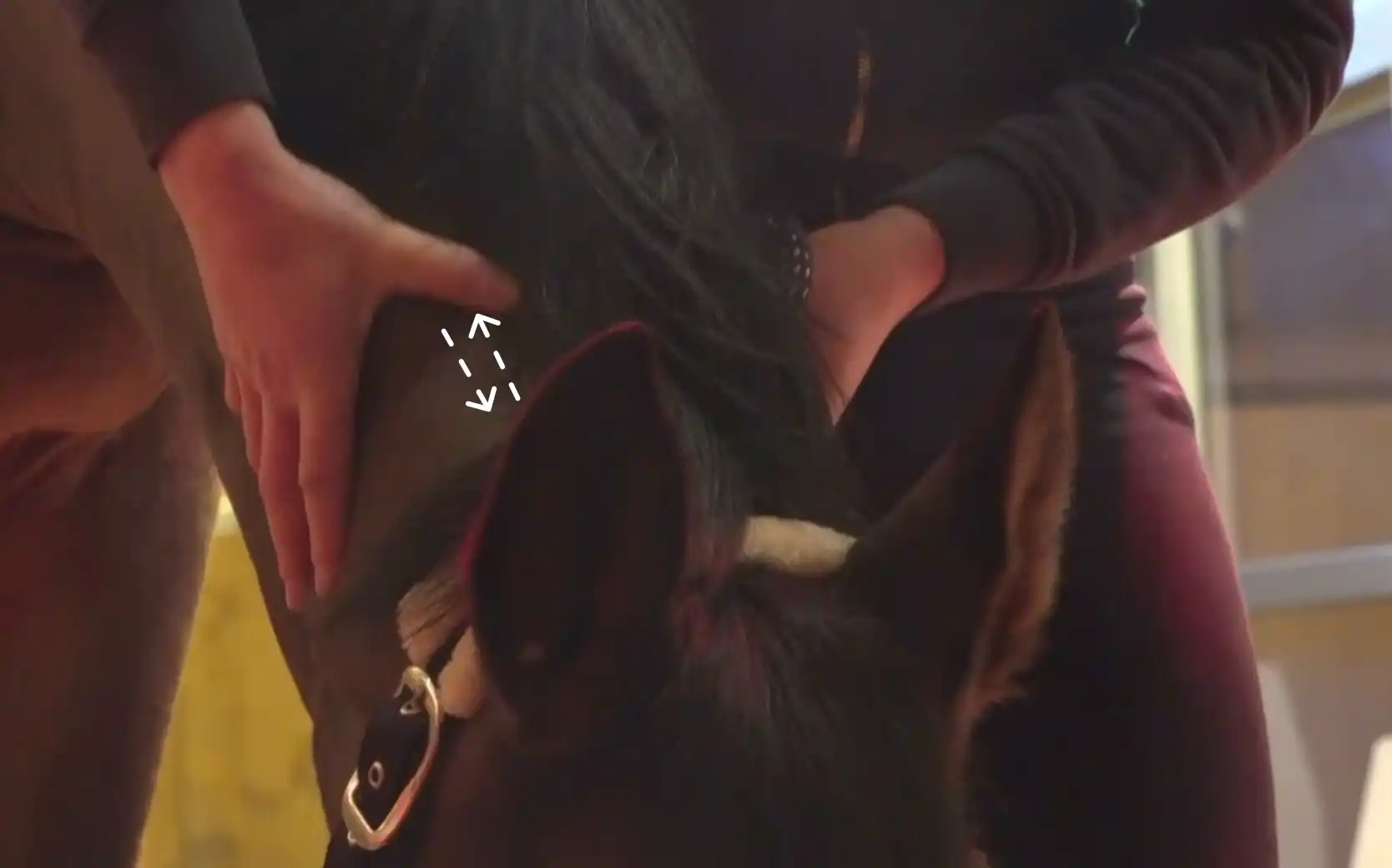
Gently stroking the ears
Goal: Calming/relaxation (very finely dosed).
How to do it:
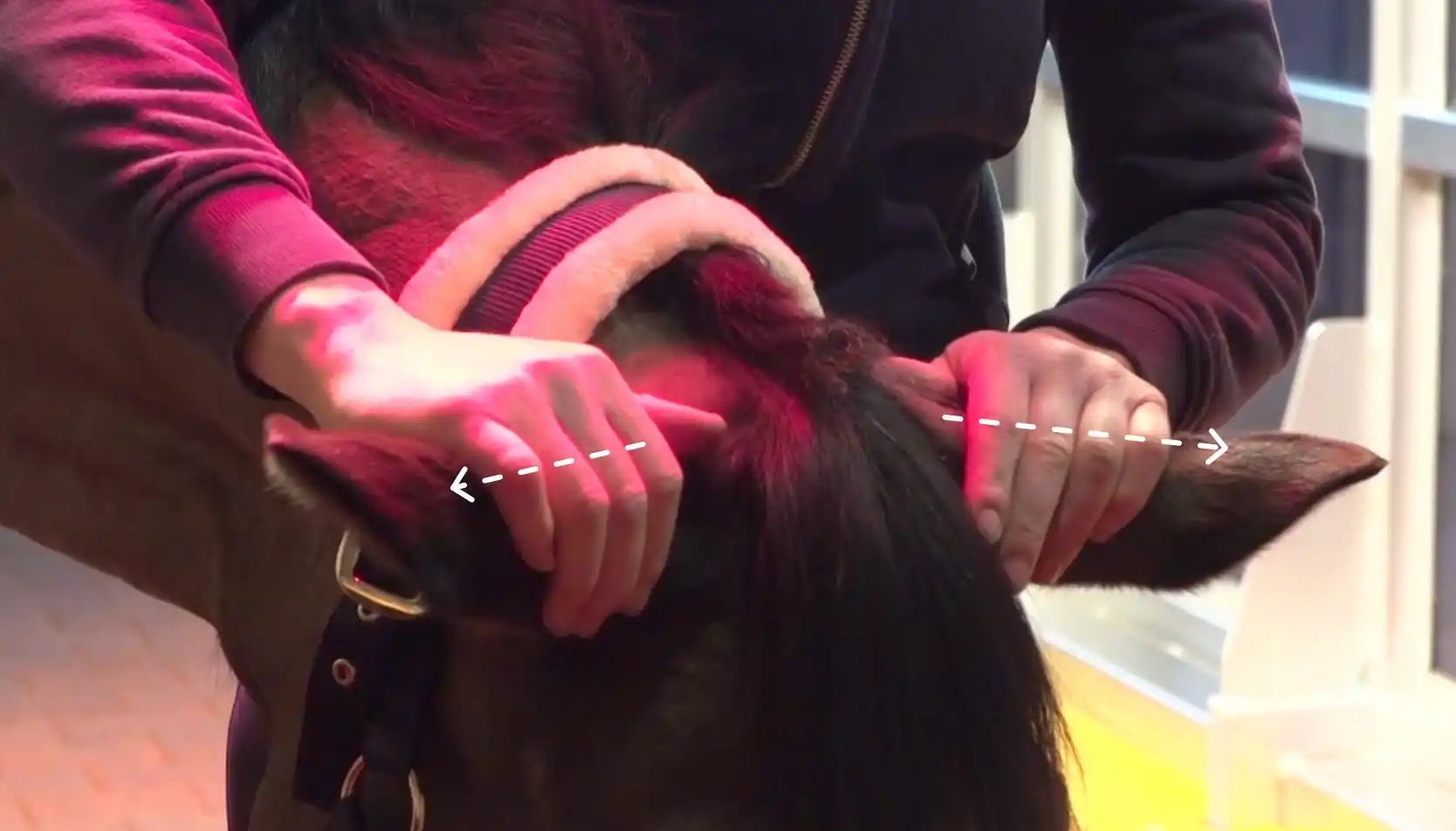
Stroking the jaw muscle at the jowl
Goal: Relax the jaw area, encourage chewing, and soothe pressure points.
How to do it:
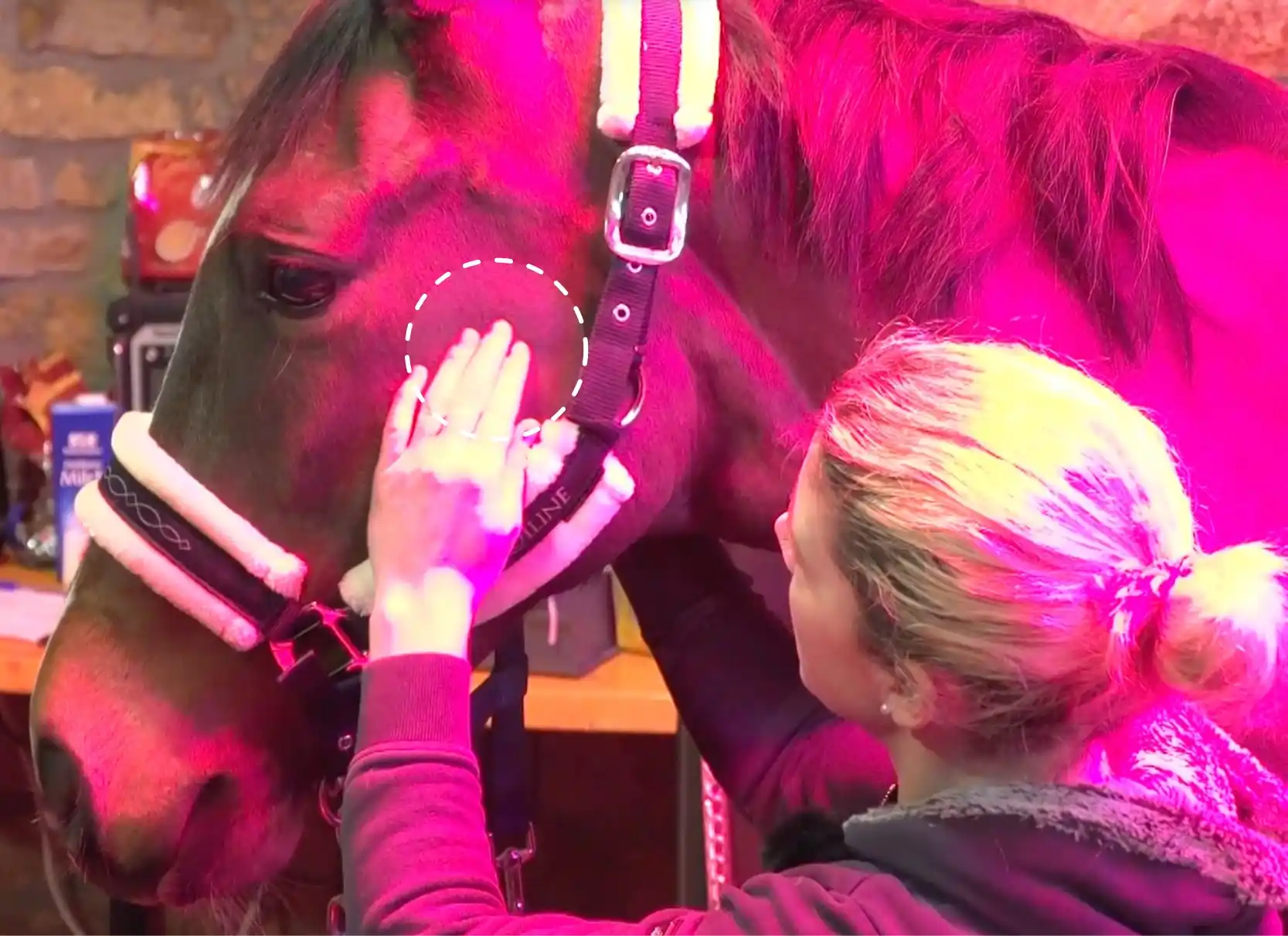
Very gently mobilizing the jaw joint
Goal: Very light mobilization of the jaw joint.
How to do it:
Conclusion
With a few gentle techniques, you can meaningfully support your horse’s poll and jaw in everyday life. The key is to work calmly, use very little pressure, observe the response—and if there are signs of resistance or pain, it’s better to have it professionally assessed early on.
You might also like