Stallion Licensing: Selection, Criteria, and Importance for Horse Breeding
How does a young stallion become an officially approved breeding stallion? Stallion licensing is the first major step. We show you how it works, what matters most, which health criteria are crucial, and what happens if a stallion doesn’t pass.
Table of Contents
What is stallion licensing?
Stallion licensing is a central part of horse breeding. It is an official selection process in which a stallion is assessed for breeding suitability by a recognized breeding organization. The aim is to approve only those stallions for breeding that have correct conformation, good quality of movement, sound temperament, and ideally performance potential as well.
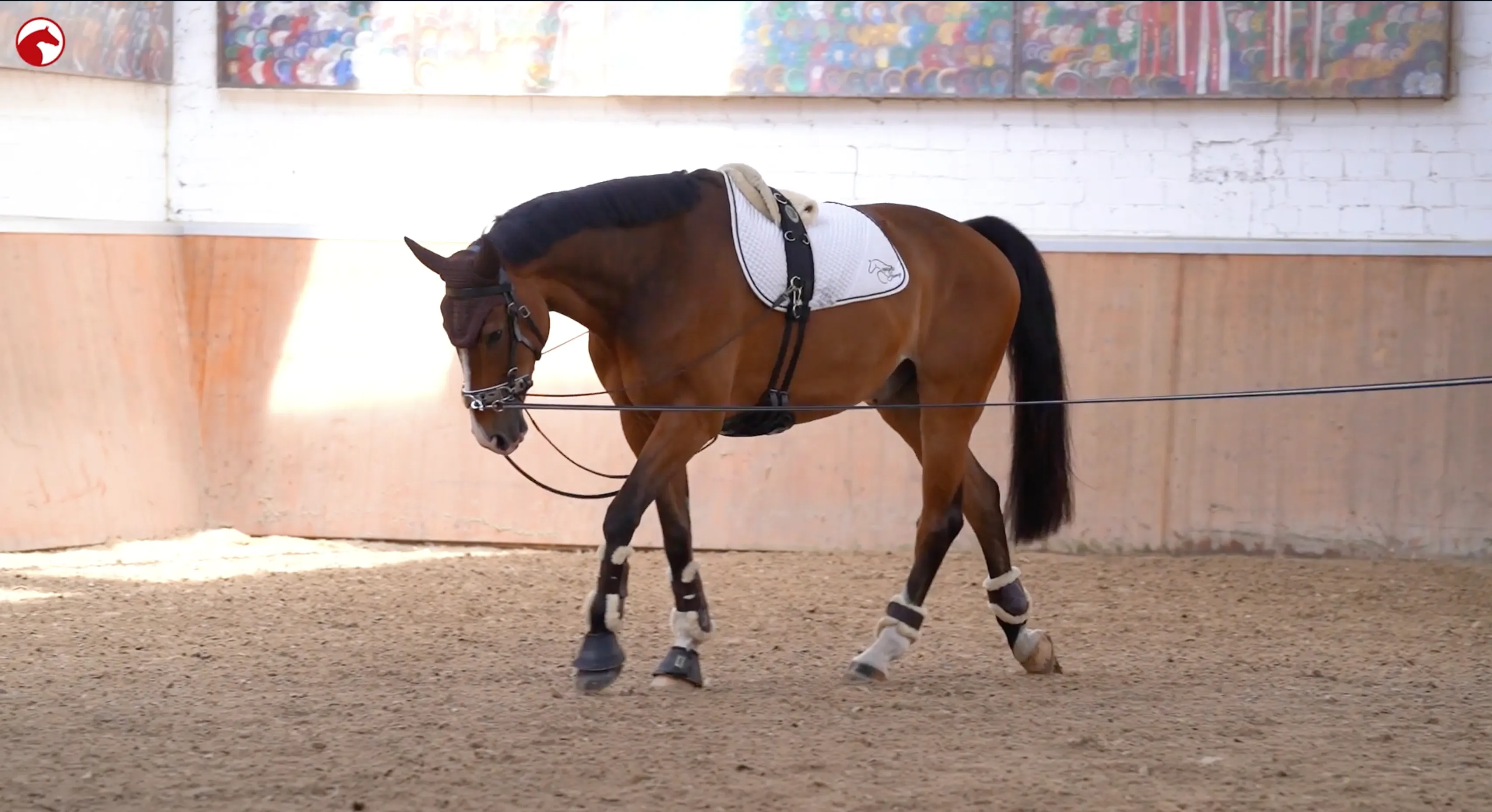
In the ClipMyHorse.TV Academy, you’ll find the following video on stallion licensing: it gives you a concise overview of the conformation inspection on the triangle, free movement, and free jumping and shows what really matters on the way to the licensing verdict and the premium stallion title.

An approved (licensed) stallion receives authorization for breeding after successfully passing the evaluation. Without this positive licensing verdict, a stallion may not be officially used as a breeding stallion even if he is highly successful in sport. Stallion licensing is therefore an essential filter to safeguard quality in horse breeding over the long term.
Why is stallion licensing so important?
A stallion can have a much greater influence on the genetic development of a breeding population through his offspring than an individual mare—simply due to the number of possible coverings per year. That’s why stallion licensing comes with particularly high requirements.
The aim of licensing is to:
- promote genetic health,
- preserve typical breed characteristics, and
- select high-performing horses with suitable temperaments for sport use or breeding.
Stallion licensing – the path to becoming a breeding stallion
Stallion licensing is a key element of modern horse breeding. It determines whether a stallion is approved for breeding and can therefore be entered into Stallion Book I. The prerequisites include successful participation in a pre-selection, impeccable health, convincing conformation, and good basic gaits—and, depending on the discipline, talent in free jumping or on the lunge.
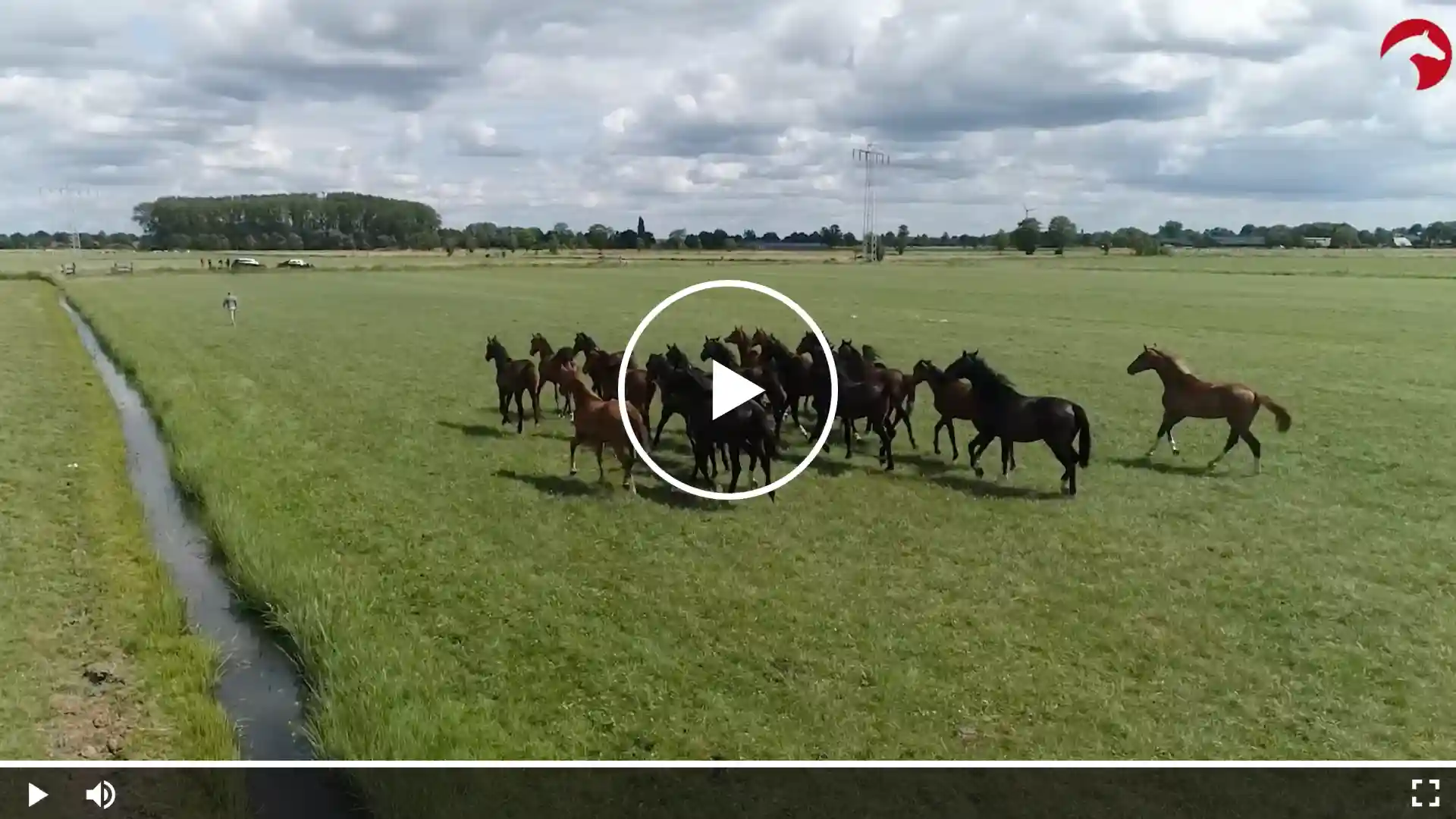
In the ClipMyHorse.TV Academy, this video shows you how to specifically prepare a young stallion for the first pre-selection for stallion licensing—what steps are involved, and how to keep the horse calm, focused, and motivated throughout the process.
After the licensing, the mandatory stallion performance test follows before a stallion is officially allowed to stand at stud. Stallions that are not licensed can still have prospects through re-licensing, sport, or even breeding use abroad. Depending on the studbook/association, the costs of a licensing amount to several hundred to a few thousand euros, but they are an investment in the breeding future.
Difference to the stallion performance test
It’s important to distinguish this from the stallion performance test:
While licensing primarily evaluates a young stallion’s conformation, basic gaits, and behavior, assesses athletic suitability under saddle. Only after passing the usually in the form of a 14- or 50-day station test or via sport tests—may a licensed stallion actually be entered into Stallion Book I and used for breeding under studbook regulations.
In short:
➡️ Licensing opens the door to breeding – the stallion performance test confirms that the stallion is allowed to walk through it.
How does a stallion licensing work?
Stallion licensing follows a clearly structured process designed to ensure that only healthy, willing-to-perform, and correctly built stallions are approved for breeding. A licensing commission evaluates the candidate based on fixed criteria—ranging from pedigree and quality of movement to veterinary findings. The entire process is divided into several assessment stages, which are clearly presented below.
Every licensing candidate must undergo a comprehensive evaluation as part of stallion licensing. Right at the start, the pedigree is checked, because only stallions from recognized breeding lines with complete papers are allowed to participate at all.
This is followed by the assessment of the conformation, in which the stallion’s build is evaluated both at a standstill and in motion. The commission pays particular attention to proportions, the quality of the limbs, and breed and sex type. The gaits—walk, trot, and canter—are assessed in different presentation formats: on hard ground, in the arena, on the triangle, and in free movement.
Another important factor is the stallion’s behavior, which provides insight into his character, his manners/handling, and his mental maturity. Especially with young stallions, it is crucial how they behave in an unfamiliar environment and cope with new demands.
For show jumpers, free jumping plays a central role: scope, reflexes, and technique are evaluated here. Dressage stallions, on the other hand, are often additionally lunged to assess rideability, balance, and relaxation.
In addition to the external impression, the stallion’s health status is also decisive. A thorough veterinary examination—including X-rays and, if applicable, a semen test—ensures that there are no heritable defects or other health-related exclusion criteria. For several years now, the WFFS test has been part of the mandatory program, as well as full vaccination coverage.
At the end of the multi-day process, the licensing commission decides—based on all impressions—whether the stallion receives the title “licensed.” In some cases, the additional awards “premium” or “champion stallion” are granted. Stallions that do not meet the requirements are considered not licensed—however, they may take part in a later re-licensing or move into sport.
Which requirements must a stallion meet for licensing?
Not every stallion is automatically allowed to take part in stallion licensing. For a licensing candidate to be admitted at all, certain formal, breeding-related, and health criteria must be met in advance. These requirements ensure that only promising young stallions are accepted into the actual licensing process—both in the interest of quality assurance and fairness.
Age limit and pre-selection
At the time of licensing, a stallion must be at least two years old. Before the actual licensing event, most breeding associations hold a pre-selection in which the stallions undergo an initial evaluation. This includes:
- presentation on hard ground (walk & stand),
- free movement and, if applicable, free jumping,
- as well as an initial veterinary examination.
Only those who pass this pre-selection are admitted to the actual licensing. The relevant dates and locations are published in advance by the responsible breeding association.
Veterinary examination and medication controls
As part of the pre-selection, a comprehensive licensing vet exam is also carried out. Its purpose is to identify heritable diseases, malformations, or other health-related exclusion criteria at an early stage. In addition, medication controls (doping tests) may be conducted—usually on a random/sample basis.
Particular attention is paid to:
- the development of the testicles (size, position, structure),
- the exclusion of cryptorchidism (undescended testicles),
- as well as X-ray checks of the skeleton and joints.
Documents and vaccination status
To be admitted to licensing, the following points must also be fulfilled:
- a complete equine passport with proof of identity,
- a complete vaccination record (mandatory vaccinations such as influenza, and in some cases also herpes),
- proof of a current WFFS test (Warmblood Fragile Foal Syndrome).
Only if all requirements are met may a stallion officially take part in the licensing event.
Which health defects exclude a stallion from licensing?
A stallion’s health is a key criterion in every stallion licensing. Only a physically sound stallion can reliably pass on his positive traits to his offspring. The veterinary examination therefore serves as a crucial filtering step to identify heritable diseases or structural defects in good time.
Testicles – size, position, symmetry
A common reason for exclusion concerns testicular development:
- Macroorchidism: If the testicles are significantly too small (e.g., chicken-egg sized instead of goose-egg sized), the stallion is classified as unsuitable for breeding.
- Cryptorchidism : One or both testicles cannot be palpated in the scrotum. As this condition is hereditary, it leads to final non-approval for breeding.
Radiographic abnormalities
Before licensing, current X-rays must be submitted (max. 3 months old). Assessed include, among others:
- fetlock joints,
- hock joints,
- knee joints,
- hoof and toe alignment.
Of particular relevance is the finding of osteochondrosis dissecans (OCD)—a developmental disorder of the cartilage-bone complex. In this condition, pieces of cartilage (so-called “chips”) detach within the joint. Depending on the location, the following rules apply:
- a maximum of three chips are permitted,
- bilateral OCD findings in the hocks or findings in the knee joint lead to exclusion.
Cyst-like defects, bone spavin (chronic inflammation/degeneration of the hock joint), or other serious changes in the locomotor system are also reasons for exclusion.
Neurological and systemic diseases
A stallion will also not be licensed if neurological abnormalities or genetically burdening conditions are identified. These include:
- ataxia: impaired coordination of movement,
- shivering: a neuromuscular disorder with muscle tremors and stiffness,
- roaring (laryngeal paralysis),
- severe sweet itch,
- club feet, overbite or underbite,
- equine recurrent uveitis (periodic eye inflammation).
WFFS: genetic test for a defect
Since 2019, the genetic test for WFFS (Warmblood Fragile Foal Syndrome) has been mandatory. A positive result (carrier status) does not automatically lead to disqualification, as long as mating with another affected animal is ruled out. However, breeding associations require full transparency and expect breeders to handle this information responsibly.
How the licensing presentation works
If a stallion meets all admission criteria and has successfully passed the pre-selection, he is allowed to compete at the licensing event itself. This usually takes place over several days and includes various stages in which the commission assesses the stallion in detail. The goal is to gain a comprehensive picture of the animal’s conformation, gaits, character, and talent.
Presentation on hard ground
The first step is the so-called “hard ground,” a firm, level surface on which the stallion is presented in walk in-hand. The focus is on assessing:
- limb alignment and hoof correctness,
- body proportions and overall appearance,
- as well as walk quality— a clear, pure four-beat rhythm is essential.
The commission also pays attention to posture, temperament, and the horse’s overall first impression.
Triangle track – trot assessment
Next comes the triangle track, where the stallion is shown in trot in-hand. The trot should:
- be even in two-beat rhythm,
- be pushed from the hindquarters,
- show an active moment of suspension,
- and impress with diligence, ground cover, and a swinging back.
The aim is to assess movement quality from different perspectives—front, side, and from behind.
Free movement in the arena
A central element of licensing is free movement in the indoor arena. Here, the stallion is observed without rider or lunge line, usually on a track with open corners. The commission evaluates:
- the canter in free, flowing movement,
- rhythm (three-beat, moment of suspension),
- relaxation/suppleness,
- and balance.
A stallion that moves “uphill” in canter—staying rhythmic, loose, and jumping through with an active hind leg—creates a particularly positive impression.
Free jumping – the highlight for jumping stallions
In free jumping, a show jumper’s talent becomes clearly visible. The stallions are sent through a line of fences, with the height gradually increased up to around 1.30 m. The assessment focuses on:
- jumping technique (knee action, use of the back, bascule),
- reflexes,
- scope,
- and trainability (e.g., how the stallion reacts to mistakes made in the previous round).
During free jumping, white boots may be used on the forelegs—no other aids are permitted.
Lunging for dressage stallions
Dressage-oriented young stallions are often additionally lunged. This allows the judges to evaluate contact, back activity, purity of rhythm, and overall movement potential under the influence of the lunge line—making it a useful complement to free movement.
Scoring, grades, and awards – when is a stallion considered licensed?
At the end of the multi-day licensing event, the decision is made: is the stallion licensed, premium-awarded, or not licensed? The assessment is carried out by the licensing commission, which is made up of experienced breeding experts and the breeding director of the respective association. The decision is based on all impressions gathered during the presentations—from pedigree and conformation to behavior and veterinary findings.
How is the stallion assessed?
Scores are given in half-point increments, with the following criteria being decisive:
- type and expression
- conformation and correctness
- quality of movement in walk, trot, and canter
- behavior and presence
- free jumping or lunging
- veterinary results
A stallion is considered licensed if:
- his overall score is at least 7.0, and
- no individual score is below 5.0.
Stallions with an overall score of 7.5 or higher additionally receive the award “premium”, which is regarded as a special distinction.
Champion stallion and reserve champion
From among the licensed and premium-awarded stallions, the commission also selects the year’s champion stallion. In addition to the scores, the overall impression, confidence in presentation, and genetic potential also play a role. In many cases, a reserve champion is also named.
Announcement of the licensing results
The results of the licensing are usually announced publicly during a walk-ring presentation in the event arena. The commission explains its decision and states the awards given. This moment is a highlight for both exhibitors and the audience—because it determines whether months of preparation have paid off.
How does a licensed stallion’s path continue?
With a positive licensing verdict, the first milestone on the way to becoming a breeding stallion has been reached. However, to actually be entered into Stallion Book I and be officially recognized for breeding, the stallion must also successfully complete a stallion performance test . This test is mandatory in almost all breeding associations and serves as an objective assessment of rideability, willingness to perform, and character under standardized conditions.
The three forms of the stallion performance test
Depending on the stallion’s age, discipline, and development, there are three test variants:
14-day aptitude test
– Initial suitability assessment for young stallions
– Evaluation of basic gaits, behavior, temperament/character
50-day station test
– Comprehensive performance test over several weeks
– Stabling and training at a recognized testing facility
– Daily evaluation by qualified riders and judges
Sport test
– For stallions already competing in sport
– Divided into two parts (Part I and II)
– Evaluation of sporting development in the respective discipline (dressage, show jumping, eventing)
Scoring and minimum requirement
The overall score of the stallion performance test must be at least 7.8 to be considered passed. Depending on the discipline, additional requirements apply to individual scores (e.g., rideability, scope, temperament). Only after successfully completing the HLP may the licensed stallion be officially used for breeding.
What happens to a stallion that is not licensed?
If a stallion receives a negative verdict at the licensing event, this initially means that he is not approved for breeding. However, the end of the licensing process is not automatically the end of all prospects—there are various ways a non-licensed stallion can still be used going forward.
Re-licensing or on-farm licensing
Some breeding associations offer the option of re-licensing. This can take place no earlier than three months after the main licensing and gives the stallion the chance to present again under changed conditions (e.g., after health stabilization or further training). Alternatively, an on-farm licensing can be requested, where the licensing commission comes directly to the owner’s yard—however, this option is significantly more expensive.
Gelding and a sport career
Many owners decide to have their stallion gelded after a negative licensing verdict. As a gelding, the horse can usually be used in sport or leisure with less stress. Especially for talented but breeding-unsuitable horses, nothing stands in the way of a successful competition career.
International options
Since licensing standards vary internationally, selling abroad can also be an option. A stallion that was not licensed in Germany may, under certain circumstances, obtain breeding approval in other countries—depending on the respective guidelines of the breeding associations there.
What does a stallion licensing cost?
Taking part in stallion licensing involves considerable costs—both financial and organizational. For breeders and stallion owners, licensing is an investment in the future that needs careful planning and budgeting. Total costs vary depending on the breeding association, venue, and the procedure chosen (e.g., re-licensing or on-farm licensing).
Overview of typical costs
Additional indirect costs
In addition to the official fees, indirect costs also arise, for example for:
- transport to the event,
- stabling and training the stallion in advance,
- professional presentation by a rider/handler,
- and, if applicable, lungeing or free-jumping training.
Especially with promising young stallions, these investments can quickly add up to several thousand euros—but with a positive licensing result, the investment can pay off in the long term through breeding income and an increase in the horse’s value.
Stallion licensing: the most important questions and answers
What is stallion licensing?
Stallion licensing is an official process used to assess young stallions for their suitability as breeding stallions. Only with a positive licensing verdict may a stallion be used for breeding.
What requirements must a stallion meet to be licensed?
The stallion must be at least two years old, pass a successful pre-selection, and be free of health defects that exclude him from breeding. The WFFS test and full vaccination coverage are also mandatory.
Which health issues lead to exclusion?
Cryptorchidism, OCD findings in the knee, bone spavin, ataxia, shivering, pronounced overbite or underbite, severe radiographic findings, or visible lameness lead to non-approval for stallion licensing.
What happens after licensing?
Licensed stallions must complete a stallion performance test (HLP). Only then may they be officially used for breeding.
Can a stallion that is not licensed still compete in sport?
Yes. Many non-licensed stallions are gelded and go on to compete successfully as geldings in sport or leisure riding.
How much does stallion licensing cost?
Total costs—depending on the association and the effort involved—are around €1,000 to €2,500, including pre-selection, licensing, X-rays, membership, and possible on-farm licensing.
You might also like