Suppleness in Horses: The Key to a Responsive and Performance-Ready Riding Horse
Suppleness means far more than just a swinging, relaxed back—it is a state of physical and mental harmony between horse and rider. It plays a decisive role in whether a horse can perform its tasks willingly, with motivation, and in balance. In this article, you will learn what suppleness really is, how to recognize it, how to develop it systematically, and why it is essential for both the training and long-term health of your horse. Including practical tips, clear definitions, and further insights into the training scale, gymnastic exercises, and effective training methods.
Table of Contents
What Does Suppleness Mean in Horses?
Suppleness describes a state in which the horse is physically relaxed while remaining mentally focused. The horse moves freely, swings through its back, and accepts the rider’s aids willingly—without resistance or stress. This combination of physical relaxation and mental calmness forms the foundation for all further training.
In classical riding theory, suppleness in horses is the second step of the training scale, directly following rhythm. It serves as the bridge to contact, impulsion, and ultimately collection. Only when a horse is truly supple can it carry itself correctly, move in balance, and respond finely to the rider’s aids.
You could say: without suppleness, nothing works. A tense horse will neither maintain a clear rhythm nor show true rideability—let alone build a harmonious connection with the rider.
These characteristics do not always appear at the same time and are often only visible in brief moments. The goal of every training session is therefore to extend and stabilize these moments—through calm, precise aids and a high level of feel and sensitivity (rider feel).
Why Is Suppleness So Important in Horse Training?
Suppleness in horses is more than just a pleasant feeling under saddle—it is a fundamental prerequisite for soundness, willingness to learn, and performance. Only a horse that feels mentally relaxed and physically free can work correctly and move in a biomechanically efficient way.
In the classical training scale, suppleness comes directly after rhythm—and for good reason. It is the foundation for developing:
- Consistent contact (Anlehnung)
- True impulsion (Schwung)
- Long-term collection (Versammlung)
What Does Suppleness Achieve?
- Efficient movement mechanics: The back swings, muscles work elastically, and movements become fluid and harmonious.
- Improved balance: A supple horse can balance itself more easily—especially on curved lines and in transitions.
- Mental relaxation: The horse remains calm, focused, and attentive, without tension or flight responses.
- Injury prevention & soundness: Reduced muscle tension and joint strain lower the risk of injury.
- Motivation & willingness: A comfortable horse works with the rider, not against them.
Rhythm, Suppleness, Contact – A Delicate Balance
These three elements of the training scale are closely interconnected. Without suppleness:
- Rhythm becomes irregular
- True contact cannot be established
- Throughness (Durchlässigkeit) is not achievable
Anyone aiming to train a healthy, motivated, and rideable horse cannot bypass this essential step in the training process.
How Do You Recognize a Supple Horse?
Recognizing suppleness in horses is not always easy, as many signs are subtle and short-lived. However, there are clear physical and mental indicators that show whether your horse is relaxed, attentive, and working with confidence.
These signs are not always visible at the same time. It is completely normal for a horse to move between tension and relaxation during a training session. The goal is to use refined, sensitive riding to make the moments of suppleness occur more frequently and last longer.
Important:
These indicators do not appear simultaneously. Especially in new situations or at the beginning of a training session, a horse may fluctuate between tension and relaxation. The aim is to gradually increase the duration and frequency of true suppleness through correct, sympathetic riding.
5 Common Causes of Lack of Suppleness in Horses
Suppleness in horses is a sensitive state—and therefore easily disrupted. Even small mistakes in communication, equipment, or training structure can cause a horse to become tense, resistant, or disengaged.
1. Unclear or Harsh Aids
If the rider applies aids in a rushed, inconsistent, or contradictory way, it creates confusion. Sensitive horses in particular respond with tension or withdrawal. Clear, precise aids are essential for building trust and relaxation.
2. Incorrect or Poorly Fitted Tack
A poorly fitting saddle, tight girth, or unsuitable bit can restrict movement and cause discomfort or pain. Horses often show this through tail swishing, tension, or resistance.
3. Monotonous Training
Repetitive exercises, lack of variation, and insufficient stimulation can lead to mental dullness. The horse may switch off or become unwilling. Suppleness develops through engagement and variety, not repetition alone.
4. Overfacing and Anxiety
Asking too much too soon, introducing difficult exercises too early, or exposing the horse to new environments without proper preparation can overwhelm it. This often leads to physical tension or mental shutdown. A gradual, patient approach is key.
5. Asking for Contact or Collection Too Early
A common mistake is demanding frame, contact, or collection before the horse has achieved true suppleness. This results in tension, resistance, and a breakdown in trust.
Developing Suppleness in Horses Systematically
Suppleness does not happen by chance—it is the result of structured, progressive training and a consistent, empathetic riding approach. Riders who focus on the basics create the foundation for a motivated, athletic, and willing horse.
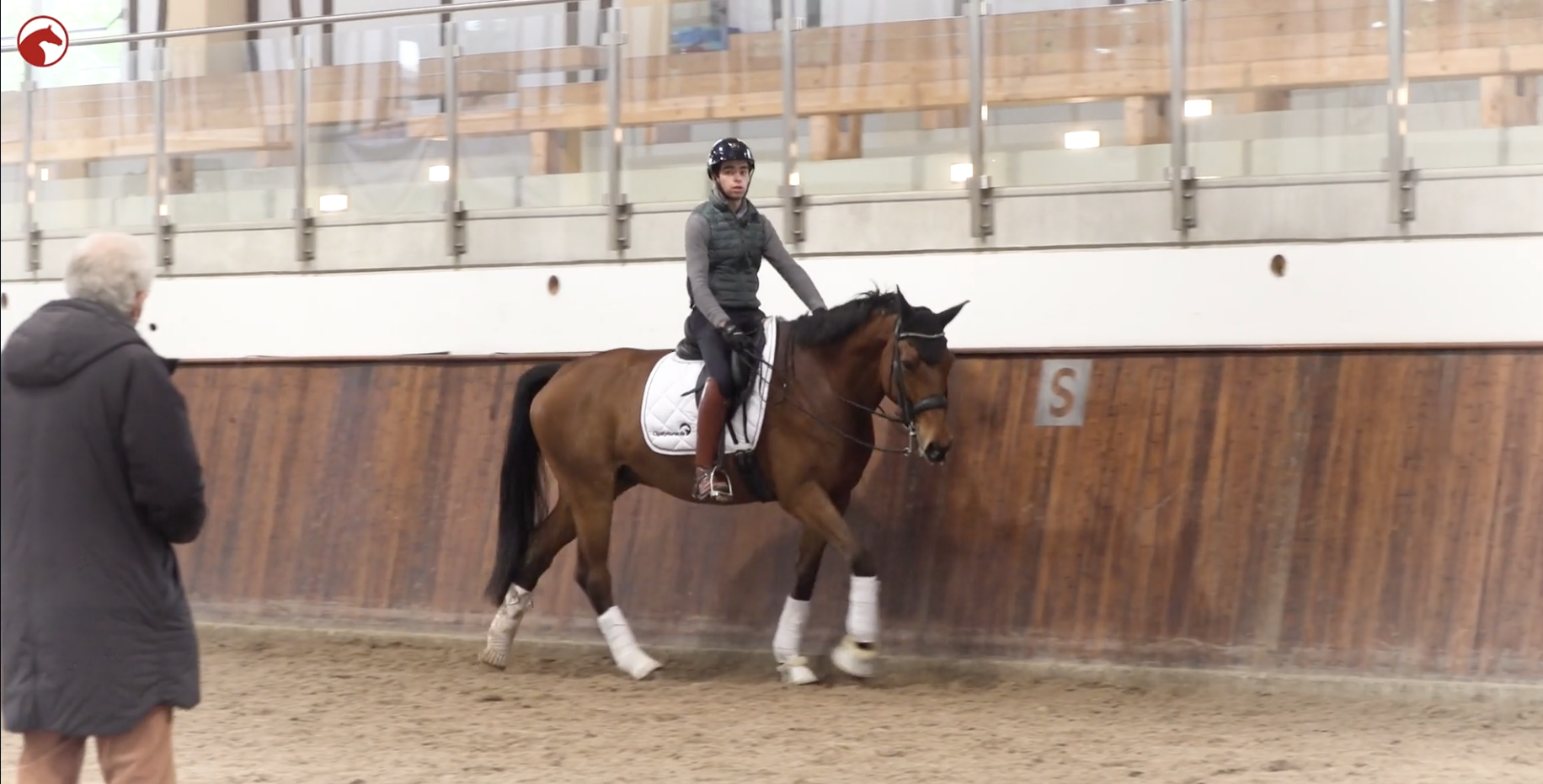
Helpful tips on how to develop suppleness in your daily training routine are shown in the following video:
1. Structured Warm-Up Phase
Every training session should begin with at least 10–15 minutes of walking—ideally outdoors or in hand. The goal is to give the horse time to settle in, both mentally and physically.
2. Chewing the Reins Out of the Hand & Stretching Frame
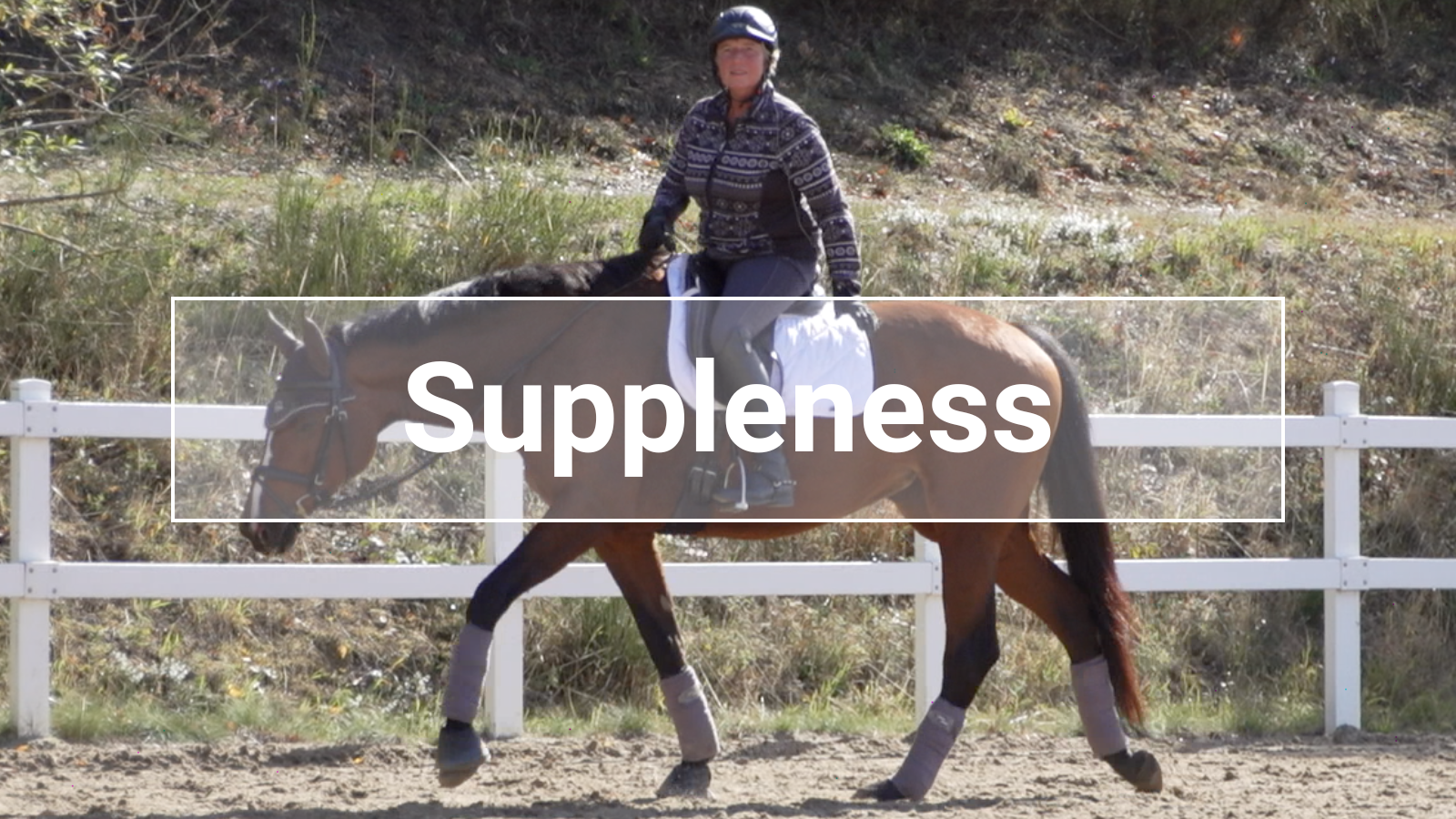
A key element in developing suppleness: regularly encourage the horse to stretch its neck forward and downward without falling onto the forehand. The back should remain lifted, and the horse should actively seek the contact with the bit.Make sure the horse does not come behind the vertical or evade the contact—true stretching always remains balanced.
Learn more about gymnastic training and stretching posture
3. Transitions and Tempo Changes
Smooth transitions within and between gaits improve attentiveness and activate the hindquarters. They help develop rhythm and balance—both essential prerequisites for suppleness.Training tip: Regularly alternate between working trot, medium trot, and rising trot—combined with curved lines and changes of rein.
4. Suppling Work on the Lunge
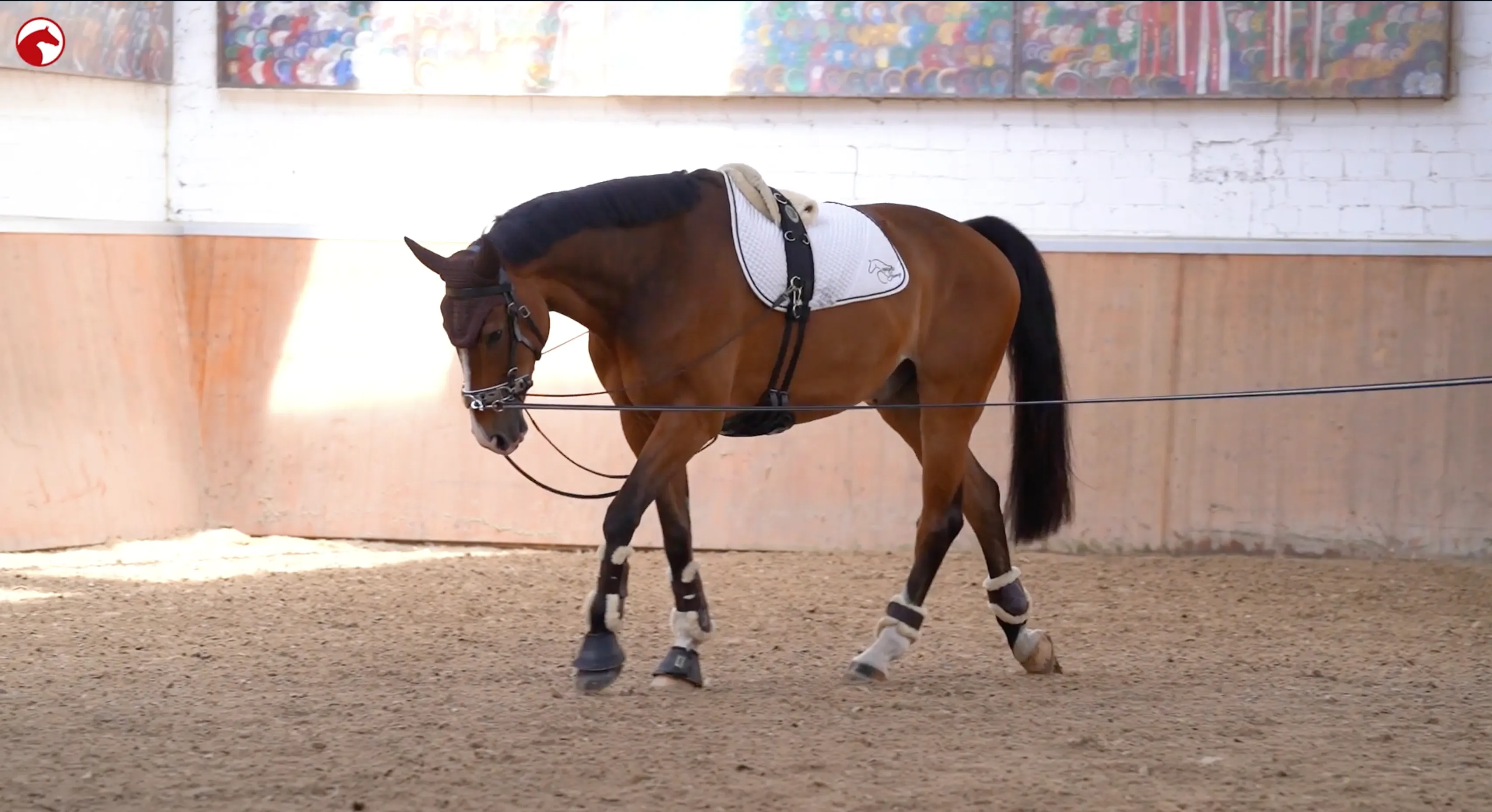
Especially for young or fresh horses, lunging in a stretching frame can help release tension. Focus on maintaining a steady rhythm, offering plenty of praise, and using well-fitted equipment (e.g. a cavesson instead of a bridle).
The Rider as the Key to Suppleness
An often underestimated but crucial factor for suppleness in horses is the rider. No horse can move freely and swing through its back if the rider blocks it with their own tension.
Why the Rider Is So Important
Horses are highly sensitive animals. They feel every muscle tension, insecurity, and mental unrest of the rider. Riding with a stiff seat, rigid hands, or nervous energy transfers this tension directly to the horse—and prevents true suppleness.
Characteristics of a Supple Rider:
- Soft, following seat: The rider absorbs the horse’s movement instead of disturbing it
- Quiet, elastic hands: The contact remains steady, light, and sensitive
- Even breathing: Supports relaxation and gives the horse confidence
- Mental focus without tension: Clear intention without pressure or stiffness
- Positive energy: Confidence, calmness, and motivation transfer to the horse
A rider who is mentally calm and physically balanced in the saddle enables the horse to relax—both physically and mentally.
Suppleness and the Training Scale
In classical riding theory, suppleness in horses is not just a desirable state—it is a clearly defined step within the training scale. It is placed second, directly after rhythm, and forms the foundation for all subsequent stages of training.
The Six Steps of the Training Scale:
- Rhythm
- Suppleness
- Contact
- Impulsion
- Straightness
- Collection
Why Does Suppleness Come So Early?
Because without it, nothing can function correctly or consistently:
- A horse without suppleness moves with tension—resulting in an irregular rhythm
- It cannot stretch confidently into the bit—true contact cannot develop
- The hindquarters cannot engage properly, making impulsion and collection impossible
Suppleness acts as the bridge between basic training and advanced work. It is not just one step—it accompanies and influences the entire training process.
Psychological and Biomechanical Foundation
Suppleness allows the horse to:
- Move freely and evenly
- Gain mental confidence and relaxation
- Respond willingly and correctly to the rider’s aids
Only on this foundation can correct collection, carrying power, and expression develop—without force or resistance.
Learn more about the training scale in Dressage
10 Tips for Improving Suppleness in Horses
Suppleness is not achieved by chance—it is the result of many small, well-planned steps in the daily interaction between horse and rider. The following tips show you how to specifically improve physical relaxation, mental balance, and quality of movement.
Whether riding, lunging, or handling your horse: these methods will help you develop suppleness gradually and maintain it long-term.
Conclusion: Suppleness as the Foundation for Trust and Harmony
Suppleness in horses is not a technical goal, but an expression of a true, respectful partnership between horse and rider. It is not shown in spectacular movements, but in the subtle signs of harmony: a swinging back, soft contact, and a focused yet relaxed mind.
Anyone who consistently works on both mental and physical suppleness in every training session lays the foundation for:
- Sound, long-term training development
- Refined communication without force
- A motivated and willing performance horse
Suppleness is not created through pressure—it develops through understanding, patience, and systematic training. It is not a fixed state, but a balance that must be re-established every day through trust, technique, and feel.
A supple horse carries itself—and offers the rider the greatest reward: willing cooperation in true partnership.
FAQ – Frequently Asked Questions About Suppleness in Horses
What is suppleness in horses?
Suppleness is a state of physical and mental relaxation in which the horse moves freely, through its body, and in trust of the rider—without resistance or tension.
How can I recognize suppleness in my horse?
Typical signs include a swinging back, relaxed muscles, quiet chewing, snorting, a soft facial expression, regular movement, and a calm, focused mindset.
How do I develop suppleness in my horse?
Through structured warm-ups, regular stretching phases, clear aids, varied training, and mental relaxation—both for the horse and the rider.
What prevents suppleness?
Tension, pain, poorly fitting equipment, overfacing, monotonous training, or an unbalanced rider can all block suppleness.
Why is suppleness so important?
It is the foundation for all further steps of the training scale—such as contact, impulsion, and collection—and protects both the physical and mental health of the horse.
What is inner suppleness in horses?
Inner suppleness refers to the horse’s mental willingness to cooperate—characterized by trust, focus, and emotional relaxation.
What do rhythm, suppleness, and contact mean?
These are the first three stages of the training scale. They build upon each other and form the basis for harmonious and horse-friendly training.
How do I achieve contact with my horse?
Only through prior suppleness. The horse must trust the rider, move in balance, and be willing to stretch into the bit—without force.
Which exercises help reduce tension in horses?
Allowing the horse to chew the reins out of the hand, transitions, serpentines, lateral work in a stretching frame, and suppling work on the lunge are particularly effective.
How can I improve suppleness on the lunge?
By maintaining a steady rhythm, using clear body language, incorporating curved lines and frequent changes of direction, and using appropriate equipment (e.g. cavesson, lunging surcingle with side reins in a stretching frame).
You might also like