Cancer in horses – symptoms, causes, treatment and hope for affected horses
Cancer in horses is not uncommon – skin tumours such as sarcoids, melanomas and squamous cell carcinomas are particularly common. But a diagnosis does not mean the end: with early detection, modern diagnostics and individually tailored therapy, many tumours can be treated successfully. Find out here what you as a horse owner should look out for.
Table of Contents
When cancer is diagnosed
The diagnosis of cancer in horses comes as a complete surprise to many owners. What initially looks like a harmless swelling or wart sometimes turns out to be a serious illness. Concerns immediately arise: How bad is it? Is there anything that can be done? Will my horse recover?
As understandable as these fears are, not every tumour means the worst. Many types of cancer in horses grow slowly, can be treated or at least kept stable for a long time. It is important to understand the disease, detect it early and make the right decision together with the vet.
What is cancer in horses?
Cancer develops when body cells divide uncontrollably and no longer respond to natural ,,stop’"signals. These cells displace healthy tissue and, depending on the type, can migrate to other parts of the body. A distinction is made between:
Benign tumours: These grow locally but do not form metastases.
Malignant tumours: These grow destructively and can spread throughout the body via the blood or lymphatic system.
Both forms occur in horses. The skin is particularly frequently affected, but tumours can also develop in the mucous membranes, eyes or internal organs.
Common types of cancer in horses
Horses can develop various types of tumours – some occur much more frequently than others. The most important ones include:
Equine sarcoid – the most common skin tumour in horses
Equine sarcoid is by far the most common type of tumour in horses. It is considered benign, but often grows aggressively and has a high tendency to recur after surgical removal.
Typical characteristics:
- Lumps, wart-like or crusty skin changes
- Mostly on the head, chest, girth area, legs or genital area
- Often on small wounds or scars
Experts suspect that bovine papillomaviruses (BPV-1 and BPV-2) play a role. These viruses can enter the skin through small skin injuries, insect bites or grooming equipment, where they stimulate cell division.
Even though the tumours do not usually spread, they can grow rapidly locally and affect the horse's well-being.
Squamous cell carcinoma – cancer on unpigmented areas of skin
Squamous cell carcinoma (SCC) is a malignant tumour that originates in skin and mucous membrane cells. The following areas are particularly at risk:
- Eyelids and conjunctiva
- Lips and nostrils
- Genital area
- Anal cone
The disease often begins with an inconspicuous, poorly healing wound or scab. Over time, the tumour can grow deep into the skin and surrounding tissue. If left untreated, there is a risk of it spreading via the lymphatic system.
The risk is particularly high in light-skinned horses or animals with many white markings, as UV radiation is considered one of the most important triggers. However, if detected early and surgically removed, the prognosis is favourable.
Melanoma – the ,,grey horse cancer"
Almost every grey horse develops melanomas, i.e. tumours made up of pigment cells (melanocytes), during its lifetime.
They usually occur in middle to old age – particularly on:
- the tail root
- anus
- genitals
- lips and eyelids
Initially, the lumps are often harmless and grow slowly. However, in some horses they change over time, grow faster or spread to internal organs such as the liver or lungs.
Well-planned monitoring and, if necessary, targeted treatment (e.g. surgical removal of individual nodules) can slow down the progression.
👉 For more information, see our article: Grey horse melanoma .
Rarer tumours
In addition to these three main types, there are also some rarer types of cancer:
- Lymphomas: Tumours of the immune system that can affect lymph nodes and organs.
- Soft tissue sarcomas (e.g. fibrosarcomas): Affect connective or muscle tissue and are sometimes difficult to remove.
- Mast cell tumours: Usually small skin nodules, rarely malignant.
- Organ tumours: e.g. in the liver, kidney or spleen – these often remain undetected for a long time.
Causes and risk factors for cancer in horses
Cancer never arises from a single cause, but rather from a combination of various factors. Some of these can be influenced, others cannot.
Age and genetic predisposition
With increasing age, the risk of cells dividing uncontrollably increases. Grey horses are genetically particularly susceptible to melanoma – this is due to a mutation in the so-called grey gene. Horses with very light skin or large white markings also have an increased risk of skin tumours.
Environmental and sun exposure
UV rays are considered one of the most important external triggers for skin cancer. Sensitive, unpigmented areas of skin in particular should therefore be protected by shade, blankets or sunscreen for horses.
Viral infections
Certain papillomaviruses are discussed as a possible cause of equine sarcoids. They can penetrate through small skin lesions and trigger changes in cell division.
Chronic irritation and inflammation
Permanent mechanical irritation (e.g. poorly fitting equipment, saddle pressure, tail straps) can cause inflammation – another risk factor for cell changes.
Symptoms: How can I recognise cancer in horses?
The symptoms depend greatly on the type of tumour and the affected area of the body.They are often inconspicuous at first, which is why attention and regular checks are crucial.
Typical signs of skin tumours:
- Lumps, warts, bumps or swelling
- Crusted,weeping or bleeding areas
- Poorly healing wounds
- Changes to the eyelids or oral mucosa
- Odour or discharge
Internal tumours may cause:
- Weight loss for no apparent reason
- Lethargy, poor performance
- Loss of appetite
- Swelling of the lymph nodes
- Breathing problems or colic
If you notice any of these changes, don't wait. A quick visit to the vet will provide clarity – and, in the best case, reassurance.
Diagnosis:How does the vet diagnose cancer?
Only a vet can determine with certainty whether it is cancer.
The diagnosis is made in several steps:
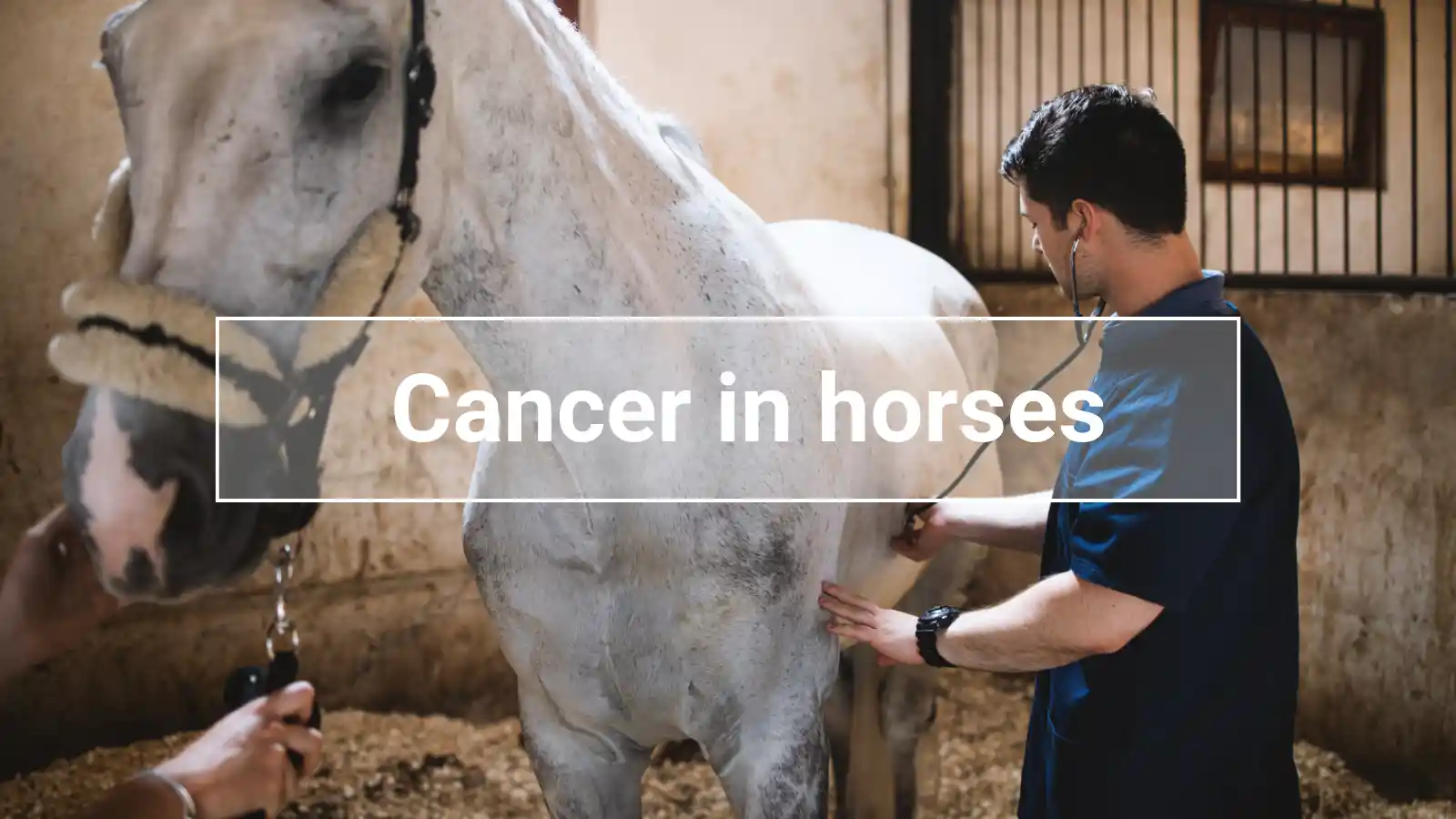
Examination and palpation
First, the entire body is examined: skin, mucous membranes, lymph nodes. The size, shape and consistency of the lump provide initial clues.
Biopsy – the tissue sample
A small tissue sample is taken and examined in the laboratory. This allows the type of tumour to be determined and whether it is malignant.
Imaging procedures
Using ultrasound, X-ray or CT, the vet can assess whether the tumour has spread or how deep it is in the tissue.
Blood tests
These show the general state of health and any organ involvement – however, specific tumour markers are still rare in horses.The combination of these methods provides the basis for the treatment decision.
Treatment: What are the options?
Treatment depends on the type of tumour, its location, size, metastasis and, of course, the overall condition of the horse. Several methods are often combined to achieve the best possible outcome.
Surgery
Surgical removal is usually the first choice if the tumour is easily accessible. In the case of skin tumours, this can be curative, provided that the tissue is completely removed. If tumour cells remain, there is a risk of recurrence.
Cryotherapy (freezing)
The cells are destroyed by freezing the tumour with liquid nitrogen. This method is particularly popular for small sarcoids or melanomas, as it is minimally invasive.
Radiotherapy
Horses can be irradiated with precision in specialised clinics. This method is very effective for squamous cell carcinomas and tumours on the head. However, the treatment is complex, expensive and requires several sessions under sedation.
Chemotherapy (local)
Systemic chemotherapy, as used in humans, is hardly practicable in horses. However, there are local forms of treatment, such as injections into the tumour or special ointments. These procedures are mainly being tested on skin tumours.
Immunotherapy – the immune system as an aid
Modern approaches rely on the body's own immune system to fight tumour cells. These include vaccination strategies and special immunostimulants. This method is still being tested, but initial results are promising – especially for sarcoids and melanomas.
Palliative treatment
When a cure is not possible, the focus is on quality of life. Painkillers, anti-inflammatory drugs, local care and good husbandry can maintain well-being for a long time.
Prognosis: What are the chances of recovery?
The outlook depends on many factors:
Many horses live for years without discomfort even with a tumour. The aim is to keep the horse pain-free, mobile and happy for as long as possible.
Prevention and early detection – what you can do
Cancer cannot always be prevented, but you can significantly reduce the risk and detect changes early on.
Regular checks
Take your time when grooming to examine your horse closely:
- Systematically check the skin and coat
- Check the tail root, anus, genitals and eyelids
- Document small wounds or lumps (e.g. with photos)
Protect the skin
- Protect grey and light-coloured horses from UV radiation
- Keep injuries clean
- Use fly protection and hygienic grooming equipment
Act early
Any noticeable skin lesions or swelling should be examined by a vet – better once too often than too late.
Take aftercare seriously
Check-ups are essential after tumour surgery: Have the affected area examined regularly to detect any recurrence at an early stage.
Conclusion: Cancer in horses – detected early, easily treatable
Cancer in horses is not a rare phenomenon – but it is not hopeless either. Thanks to modern diagnostics and therapies, many horses can be treated effectively or kept stable.
With the right support and patience, even a horse with cancer can live a long, happy life.
Cancer in horses: the most important questions and answers
How long can a horse live with a tumor?
Many horses live for years with a tumor without major limitations. The key factors are tumor type, location, growth rate, and good veterinary care.
Can cancer in horses be prevented?
Complete prevention is not possible. Regular body checks, good skin protection, and clean stable management can significantly reduce the risk.
Why is early detection of tumors so important?
The earlier a tumor is detected, the better the treatment options. Small changes are often easier to treat before they become larger or more aggressive.
Which areas of the body should I check most closely?
Skin, coat, tail dock, anus, genitals, and eyelids are typical areas where tumors may appear early. Even small lumps or wounds should be documented.
How can I protect my horse from skin cancer?
Light-colored and spotted horses should be protected from intense UV radiation. This includes appropriate shelters, UV-protection blankets, and consistent care of small skin injuries.
When should a veterinarian be consulted?
Whenever there is an unusual skin area, swelling, or change that appears new or is evolving. It's better to ask once too early than too late.
Why is aftercare so important after tumor surgery?
Even after successful removal, tumors can return. Regular check-ups help detect recurrences early and allow for prompt treatment.
What treatment options exist for cancer in horses?
The choice of therapy depends on the type of tumor. Options include surgical removal, cryotherapy (freezing), laser treatment, medication, or a combination of these. The veterinarian determines the most suitable treatment individually.
Is cancer in horses always a death sentence
No. Many tumors grow slowly or can be effectively treated. With modern diagnostics, appropriate therapies, and good care, affected horses can live long and comfortable lives.
What can horse owners do themselves?
Perform regular checks, document changes, involve the veterinarian early, take UV protection seriously, and ensure thorough aftercare. Attention is the most important factor for a good prognosis.
You might also like