Equine physiotherapy: overview, benefits and useful application
Equine physiotherapy improves movement function and can identify compensations early—often before a clear lameness becomes visible. It supports mobility, musculature, and coordination and can be beneficial for rideability or performance issues with no obvious cause. Learn which warning signs are typical and what you can do at home to provide additional support.
Table of Contents
What is Equine Physiotherapy?
Equine physiotherapy is a therapeutic approach aimed at maintaining, improving, or restoring a horse’s ability to move. The focus is not on a single symptom, but on the function of the entire musculoskeletal system.
It primarily addresses:
- the musculoskeletal system, including joints, tendons, and ligaments
- the muscles as the structures responsible for support and movement
- the fasciae as a connective network linking the body
- coordination and the interaction between individual body regions
The goal of equine physiotherapy is to make movement more efficient, more even, and sustainable for the horse in the long term. It is not about short-term relaxation, but about functional health.
A clear distinction is important:
Equine physiotherapy is not training, does not replace veterinary diagnostics, and is not a wellness treatment. It complements training and veterinary care where functional restrictions exist or are beginning to develop.
The growing importance of equine physiotherapy is closely linked to how horses are used today. Earlier backing, more intensive work, and one-sided loading place high demands on the musculoskeletal system. At the same time, our understanding of muscles, fasciae, and loading mechanisms has expanded significantly. Taking functional relationships into account in a targeted way is therefore an important part of modern horse management.
Precisely because the horse’s body functions as a single integrated unit, it’s important to understand how the different structures work together—and where their limits under load lie.
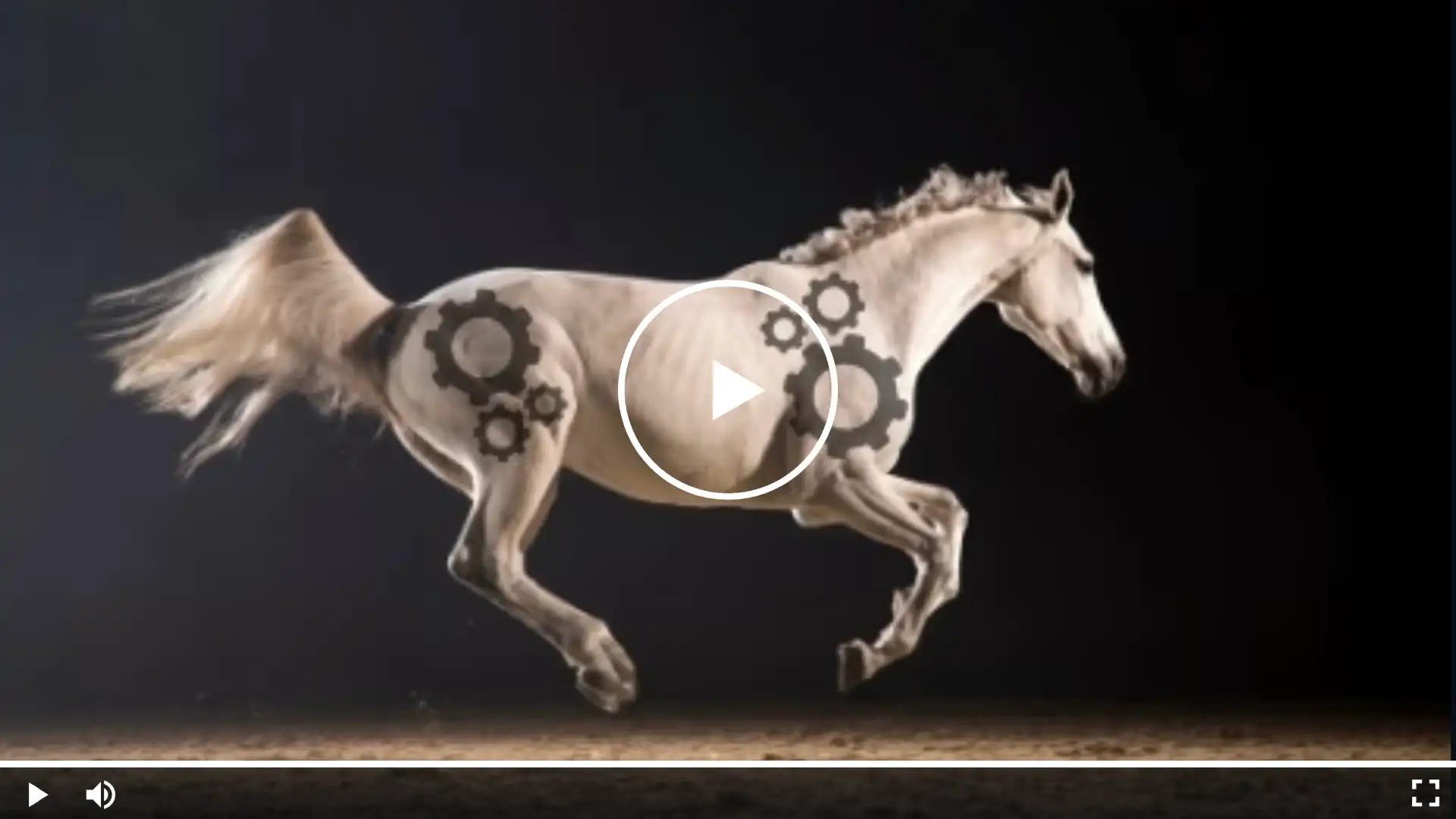
🎥 Video tip: A Functional Unit – The Horse’s Musculoskeletal System
In our ClipMyHorse.TV Academy, an exclusive premium video on this topic is available.
Why is Equine Physiotherapy Important?
Horses are naturally designed for continuous, even movement. In reality, however, many experience the opposite: long periods of standing still, intermittent loading, and the added weight of the rider and equipment. This mismatch often causes the body to avoid strain and compensate, sometimes for a long time without clear symptoms becoming visible right away.
Typical contributing factors include:
- rider weight and balance
- saddle fit and equipment
- one-sided or unbalanced training
- insufficient recovery time
Many horses compensate for these stresses for surprisingly long periods. However, that does not mean they are truly moving freely or staying healthy. It is often only when problems become chronic or start to show in behaviour, rideability, and muscle development that the difference becomes clear.
This is exactly where equine physiotherapy comes in: it helps identify functional restrictions early and improve them in a targeted way—before they develop into long-term overload or structural problems. A common issue in this context is a hollow back.
In the following article, you will learn how it can develop, what consequences are possible, and what to look out for.
Typical situations where equine physiotherapy can be useful
- after injuries or surgery
- with recurring movement irregularities
- with rideability or performance issues without a clear cause
- during strengthening and rehabilitation phases
- in older horses with declining mobility
Typical signs and warning signals
- altered movement pattern, irregular rhythm
- uneven muscle development or muscle loss
- resistance under the rider
- sensitivity when grooming, saddling, or tightening the girth
The table below shows typical signs—grouped into early, moderate, and clear warning signals.
Equine Physiotherapy at Home: What You Can Do Yourself - and What You Shouldn’t
Many horse owners want to actively support their horse in everyday life, and that can be very beneficial. The key is to understand the limits of working on your own: with the right measures, mobility can be improved and tension reduced. Complex therapeutic techniques and diagnosis, however, belong in professional hands.
Helpful self-care measures ✅
- regular, calm mobilisation with small movement impulses
- simple stretching exercises that the horse does willingly and in a relaxed way
- consciously noticing tension (e.g., sensitive areas, muscle tone)
- gentle loosening work through movement, groundwork, or light in-hand work
Clear limits ❌
- no self-diagnoses or “speculating about the cause”
- no aggressive techniques, no force, and no abrupt manipulation
- no “copying” complex therapies from videos or social media
At-home work can be a useful complement to physiotherapy, but it cannot replace it—especially if any of the following warning signs occur.
If the goal is to work on a specific area, it can be helpful to explore the topics in the ClipMyHorse Magazine by body region. There are three relevant articles that explain the background and include exercises with clear, step-by-step instructions to follow along.
Strengthen Your Horse’s Back: Exercises to Do at Home
Relaxing your neck & jaw: Exercises to do at Home
Strengthening the horse’s forehand: exercises you can do at home
Equine Physiotherapy, Osteopathy & Chiropractic Care - What’s the Difference?
When it comes to the musculoskeletal system, several methods are often mentioned that can seem similar at first glance. The main difference lies in the focus of treatment: physiotherapy improves function and load tolerance, osteopathy places greater emphasis on connections throughout the whole body, and chiropractic care works in a targeted way on joints.
Equine Physiotherapy
The focus is on movement function and therapeutic exercise. The goal is to improve mobility, build muscle in a targeted way, reduce compensation patterns, and help the horse become fit to work again (e.g., after injury, with rideability issues, or recurring irregularities). Common components include mobilisation, active exercises, stabilisation, soft-tissue techniques, and a sensible progressive rehabilitation plan.
Equine Osteopathy
Osteopathy follows a holistic approach and views the body as an interconnected system. Rather than treating only “one spot,” the practitioner looks for tension and restrictions that may affect posture and movement. The aim is to give the body better conditions to return to a functional balance.
Chiropractic Care
Chiropractic care uses very precise impulses on joints when their mobility is restricted (often described as a “blockage”). This is a highly targeted approach and requires accurate assessment and technically sound work. Follow-up care is often beneficial so the horse can use the new range of motion in a stable way (e.g., through physiotherapy and adjusted training).
Important: These methods are not mutually exclusive. They can complement each other well-provided the diagnosis, the horse’s training status, and the overall picture are taken into account, and the treatment is carried out professionally.
How Often Is Equine Physiotherapy Useful?
There is no fixed schedule: how often equine physiotherapy makes sense depends on the individual needs of the horse.
Important factors include:
- type of use (leisure, sport, rehabilitation)
- age
- training level
- type of issue
Physiotherapy should be used in a targeted way. Regular sessions without adjusting training or management rarely lead to lasting improvement.
Why training always needs to be part of it
Physiotherapy can provide important impulses—but results only become sustainable when:
- training is adjusted appropriately,
- workload is managed sensibly, and
- recovery is taken into account.
Conclusion
In many cases, movement quality can be noticeably improved especially when functional restrictions are identified early and addressed consistently. The longer compensation patterns become established, or the more pronounced the issues are, the more important it is to set realistic goals: not a full return to the original baseline, but greater freedom of movement, improved load tolerance, and long-term stability.
Equine physiotherapy is neither a luxury nor a cure-all. It is a valuable tool for improving movement, balancing strain, and helping horses stay healthy over the long term provided it is applied purposefully, professionally, and in combination with appropriate training, management, and recovery.
FAQ: Frequently Asked Questions About Equine Physiotherapy
What is equine physiotherapy?
Equine physiotherapy is a therapeutic approach aimed at improving movement function. It uses, among other things, manual techniques, active exercises, and physical stimuli to enhance mobility, coordination, and resilience.
When is physiotherapy beneficial for horses?
For example, in cases of rideability or performance issues without a clear cause, after injuries or surgery, during rehabilitation and conditioning phases, with recurring movement irregularities, or in older horses with declining mobility.
Is physiotherapy good for horses?
Yes especially when it is applied purposefully and complemented by appropriate training, load management, and recovery.
How can I tell if my horse needs physiotherapy?
Possible signs include rhythm irregularities, changes in movement patterns, uneven musculature, resistance when ridden, or sensitivity during grooming, saddling, or girthing.
How often is physiotherapy recommended?
There are no fixed intervals. What matters are the horse’s needs, type of use, age, and training condition—along with adjustments in training and recovery.
Can you ride after a treatment?
That depends on the findings. Light, relaxed movement is often beneficial, while intensive training should only be done on the therapist’s recommendation.
What is the difference between equine osteopathy and equine physiotherapy?
Physiotherapy focuses primarily on function, resilience, and training or rehabilitation development. Osteopathy places greater emphasis on interconnections throughout the entire body and works manually on tension and movement restrictions. Depending on the findings, both approaches can complement each other effectively.
What can be sensibly supported at home—and what should not?
Gentle mobilisation, simple stretches, and attentive observation of tension are helpful. Self-diagnosis, abrupt techniques, or attempting complex therapeutic maneuvers are not advisable.
You might also like