Fetlock hyperextension in horses – causes, symptoms, treatment and training
Fetlock hyperextension in horses, often referred to as soft fetlocks, can be either congenital or acquired. It leads to excessive lowering of the fetlock joint and weakens the entire musculoskeletal system. With the right diagnosis, appropriate hoof care, targeted muscle building and careful training, the condition can usually be significantly improved.
Table of Contents
What does Fetlock hyperextension mean in horses?
Fetlock hyperextension describes an excessive lowering of the fetlock joint, where the normal alignment and stability of the limb are compromised. The horse “drops” through the fetlocks — the joints sink more deeply during standing or movement than they are anatomically designed to. The fetlock appears soft, elastic, and in severe cases even unstable.
Physiologically, the fetlock joint is designed to cushion shocks when the hoof strikes the ground. If this spring action becomes too strong, it is referred to as hyperextension. This primarily affects the fetlock ligaments, the deep and superficial flexor tendons, and the hoof joints.
Depending on its severity, transparency can be a purely cosmetic problem or a painful symptom that limits performance.
Causes: Why Horses Develop Fetlock Hyperextension
The development of fetlock hyperextension is multifactorial — usually several factors interact. It can be congenital or acquired.
Congenital Fetlock Hyperextension
Some horses are predisposed due to their anatomy:
- Soft connective tissue or overly elastic ligaments
- Weak musculature around the fetlock and pastern
- Long pasterns and low fetlock angles
Genetic predisposition of certain breeds (e.g. warmbloods with a long stride or Icelandic horses with soft connective tissue). During the rearing phase, a lack of minerals or proteins can further impair connective tissue stability.
Acquired Fetlock Hyperextension
Acquired hyperextension develops gradually. Common causes include:
- Overloading the musculoskeletal system due to overly intense training
- Incorrect hoof trimming or inappropriate shoeing (e.g., long toes, low heels)
- Tendon injuries or suspensory ligament desmitis
- Soft, deep or uneven footing in daily life and training
- Overweight or poor muscular development
- Metabolic issues or nutritional imbalances affecting tissue stability
As the condition progresses, the connective tissues overstretch and lose stability, making the hyperextension visible.
Symptoms: How to Recognize Fetlock Hyperextension
Horses with fetlock hyperextension often display:
- Noticeably lowered fetlock joints, especially at rest
- Soft restraint in which the restraint axis is suspended
- Hyperextension of the fetlocks during movement
- A less stable or weakened gait
- Swelling or heat in the tendon/ligament region
- Occasional lameness, especially after exercise
In early stages, signs may only appear when the horse is tired.
Diagnosis: How Vets Assess Fetlock Hyperextension
A thorough veterinary examination is essential. Diagnostic steps include:
- Evaluation of limb conformation in motion and at rest
- Palpation of the suspensory ligament and flexor tendons
- Ultrasound to assess tendon and ligament fibers
- X-rays to check joint and bone structures
- Movement analysis, sometimes with slow-motion video or sensors
A precise diagnosis is important in order to distinguish between functional (caused by muscle or postural weakness) and structural (caused by injury or connective tissue defect) laminitis.
Treatment: What Really Helps?
The treatment depends greatly on the cause. As a general rule, the earlier it is detected, the better the prognosis.
Acute treatment
If there is acute inflammation or injury to the tendons or ligaments, rest is essential. Therapeutic measures include:
- Cooling in the first few days, e.g. with ice bandages.
- Anti-inflammatory medication as prescribed by a vet.
- Support bandages or therapeutic boots to stabilise the fetlock joint .
- Controlled movement of the hand once the acute phase has subsided.
Laser, magnetic field or shock wave therapy can also promote healing.
Long-term stabilisation
Once the acute inflammation has subsided, the focus is on strengthening the supporting structures:
- Regular, correct hoof care (every 6–8 weeks).
- Shorter toes to reduce leverage.
- Customised shoeing or hoof protection, orthopaedic if necessary, to support the pastern axis.
- Targeted muscle building (see training section below).
- Physiotherapy or osteopathy to release movement restrictions
Depending on the findings, bandages or gaiters may also be useful during training, but should only be used temporarily so as not to impair the horse's own stability.
Training for Horses With Fetlock Hyperextension
Training is the most important factor in stabilising a horse in the long term. The aim is to strengthen the supporting muscles, especially the back, abdominal and hindquarters muscles.
Basics of healthy training
- Short, regular sessions: 20 minutes every day is better than 1 hour
- Good ground: firm, elastic ground (no deep sand or mud)
- Warm-up phase: at least 10 minutes walking in hand or under saddle
- Avoid overexertion: no tight turns, no jumping training, no deep ground
Hand exercises
Many horses with flat feet benefit from ground work because it activates the hindquarters without putting too much strain on the fetlock joints.
Proven exercises:
- Walking over ground poles: strengthens the trunk and abdominal muscles.
- Backing up: activates the flexor muscles and hindquarters.
- Halting and stepping forward: promotes carrying power and balance.
- Side movements in hand (e.g. shoulder-in): improves coordination.
These exercises can also be performed on slightly sloping terrain to specifically strengthen the hindquarters.
Lunge work
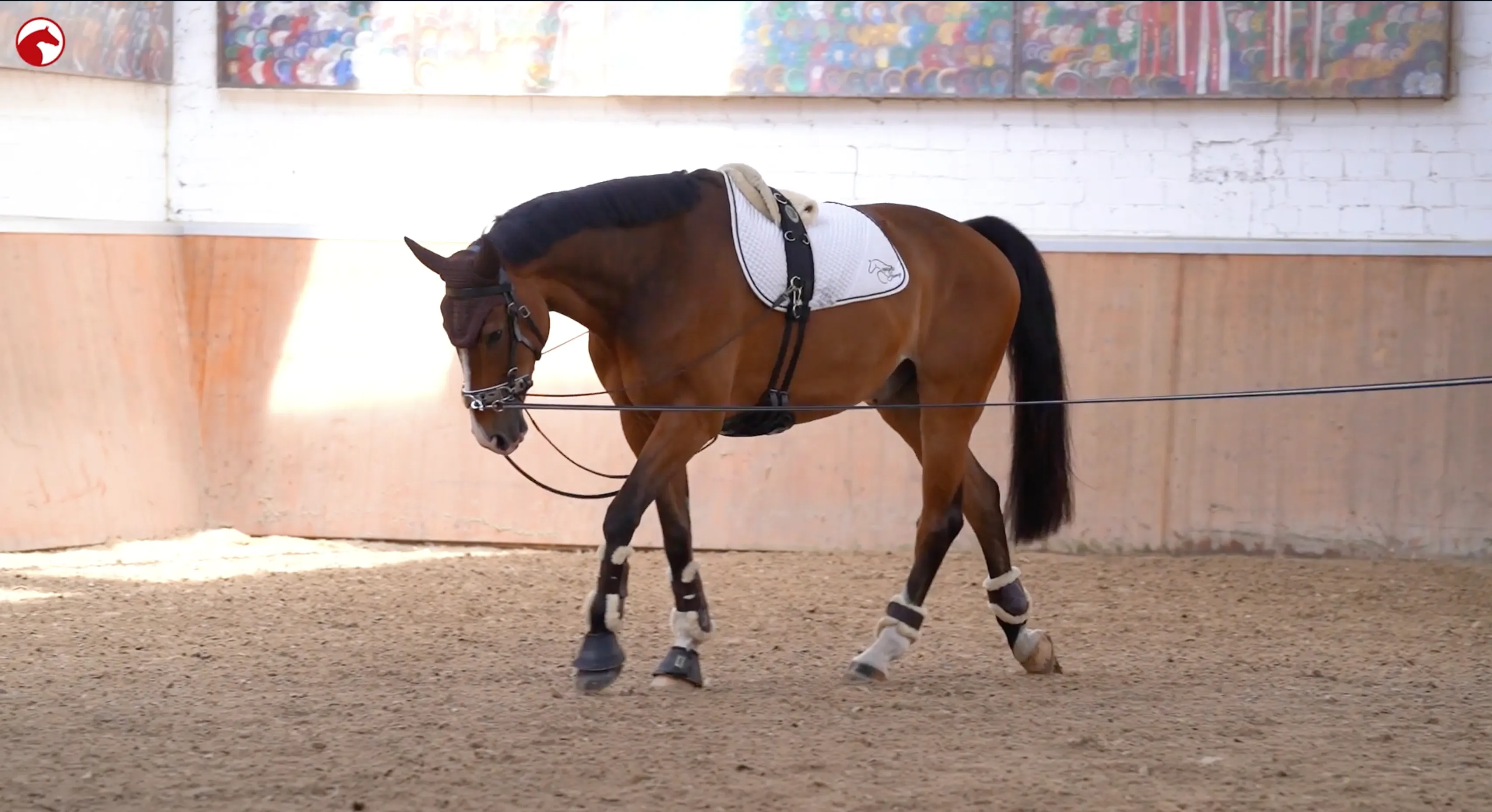
When lunging, make sure to use large circles (at least 18 metres) to keep the strain low.
Important points:
- Use a cavesson instead of side reins to promote natural head and neck posture.
- Use walk-trot-walk transitions to train carrying power.
- Bar work at different distances.
Equikinetic® training is particularly effective: Interval work on circles strengthens muscles, coordination and core stability without overloading the fetlocks.
Riding work
Under the saddle, the horse should work over its back, not on its forehand.
Effective exercises:
- Transitions (walk–trot, trot–canter) to activate the hindquarters
- Lateral movements such as shoulder-in, half-pass or renvers
- Tempo changes in trot for balance and strength
- Canter work uphill, provided the condition is stable
Additional measures
The following elements can also be helpful:
- Fascia work to loosen up and improve circulation
- Balance pads or unstable surfaces when standing (under supervision)
- Massage and stretching exercises after training
- Recovery days without training, but with free movement
Feeding & care:Strengthen the body from within
Strong connective tissue is also the result of optimal feeding.
Important nutrients:
- Amino acids (lysine, methionine) for muscle building
- Silicic acid, zinc, manganese, copper for tendons and ligaments
- Vitamin E and selenium for cell protection
- Omega-3 fatty acids for anti-inflammatory effects
You should avoid:
- Overweight (puts additional strain on the fetlocks)
- High-energy rations with little exercise
Housing conditions:
A paddock trail or open stable with firm, non-slip flooring supports the musculoskeletal system. Soft, muddy ground, on the other hand, promotes instability and overstretching.
Prognosis & Prevention
The prognosis depends on the cause and consequences of treatment:
- Mild, training-related laminitis can be completely reversed.
- Chronic or genetic forms can be stabilised but not cured.
If you observe your horse at an early stage and take even the smallest changes seriously, you can usually prevent laminitis from worsening.
Conclusion
Fetlock hyperextension in horses is more than just a visual anomaly; it signals a structural weakness in the musculoskeletal system that must be taken seriously. A combination of targeted muscle building, appropriate hoof care, conscious feeding and veterinary supervision can significantly improve the stability of the fetlock joint.
Regular exercise, careful training and patience are the most important remedies.
Fetlock Hyperextension: the most important questions and answers
What does fetlock hyperextension mean in horses?
Fetlock hyperextension describes an excessive lowering of the fetlock joint, usually caused by weakened tendons or ligaments.
Can fetlock hyperextension improve again?
Yes, if the cause is functional or training-related. If it is due to genetic predisposition, stabilization is possible, but complete recovery is unlikely.
Is fetlock hyperextension painful?
It can be if tendons or joints are overloaded. If left untreated, it may lead to chronic pain and lameness.
How do I train a horse with fetlock hyperextension?
With controlled strength training, pole work, groundwork, Equikinetic, and plenty of walking – without deep footing or tight turns.
What role does hoof care play?
Correct hoof balance is crucial to relieve strain on the fetlock axis. Orthopedic shoeing can provide additional support.
You might also like