Loss of Carrying Power in Horses: Regaining Strength with Targeted Training
Back fatigue in horses is a gradual process in which the core muscles lose their strength. Without proper muscle development, the horse's torso will collapse.
Table of Contents
What Is Loss of Carrying Power in Horses?
A horse is said to experience a loss of carrying power when it no longer has sufficient strength in its muscles, ligaments and tendons to support its trunk. Because horses do not have a collarbone to provide bony stability between the shoulders, the trunk can sink forwards and downwards between the shoulder blades as the supporting structures become fatigued.
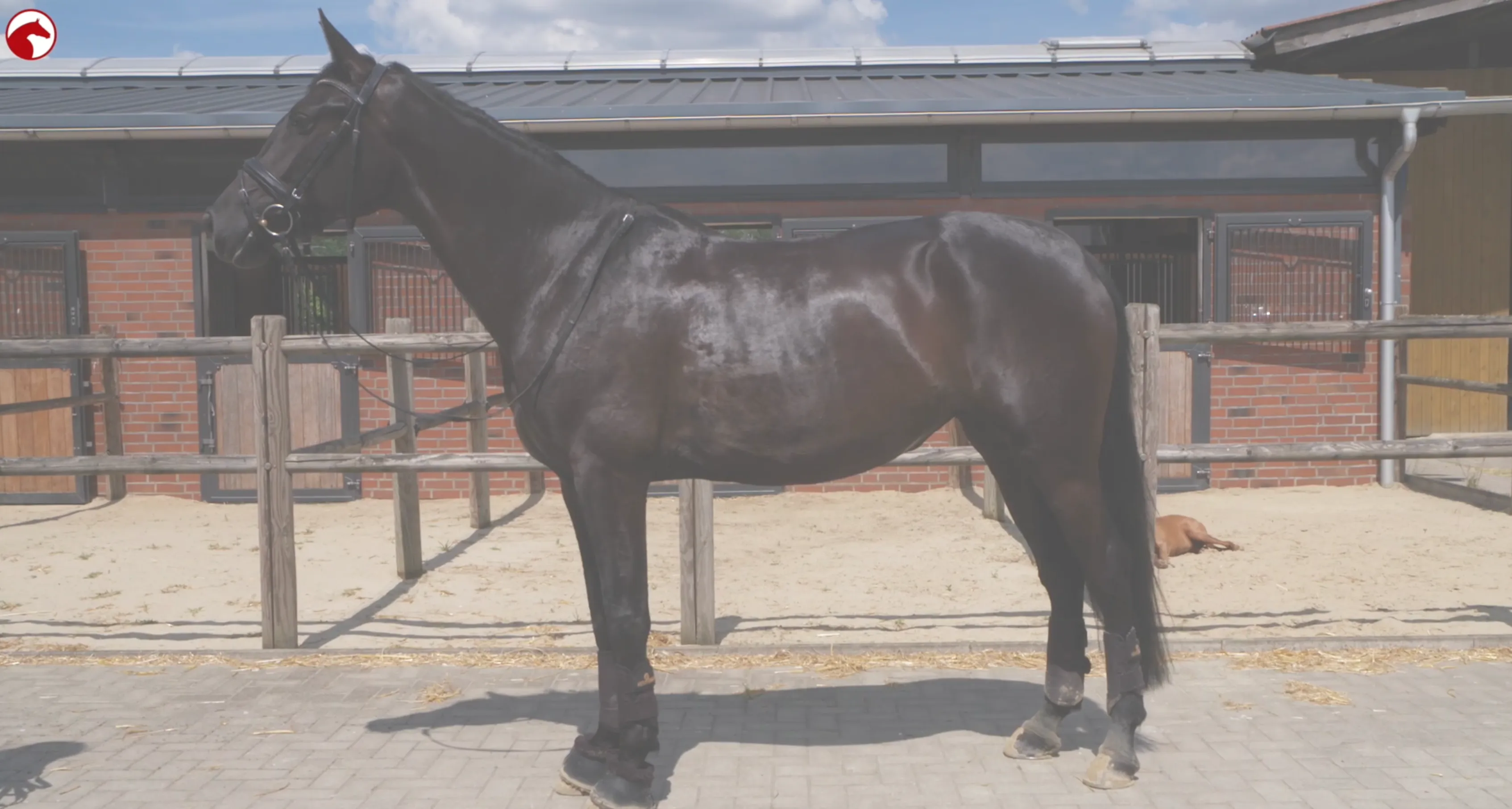
This results in the most visible signs of a loss of carrying power: a hollow or sagging back, an overdeveloped lower neck and a prominent point of the shoulder. Other terms used synonymously include postural fatigue, postural weakness, loss of carrying strength and topline syndrome.
A loss of carrying power is not a disease in itself, but rather a symptom caused by a combination of several factors. It can lead to secondary problems such as osteoarthritis, tendon injuries and kissing spines. The condition develops gradually, often as a result of repeatedly overlooking the horse’s early signs of fatigue. Eventually, the supporting structures can no longer maintain the trunk’s position, causing it to sink.
📖 Recommended reading: A swayback is a typical sign of weak core muscles, but it is not always caused by a loss of carrying power. In some horses, a swayback may also be congenital.
What Does Postural Fatigue Look Like? Recognising Loss of Carrying Power in Horses
Many equestrians associate a loss of carrying power with a swayback. This is not entirely incorrect, as the back and abdomen can indeed begin to sag when the horse is no longer able to support its trunk properly. However, the signs of developing postural fatigue are far more varied and can appear long before the back muscles begin to atrophy and the topline sinks.
The signs can be divided into physical changes, behavioural changes and changes in the horse’s gait.
Physical Changes
- A pronounced ewe neck or overdeveloped lower neck
- A noticeable hollow in front of the withers
- Excessively prominent shoulder and forelimb muscles
- Forelimbs positioned too far back beneath the body, sometimes toe-narrow or base-narrow
- Hind limbs positioned too far beneath the body
- Soft or dropped pasterns, potentially progressing to suspensory ligament damage
- A prominent sternum
- A sagging abdomen with a clearly visible abdominal vein, even when the horse is resting, has not been exercised and the weather is not particularly hot
- A swayback, atrophied muscles and increasingly visible spinous processes
- An arched lumbar region, while the junction between the loin and sacrum sinks
When a horse experiences a loss of carrying power, its core muscles lack the strength required to support the trunk. The horse’s posture and overall conformation therefore shift to compensate for this weakness, moving its centre of gravity forwards and downwards.
Because horses do not have a collarbone to stabilise the trunk between the shoulder blades, they may bring their front legs closer together in an attempt to prevent the ribcage from sinking further. As a result, muscles throughout the body become tense: the withers sink, while the lumbar muscles tighten and change shape.
These typical signs of reduced carrying strength can be recognised at an early stage when considered alongside behavioural changes and alterations in the horse’s gait.
Changes in Gait
- Irregular rhythm and frequent stumbling
- Lameness
- Flat, ground-bound movement
- Heavy, audible footfalls and a lack of elasticity in the stride
- A stiff gait, with difficulty bending through the body or flexing correctly
Behavioural Changes During Training
- Reduced performance
- Poor rideability
- Resistant behaviour caused by pain
Changes in the horse’s physical structures are often accompanied by pain. A loss of carrying power can also negatively affect the horse’s mental well-being. The horse may lose its enjoyment of movement and working with people, leading to reduced performance and, in some cases, resistant behaviour.
Resistance in particular may be caused by considerable pain resulting from tense muscles, vertebral misalignment or compressed nerves.
What Causes a Loss of Carrying Power in Horses?
Horses with a long body and back are often more susceptible to back problems because the distance between the two “pillars of the bridge” — the forehand and the hindquarters — is greater. The supporting structures therefore have to work harder to maintain the necessary tension.
However, although long-backed horses with a rectangular build may develop a loss of carrying power more easily, horses with other body types are not immune. Compact horses with shorter backs and strong cannon bones may generally be better suited to carrying weight.
Understanding the Anatomy
To understand how a horse can develop a loss of carrying power, it is important to consider its anatomy. The horse’s ribcage is suspended both between the forehand and hindquarters and between the shoulder blades. Unlike humans, horses do not have a bony collarbone to hold their barrel-shaped trunk in place between the shoulders. Instead, it is supported by muscles and connective tissue.
This structure allows the horse to move with elasticity and absorb the impact of jumping more effectively. The trunk, with the sternum forming its lowest point, can move and oscillate between the shoulders. At the same time, the back and abdominal muscles must work harder to stabilise this moving structure and prevent it from sinking.
A horse capable of carrying itself and a rider therefore needs not only strong back muscles, but especially powerful abdominal and core muscles.
If the horse does not have healthy, functional core muscles, its centre of gravity gradually shifts forwards. Because all structures within the horse’s body are connected through fascia, this imbalance can affect the entire body, from the neck to the hindquarters. The muscles throughout the horse’s body become tense, resulting in the physical changes described above.
But how can the core muscles lose so much strength that they are no longer able to support the horse’s own body? There are many possible causes of weak abdominal and back muscles:
- Training mistakes
- The rider’s weight and balance
- Conformation and hoof condition
- Breeding
- Poorly fitting or unsuitable equipment
- Management with insufficient opportunities for movement
- Respiratory problems
- Stress
- Chronic pain
Training Mistakes and the Rider’s Influence
Because horses are not naturally designed to carry additional weight, incorrect, insufficient or excessive training is one of the main causes of a loss of carrying power. Many young horses are subjected to excessive strain too early, even though their physical development is not complete until approximately six to eight years of age.
Young horses may take part in their first performance test at the age of three and compete in their first shows at four. Their still-developing tendons and ligaments may not yet be sufficiently prepared for this level of strain.
Gaps in the horse’s education and inadequate muscle development can also place incorrect or excessive strain on the entire musculoskeletal system until the supporting structures can no longer cope. This does not apply only to the training of young horses. The everyday training of adult riding horses can also lead to severe muscular fatigue.
Training often fails to account for the horse’s physical needs or the correct execution of exercises, gaits, flexion and bend. Examples include:
- Incorrect long-and-low work: The horse moves on the forehand with its head and neck held too low. Instead of lifting and broadening its back and raising the withers, it simply trails along with its nose close to the ground.
- Excessive speed: The horse rushes forwards without developing impulsion. The hindquarters do not step underneath the body and remain inactive. Carrying strength cannot develop when the horse is moving too quickly.
- Forced elevation: The horse is forced into an elevated neck position, causing it to hollow its back. This prevents the back from lifting and the spaces between the vertebrae from opening, increasing the risk of kissing spines.
- Harsh rein contact: Holding the neck rigid and applying excessive pressure to the sensitive bars of the mouth can cause both mental and physical tension. Stress also prevents the development of healthy muscles capable of supporting the horse’s body.
- Overtraining: Training sessions that are too long, demanding or frequent do not build functional muscles. Without sufficient recovery periods during and between sessions, the muscles become fatigued and begin to deteriorate.
- The rider’s influence: A rider who is too heavy and also unbalanced places additional strain on the horse, which the horse must compensate for. If the rider is also unable to provide appropriate training that supports healthy muscle development, the horse is placed at a double disadvantage.
Anatomy and Modern Horse Breeding
Although certain horses are not automatically destined to develop a loss of carrying power, their conformation can make it more difficult to build the muscles required to support their own body and a rider.
According to a study by the German Veterinary Association for Animal Welfare (TVT), horses with short backs, broad loins and strong cannon bones are generally better able to carry weight than lightly built horses with long legs and long backs.
Horses of the traditional type were primarily bred with health and physical resilience in mind. Modern sport-horse breeding has sought to reduce conformation faults such as a roach back or swayback. At the same time, breeding goals have shifted towards taller horses with longer frames. Greater emphasis has been placed on expressive, ground-covering movement and less on the horse’s physical ability to cope with the forces created by these movements.
In addition to the horse’s overall conformation, the hooves play an essential role as the foundation of the body. Poor hoof balance and inadequate trimming or shoeing can cause uneven loading, which the horse must compensate for through its muscles. This creates muscular tension and prevents healthy muscle development.
When trimming or shoeing the hooves, make sure that the breakover point is appropriate for the horse’s anatomy. The toes should be neither too long nor too short, as either can restrict the horse’s natural movement.
Other factors that can contribute to a loss of carrying power include:
- Age: Muscle mass decreases with age and becomes more difficult to maintain. This can reduce the horse’s ability to support its own body and carry additional weight.
- Pregnancy: During pregnancy and birth, the ligaments stretch to accommodate the growing foal. After an appropriate recovery period following birth, careful and gradual strengthening exercises — similar to postnatal rehabilitation in humans — are required to restore the trunk’s carrying capacity.
- Genetically weak connective tissue
- Unsuitable or incorrectly fitted equipment
Unsuitable or Incorrectly Fitted Equipment
Equipment that is unsuitable or fitted incorrectly can contribute to many equine health problems. A poorly fitting saddle can create pressure points that cause the underlying muscles to atrophy.
Using additional saddle pads, sheepskin pads or gel pads to compensate for an unbalanced saddle may make the problem worse. These pads do not address the underlying cause; they merely conceal it. The additional padding can make the saddle less stable, which also makes the rider less stable. Once again, the horse has to compensate for the imbalance.
A noseband that is fastened too tightly can also cause tension and contribute to a loss of carrying power over time. If the noseband and flash strap are too tight and prevent the horse from chewing freely, the muscles of the back cannot work in a relaxed and unrestricted way.
Incorrectly used training aids can cause further problems. Auxiliary reins that are adjusted too short — or used when they are not required — restrict the horse’s movement. They do not teach the horse to contract and relax its abdominal and back muscles appropriately and therefore do not help it develop the strength required to carry itself correctly.
Is Loss of Carrying Power a Diagnosis or a Symptom?
There is no specific diagnostic test for a loss of carrying power comparable to confirming an infection such as equine influenza. Like a typical swayback, a loss of carrying power is a symptom rather than a disease in itself.
However, it can lead to serious secondary conditions such as kissing spines, bone spavin, osteoarthritis and suspensory ligament injuries. Postural fatigue itself is not a disease.
To recognise whether a horse is progressing towards severe fatigue of its core muscles, it is important to take the early signs seriously and respond promptly.
In many cases, reduced trunk stability only becomes apparent to the owner when the horse develops a swollen leg. An ultrasound examination may then reveal a significant lesion in a tendon or suspensory ligament. Before this damage becomes visible, the horse may have been subjected to considerable uneven loading for a long time. Through protective postures and compensatory movement patterns, it may conceal the problem from the untrained eye.
Weak and insufficiently trained abdominal and back muscles can eventually contribute to tendon or suspensory ligament damage. If the early warning signs had been recognised sooner, the injury might have been prevented.
Unrideable for Life? Can a Horse with Loss of Carrying Power Still Be Ridden?
During the acute phase, a horse with a loss of carrying power must not be ridden. In principle, however, horses with reduced carrying strength may be able to return to ridden work. This requires considerable patience, time and a systematic strengthening programme.
Training should not focus solely on rebuilding the muscles of the neck and back to restore a harmonious topline. The abdominal muscles, which work in opposition to the back muscles, also play a crucial role.
Below, we explain different ways to restore your horse’s carrying capacity and maintain healthy, resilient muscles.
Only in rare cases does postural fatigue cause such severe physical changes that they become irreversible. However, a horse with a chronic swayback should no longer carry a rider.
Reconditioning Horses with Loss of Carrying Power: The Road Back to Strength
Restoring the horse’s carrying power takes several months and requires a systematic, carefully planned training programme. Sessions should be short and include frequent breaks for recovery. Initial results and visible improvements should generally not be expected before approximately three months.
Bear in mind that a horse unable to support its own body may be experiencing pain. The first step should therefore be to work with a veterinarian and equine physiotherapist to identify and treat the cause of the pain. Only then should the strengthening programme begin.
Physiotherapy and massage may be useful alongside training to relax the muscles and release areas of tension or restricted movement.
Basic Rules for Strengthening Training
- Allow the horse to walk and warm up for at least 20 minutes before every session.
- Jaw mobilisation and chewing exercises before training can help relax the jaw joint and provide a foundation for relaxed neck and back muscles.
- Keep training sessions short. They should rarely exceed 20 to 25 minutes; sessions of 5 to 10 minutes may initially be more appropriate.
- Include plenty of recovery breaks, both during each session and between training days. Muscles develop during the recovery phase.
- If your horse does not cooperate, look for the reason behind its “no” rather than simply continuing to apply pressure.
📖 Recommended reading: Every rider should be familiar with exercises that encourage relaxation through the poll, jaw and neck. We have put together several exercises to practise at home in the article “Relaxing the Poll and Jaw in Horses: Exercises to Do at Home”.
Initial Phase: Mobilisation
During the initial recovery period — the first two to three weeks — the horse should only be walked in hand. Take your horse for walks lasting no longer than 30 minutes and choose routes with different surfaces as well as gentle inclines and declines.
The horse must first learn to become aware of its body again and use it correctly. Varied terrain is particularly helpful for this.
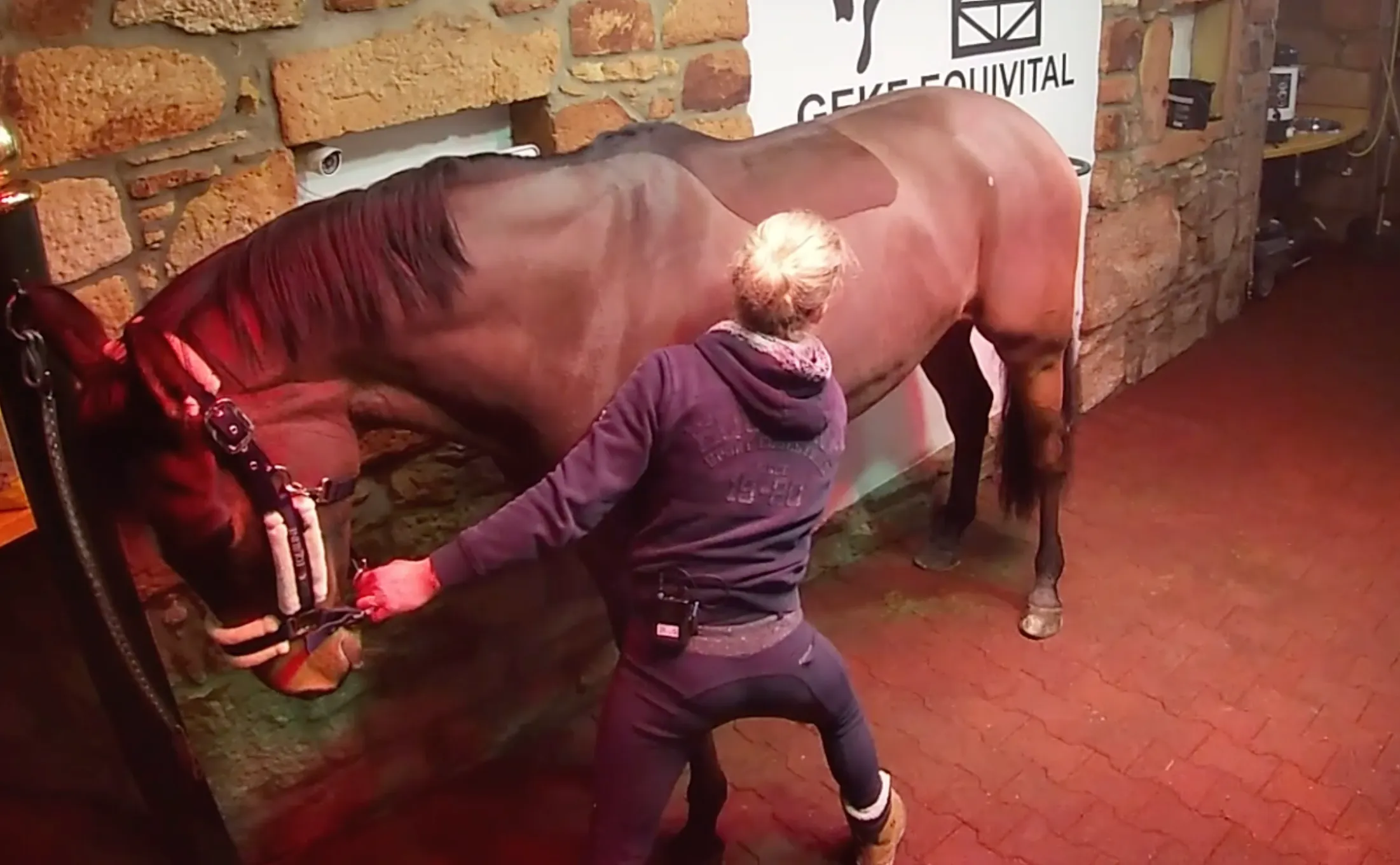
You can then gradually introduce gentle groundwork. Stretching exercises and walking over poles help to activate the abdominal muscles, as these muscles are also involved in lifting the hind legs.
🎥 Video tip: Relaxing Your Horse’s Back – These Exercises Can Help
Building Phase: Strengthening
The next step is to strengthen the core muscles, which cannot be specifically activated through conscious contraction. Instead, the core and deep muscles are trained through varied movements and balance exercises. Keep training sessions short—no longer than 15 minutes—but varied to avoid tiring the horse. Limit training to a maximum of three sessions per week.
- Cavaletti training with varying distances
- Introducing initial trot work
- Hill work in the countryside
- Lunging with a cavesson without side reins
- Long reining
- Equikinetic training
- Balance training with balance pads or seesaws
- Correctly performed lateral movements in hand
When practising lateral movements, make sure the poll remains relaxed, the horse does not tilt its head and is not positioned at too great an angle. The withers should lift, and the horse should show an uphill tendency.
Groundwork offers a wide range of ways to strengthen the horse’s muscles, maintain suppleness, restore its ability to carry weight and improve coordination. The variety also has a positive effect on the horse’s mental well-being and motivation, which can help it rediscover the joy of movement.
Advanced Phase
Once the horse shows visible improvements in both its physical condition and performance after several weeks, ridden work can gradually be reintroduced. Continue to watch for the first signs of fatigue and end the session early. The aim is to provide the muscles with an appropriate training stimulus without overloading them.
At this stage, a professional saddle-fit assessment remains essential, particularly because the horse’s body can change considerably during the reconditioning process. The saddle should therefore be checked and adjusted regularly. Additional saddle pads or corrective pads are not a suitable solution.
Exercises that may help restore the horse’s carrying power during the advanced phase include:
- Gymnastic exercises under saddle
- Transitions between the different gaits
- Working on voltes and circles, gradually increasing and decreasing their size
- Alternating between curved and straight lines
- Ground poles, trotting poles, cavaletti courses and small jumps
- Lateral movements under saddle
For muscle-building training to be successful in horses with loss of carrying power, the right combination of training, management, nutrition, massage and physiotherapy is essential. Optimise your horse’s diet to provide the muscles with all the necessary nutrients, building blocks and vitamins, and ensure sufficient opportunities for movement through appropriate management. This is the only way to keep your horse healthy, fit and strong in the long term.
🎥 Videotipp: "Hype" or Helpful - Dietary Supplements for Horses
Principles for Preventing Loss of Carrying Power
- End the training session as soon as the horse shows the first signs of fatigue.
- Mobilise the shoulder muscles.
- Ride with correct bend and flexion: The horse must be properly supported and stabilised through each turn. It should not tilt through the turn or fall onto its inside shoulder.
- Maintain a pace appropriate to the situation: Slow down through turns and do not lean into them with your horse like a motorcycle on a racetrack. The considerable tensile forces acting on the spinous processes—sometimes reaching up to one tonne—can cause the muscles to fatigue too quickly.
FAQs About Loss of Carrying Power in Horses
Is riding completely off-limits for a horse with loss of carrying power?
During the acute phase, riding is strictly off-limits. The same applies during the rest and initial rehabilitation phases, when the horse should be worked entirely from the ground. Since the horse is no longer able to support its own body properly, it must first recover completely without the additional weight of a rider.
Short sessions under saddle may only be resumed during the strength-building or advanced phase, once the horse has regained its basic balance and core stability.
Can special saddles help a horse with loss of carrying power?
A perfectly fitted saddle is fundamental to maintaining the health of every riding horse. However, there is no special saddle designed specifically for horses with loss of carrying power. If muscle mass is lacking, it must be rebuilt through appropriate rehabilitation and training.
Regular saddle-fit checks by a qualified saddler or saddle fitter are essential.
How heavy can a rider be for a horse with loss of carrying power?
To help prevent loss of carrying power, the rider’s weight and build should be appropriate for the horse. Various guidelines can be used to assess the ratio between rider and horse. Some studies suggest that the rider’s total weight, including clothing and equipment, should not exceed 15–18% of the horse’s body weight. At 20%, the horse may already be at risk of physical harm.
However, the horse’s conformation and whether it has a sufficiently strong frame also play an important role. In addition to the structure of the back, the cannon bone load index (Röhrbeinbelastungsindex, RI), developed by the German Veterinary Association for Animal Welfare (TVT), can be used to assess a healthy ratio between rider weight and horse.
Which nutrients can support a horse with loss of carrying power?
Appropriate nutrition is an important part of supporting horses with loss of carrying power and a swayback. Muscles require sufficient protein and minerals to remain healthy. Vitamin E, selenium, magnesium and amino acids are particularly important for normal muscle function.
- Magnesium supports muscle relaxation and helps prevent cramping.
- Amino acids, the building blocks of proteins, are essential for building and maintaining muscle.
- Vitamin E and selenium support normal muscle metabolism.
- Green-lipped mussel powder contains glucosamine and chondroitin, which may support healthy joints, cartilage and synovial fluid.
Can a horse fully recover from loss of carrying power?
Yes, a horse can recover from loss of carrying power, particularly when the problem is identified and addressed at an early stage. A swayback caused solely by weakened muscles and sagging connective tissue may be improved through a systematic muscle-building programme.
Even after recovery and the restoration of carrying capacity, correct gymnastic training remains essential to maintain core strength and keep the horse healthy.
You might also like