.webp)
Fjord Horse: The Norwegian Breed in Profile
The Fjord Horse – A Robust and Versatile Norwegian Breed. Discover everything about the Fjord horse's character, care, coat colors, breeding, and price range. Is a Fjord horse the right choice for you? In this article, you’ll find all the essential facts you need to know!
Table of Contents
Fjord Horse Profile
Breed: Fjord Horse (Norwegian Fjord Horse, Norwegian Pony)
Origin: Norway
Type: Hardy pony, small horse
Height: 135–150 cm
Weight: 400–500 kg
Colors: Dun colors (Brown Dun, Red Dun, Grey Dun, Yellow Dun, White Dun)
Character: Friendly, calm, reliable, eager to work
Suitability: Ideal for leisure riding, therapy work, western riding, driving, and riding schools
Special Features: Primitive markings (dorsal stripe, zebra stripes), extremely robust and resilient
Lifespan: 25–30 years
Price: Between €3,000 and €10,000 depending on age, training, and bloodline
History & Origin of the Norwegian Fjord Horse
The Fjord Horse is one of the oldest and purest horse breeds in the world, with direct roots tracing back to prehistoric wild horses in Europe. Archaeological findings show that its ancestors lived in Norway over 4,000 years ago. Genetically, the Fjord is closely related to the now-extinct Tarpan, a compact wild horse native to Eastern Europe.
Tarpans were sturdy, short horses with a height of around 130–145 cm, sporting dun-colored coats, a distinct dorsal stripe, and zebra-like leg markings—all traits still clearly visible in today’s Fjord Horses. Experts believe the Fjord's ancestors migrated to Scandinavia during the last Ice Age and adapted over millennia to the region’s harsh and isolated environment.
The Vikings valued the Fjord Horse for its strength and versatility. It served as a riding horse, packhorse, and war horse. Historical records even show that Vikings transported Fjord Horses on their ships to accompany them on expeditions and settlements. The breed has changed very little over the centuries, having evolved under natural selection in Norway’s rugged landscape.
In the 19th and 20th centuries, selective breeding programs were established to preserve the original type of Fjord Horse. Breeders focused on maintaining its classic dun colors, strong conformation, and gentle temperament. Today, the Fjord Horse is a national symbol of Norway and remains widely used in traditional farming, forestry, and as a reliable all-round family horse.
Appearance & Conformation of the Fjord Horse
Exterior – The Fjord Horse’s Distinct Look
The Norwegian Fjord Horse is compact yet powerful. Although classified as a small horse or large pony, its strength and endurance make it an excellent mount for both children and adults. With an average height of 135–150 cm and weighing 400–500 kg, it’s well-suited for carrying heavier riders and pulling loads.
Typical Features of the Fjord Horse:
- Strong, muscular build – especially noticeable in the neck, back, and hindquarters
- Dry, sturdy legs with hard hooves – ideal for uneven or mountainous terrain
- Dun coat colors, with Brown Dun being the most common, followed by Red, Grey, Yellow, and White Dun
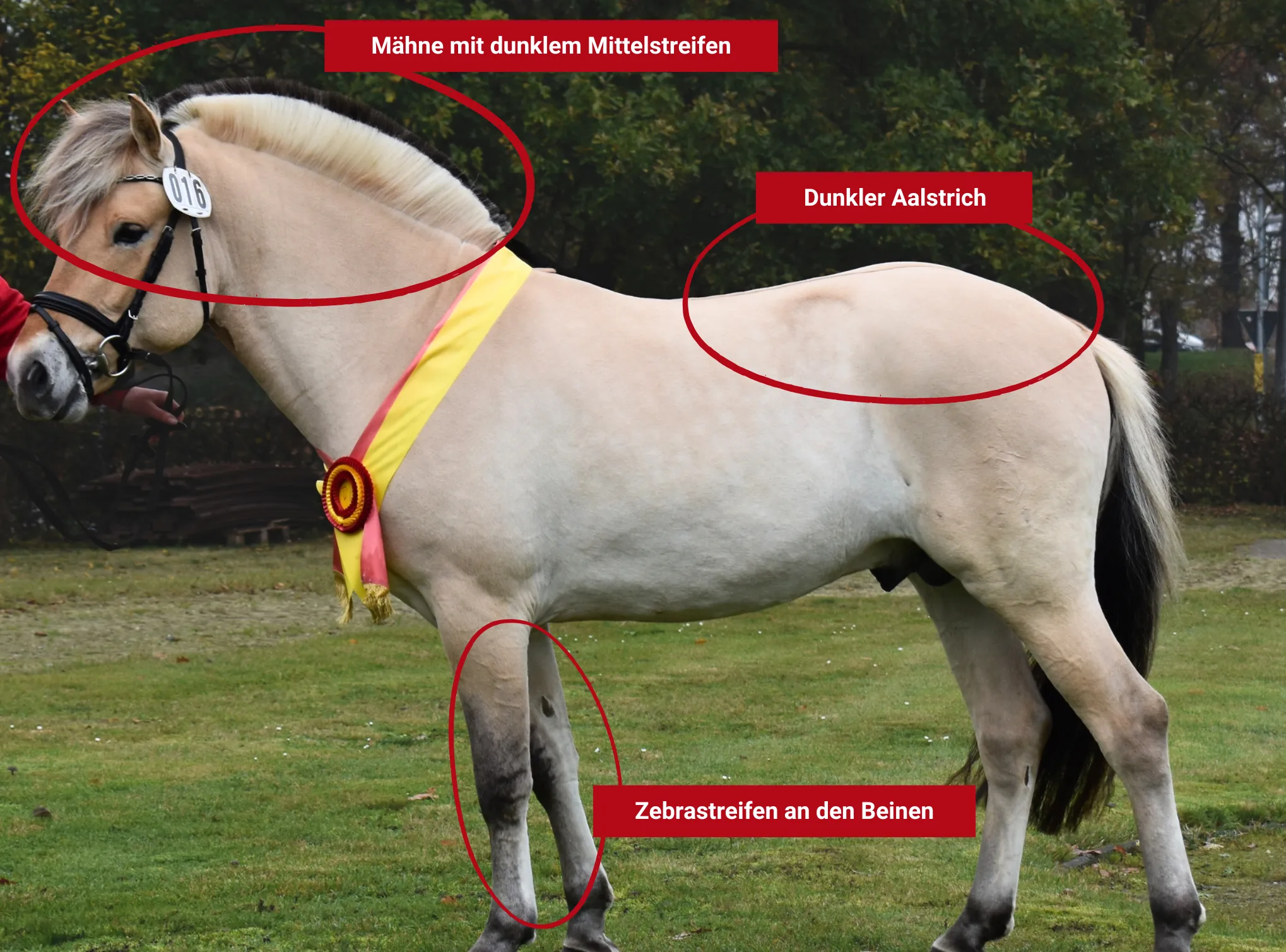
- Primitive markings, such as a black dorsal stripe running from the forelock to the tail, and zebra stripes on the legs
- Thick, two-tone mane, traditionally trimmed short in a crescent shape to highlight the dark center stripe
The Fjord Horse’s distinct coat pattern and wild markings not only reflect its ancient lineage but also contribute to its recognition worldwide as a unique and hardy Nordic breed.
Temperament and Character of the Fjord Horse
The Norwegian Fjord Horse is renowned for its friendly, calm, and reliable nature. With a naturally even temperament, it remains willing to work and highly capable, making it an excellent horse for beginners and a trusted partner for experienced riders alike.
Typical character traits of the Fjord Horse:
- Even-tempered and rarely spooks, making it very safe
- Intelligent and eager to learn, easy to train and teach new tasks
- Patient and people-oriented, often used in therapeutic riding programs
- Willing and enduring, ideal for long trail rides or working in harness
- Social and herd-compatible, easily integrated into group housing
This unique combination of traits makes the Fjord Horse one of the most versatile and family-friendly horse breeds in the world.
Uses and Disciplines of the Fjord Horse
The Norwegian Fjord Horse is a versatile, reliable, and surefooted all-rounder that shines both under saddle and in harness. Whether in leisure riding, driving, or therapeutic settings – this hardy native breed from Norway is a true partner.
Trail and Leisure Riding
Thanks to its exceptional surefootedness, endurance, and nervous strength, the Fjord Horse is ideally suited for trail riding and trekking. It navigates rough terrain, steep paths, and water crossings with confidence and remains calm even in unpredictable situations. This makes it the perfect hacking horse for riders of all levels who value safety, comfort, and a trustworthy character.
Therapy and Riding School Horse
With its calm temperament, human-oriented nature, and patience, the Fjord Horse is a favorite in therapeutic riding and riding schools. It offers a safe and steady ride, making it ideal for children, beginners, or riders with special needs. Its willingness to learn and gentle disposition make daily work easy for both rider and trainer.
Driving and Traditional Work
Historically used in Norwegian agriculture and forestry, the Fjord Horse remains a powerful and enduring driving horse. Its compact build and strong hindquarters make it ideal for pulling carts, carriages, and working implements. Even today, Fjord Horses are valued in pleasure driving, competitive driving, and light farm work.
Fjord Horse in Sport – Dressage, Jumping & Western
While not bred as a top-level sport horse, the Fjord Horse proves to be a capable and willing athlete in several disciplines:
- Dressage: With good basic gaits, rideability, and responsiveness, Fjord Horses perform well in lower to medium dressage levels, especially in classical or Working Equitation contexts.
- Jumping: Their boldness and balance make them suitable for small jumping courses and gymnastic work – perfect for allround training or club-level competition.
- Western disciplines: Their agility, cool-headedness, and cow sense make them popular in Trail, Ranch Riding, and Horsemanship classes.
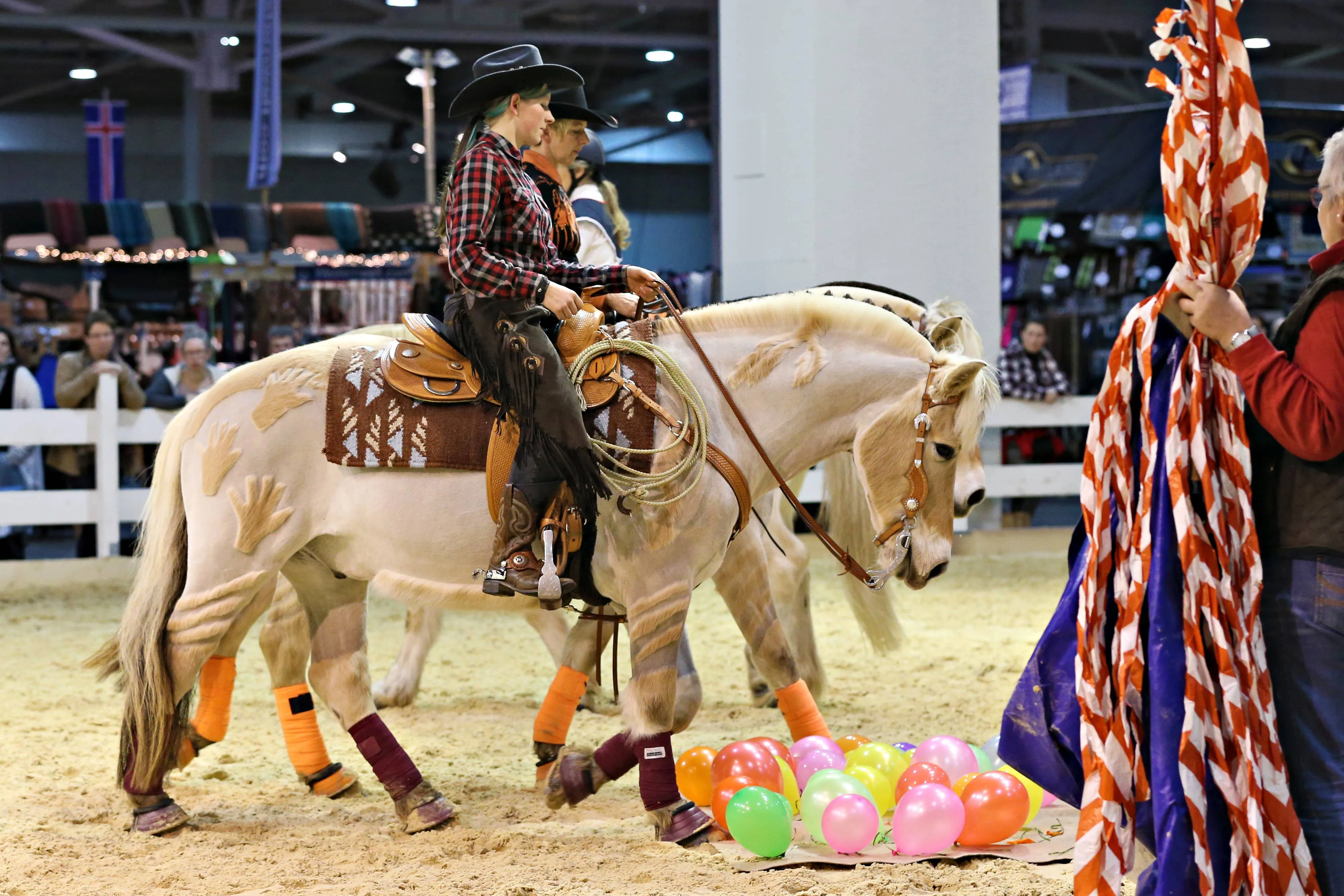
Cultural Significance and Traditional Use
In Norway, the Fjord horse holds a special place in cultural heritage. It is often seen at folk festivals, historical parades, and traditional events. As a true national symbol, it’s also presented at equestrian shows and international exhibitions representing Norwegian breed heritage.
Fjord Horse Care and Management
Like many Nordic horse breeds, the Fjord horse thrives in natural, low-maintenance environments. It adapts well to pasture-based living and doesn’t require complex feeding regimes.
Pasture or Stall?
Fjord horses are best kept in open stabling (group or pasture-based housing) or on year-round turnout with access to shelter from the elements. They need plenty of movement and social interaction, making herd housing ideal. While individual stalls are possible, daily turnout is essential to avoid behavioral and metabolic issues from lack of exercise.
Feeding: What do Fjord Horses Eat?
The Fjord horse is a good doer – a breed that metabolizes feed very efficiently. This means it needs a fiber-rich, low-energy diet to stay healthy and maintain an ideal body condition.
Basic diet:
- Ad libitum hay or silage (1.5–2% of body weight per day)
- Mineral supplements as needed
- Little to no grain unless in hard work
In summer, grazing is usually sufficient, though access should be restricted to prevent weight gain or metabolic disorders due to rich pasture.
Coat & Mane Care
The Fjord horse’s dense coat provides excellent protection in cold climates. In spring and autumn, regular grooming helps with shedding and maintains skin health.
One of the breed’s trademarks is its two-tone mane, traditionally trimmed in a crescent shape to highlight the dark dorsal stripe. This is a stylistic tradition, not a requirement.
Exercise & Mental Stimulation
Fjord horses are intelligent and willing, and benefit from varied work to stay mentally and physically fit. Ideal activities include:
- Trail riding
- Groundwork and liberty training
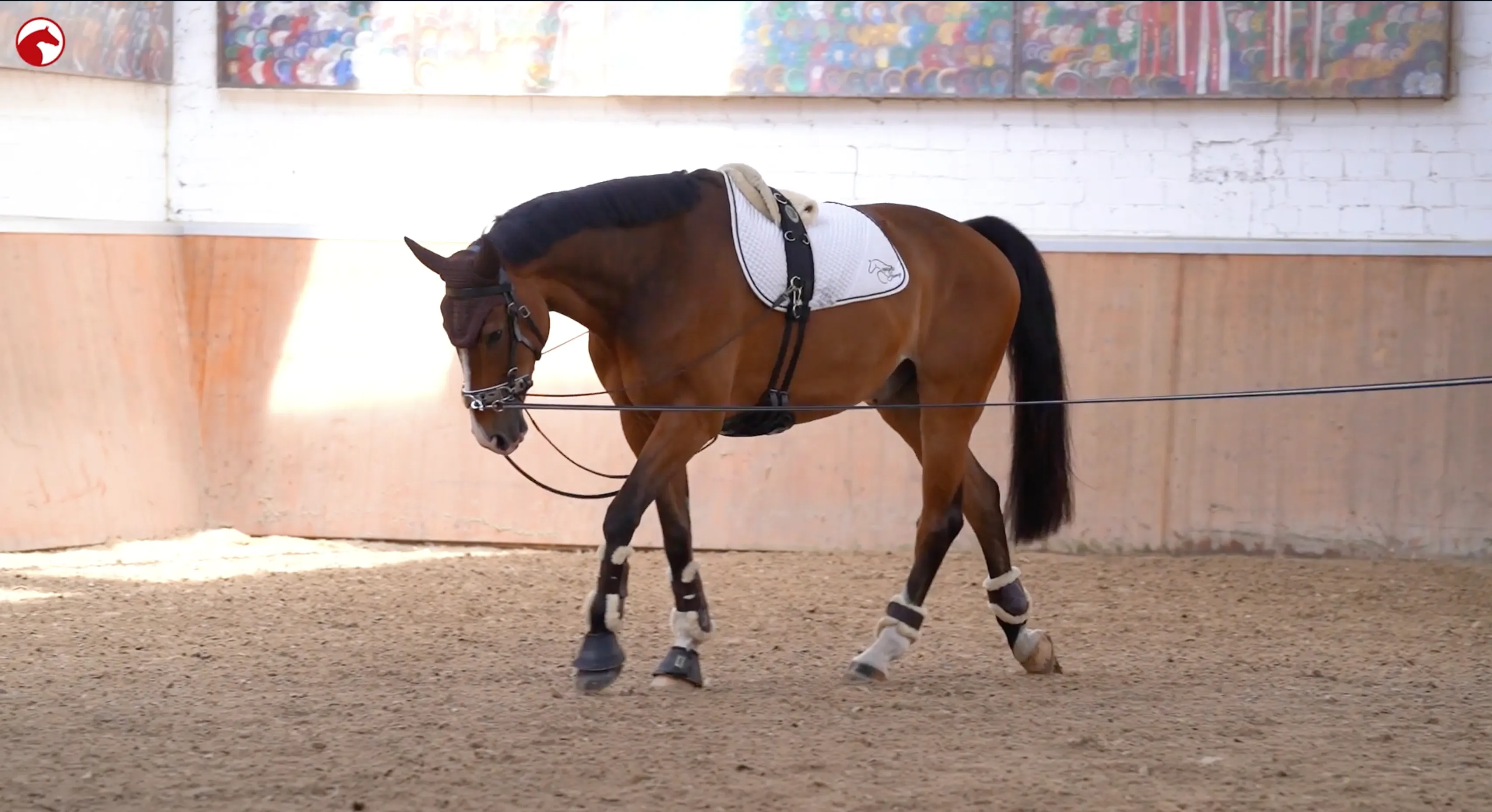
- Long reining or lunging
- Light driving or carriage work
Inherited Conditions in Fjord Horses
Fjord horses are generally considered a sound and hardy breed, with very few genetic health issues. Centuries of natural selection have helped preserve their physical integrity and robust constitution.
Myotonia (Hereditary Muscle Disorder)
A very rare neuromuscular condition, occasionally reported in Fjord foals. Symptoms include muscle stiffness or delayed relaxation after movement. Due to strict breeding practices, it has nearly been eliminated.
Atresia Ani (Congenital Absence of the Anus)
Also extremely rare, this fatal condition can occur in foals and requires immediate surgical correction. It is believed to be genetic, so careful breeding selection is critical.
Immune Deficiencies & Growth Disorders
Occasionally seen in foals, these are not specific to the breed and are usually due to environmental or maternal factors during gestation and foaling.
Metabolic Issues
While Fjords are not classified as a high-risk breed for metabolic disorders, their easy-keeper metabolism makes them prone to:
- Equine Metabolic Syndrome (EMS)
- Laminitis
- Insulin Resistance
These risks can be managed through proper diet, weight control, and regular exercise.
Breeding the Fjord Horse
Breeding programs focus on preserving the original type, including physical soundness, unique coloring, and excellent temperament.
Breeding History & Goals
Since the opening of Norway’s official studbook in 1941, strict standards have been in place. Only horses showing the typical primitive markings (dorsal stripe, leg bars) and diluted coat colors (dun types) are approved.
Key breeding goals:
- Health and longevity
- Compact, muscular conformation
- Calm, cooperative character
- Versatility in riding, driving, and work
Key Breeding Regions & Associations
- Norway: Home of the Norges Fjordhestlag, enforcing strictest selection criteria
- Germany: Breeders governed by IG Fjordpferd e.V.
- Other active breeding countries: Denmark, Sweden, Netherlands, USA, Canada
Stallion Licensing & Breed Evaluation
Only horses with correct conformation, free, correct movement, and clear breed type are approved for breeding. Evaluation includes:
- Conformation and structural soundness
- Gaits and biomechanics
- Disposition and rideability
Raising Fjord Foals
Foals are generally raised in natural, pasture-based environments, encouraging proper development and social behavior. Early socialization and freedom of movement are critical for raising sound, well-adjusted horses.
FAQ´s Fjord Horse
What is the difference between a Fjord horse and a "Norwegian"?
There is none – the Fjord horse is also commonly referred to as the Norwegian Fjord Horse or simply "Norwegian". The name comes from its origin in the fjords of Norway.
Is a Fjord horse suitable for beginners?
Absolutely! Thanks to its calm temperament, steady nerves, and friendly personality, the Fjord is ideal for beginners, children, and returning riders.
How much weight can a Fjord horse carry?
Due to its strong, compact build and sturdy legs, a Fjord horse can comfortably carry up to 90 kg (200 lbs) – in some cases even 100 kg (220+ lbs) or more, depending on the individual horse.
What is the average lifespan of a Fjord horse?
Fjord horses typically live 25 to 30 years, and many even reach over 30 with proper care.
What colors do Fjord horses come in?
All Fjord horses are duns (falbs) – the most common and accepted color variations include:
- Brown dun (most common)
- Red dun
- Grey dun
- Yellow dun
- White dun (rarest variety)
How much does a Fjord horse cost?
Prices vary depending on age, training level, and bloodlines:
- Foals: approx. €3,000–5,000
- Young horses (untrained): approx. €5,000–7,000
- Trained riding horses: approx. €7,000–10,000
Is the Fjord horse a cold-blood or warmblood?
Fjords are considered hardy small horses (robust ponies). They are neither true cold-bloods nor warmbloods, but rather a unique, powerful pony breed with excellent weight-carrying capacity.
Can a Fjord horse jump?
Yes – while not bred specifically for jumping, Fjord horses can handle small jumps and low-level jumping courses with ease. However, for higher-level show jumping, other breeds may be more suitable.
Is the Fjord horse a good weight carrier?
Yes, Fjord horses are excellent weight carriers. Their strong bone structure and muscular frame allow them to comfortably carry heavier riders than most ponies.
Are there other Norwegian horse breeds besides the Fjord?
Yes! Norway is home to a few other traditional horse breeds:
- Døle Horse – a strong cold-blooded draft breed used for driving and heavy work
- Nordland Horse (Nordlandshest/Lyngshest) – a small, agile, and hardy horse similar in robustness to the Fjord
These Norwegian breeds share key traits such as endurance, versatility, and a calm, people-friendly nature.
You might also like